
The Patient Who Came Home
This Is Going to HurtThis flow follows Kay’s long attachment to a premature infant and the bittersweet moment when the child leaves hospital.
increasing Bearing strength in each event
 decreasing
Bearing strength in each eventdecreasingA Tiny Newborn
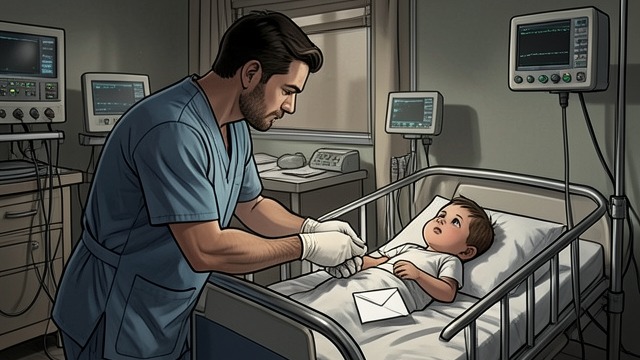
A Tiny Newborn
A fragile arrival
Baby L is born fourteen weeks early, weighing less than a jar of jam. Kay has also cared for the baby’s seriously ill mother during the long hospital stay.
A developing attachment
The infant’s survival depends on intensive care and constant clinical attention. Kay’s involvement turns a medical case into a familiar presence within his working routine.
Daily Visits
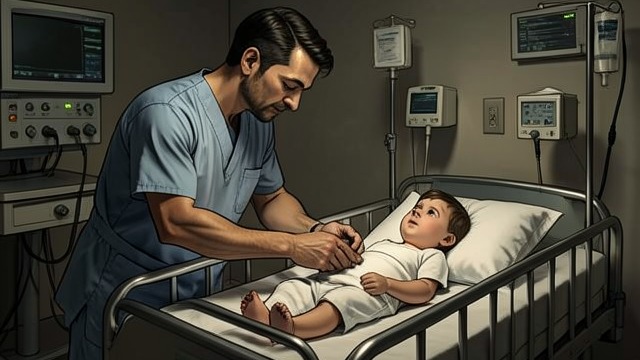
Daily Visits
A routine formed
For three months, Kay visits Baby L on the special-care unit before going home. Seeing the same small patient becomes part of the end of his day.
Change made visible
He watches the child grow from a tiny body connected to tubes and wires into a noisy, sleeping, vomiting baby. Repeated visits give him a personal view of gradual recovery.
The Odds Improve
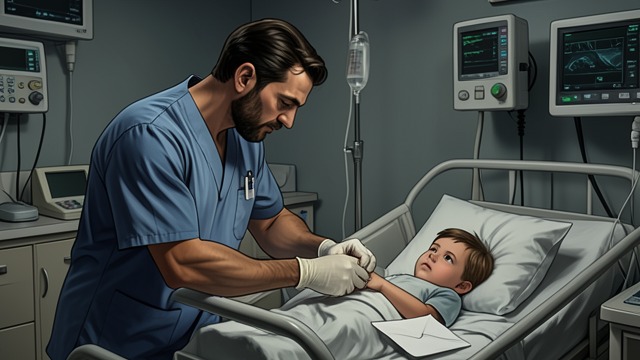
The Odds Improve
Medicine and survival
Kay reflects that a few decades earlier a baby born so early might not have survived. In this case, modern care has given the infant good prospects.
A human scale
Clinical progress is not an abstract statistic to Kay. It is the transformation of a child he recognizes, whose changing habits have become part of his own memory.
Going Home
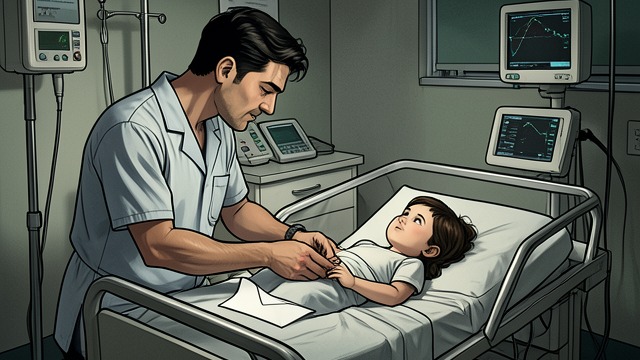
Going Home
A happy departure
Baby L is ready to leave the hospital. Kay is pleased for the child and family, but knows he will miss seeing his familiar little companion.
Goodbye made personal
He chooses a card, writes about the happy ending, and leaves his number for the mother. He knows this crosses professional rules, but feels the connection merits the risk.
A Photo by Text
A Photo by Text
Contact continues
The baby’s mother does text Kay a picture after discharge. The hospital relationship has briefly extended into a private exchange beyond the ward.
A rare exception
Kay’s choice shows how care can produce attachments that formal rules struggle to contain. He does not claim a continuing clinical role; the photograph simply preserves a connection to a family whose story moved him.
Late 2005
Late 2005 to January 2006
January 2006
27 January 2006
After 27 January 2006
