Adam Kay
This Is Going to HurtAdam Kay is the junior doctor whose diaries form the personal and professional history at the center of This is Going to Hurt. His decisive change comes after a catastrophic birth: the jokes that had helped him narrate the absurdities and pressures of hospital life stop, and he leaves medicine. The retrospective account follows both what he did for patients and what the work did to him, ending with a new career as a writer and a public commitment to defending doctors.
Identity and Retrospective Frame
Kay’s account is presented as an edited extract from his diaries, rewritten for ease of reading. The introductory framing looks back after his medical career has ended: he had left his junior doctor job in 2010, and a later letter confirmed that he would not work as a doctor again. Though he had not been in a hospital for a long time, the finality of that notice still made him sad. Clearing his spare room, he kept the diaries and found in them a record of long hours and the work’s extensive effect on his life. The retrospective voice therefore holds two perspectives together: the doctor who had simply carried on at the time, and the later writer who can recognize the cost.
Kay’s early diary episodes show how he uses humor to report situations that are frightening, awkward, or absurd. In one, a patient becomes critically unwell; Kay does not know what to do until his boss arrives and takes over, and the patient dies. Kay records the immediate practical aftermath, including changing out of his wet clothes, rather than offering a reflection on grief or competence. The plainness of that ending establishes a pattern: clinical work continues through decisions and tasks even when an episode ends in death.
Clinical Work and the Limits of Training
Kay’s work brings him into contact with patients whose situations are difficult to interpret and whose needs exceed a purely technical response. In 2006, he investigates an alarming change in a pregnant patient’s condition. The baby appears well and the patient is not in pain, but Kay cannot confidently explain what has happened. He calls another doctor for advice and arranges a scan. The eventual explanation is that the apparent warning sign came from beetroot the patient had eaten. The episode turns uncertainty into a comic reversal, while showing Kay seeking help rather than pretending to know more than he does.
A different kind of uncertainty arises when Kay encounters a patient he had seen in A&E the previous week. He learns that she has cancer and only a few months to live. He had suspected the possibility earlier but did not say the word, having been taught that a patient may remember that diagnosis to the exclusion of everything else. Kay’s account makes the consequence of that caution visible: the patient now faces the news and the future it has taken away. She grieves that she will miss her son’s graduation and her daughter’s wedding, and that she will not meet grandchildren. She also worries about her husband managing the boiler. They laugh together, but Kay cannot offer reassurance he does not believe. Instead, he talks through practical concerns as she shares them, recognizing that she may have found someone with whom to speak openly. On his way home, he phones his mother to tell her he loves her.
Kay later meets another gap in his training when a couple must face the birth of their baby after the baby’s heart has stopped. The couple are glad to see a familiar doctor who already knows what has happened, so they do not have to explain it again. Kay is unsure what to say: he has not been taught how to speak with parents who have lost a child, and he cannot know whether hopeful language or an expression of sympathy would help. He chooses to explain what will happen next and answer their questions. He returns to check on them about once an hour and stays beyond 8 p.m., until the birth has taken place. The scene sets practical presence against the absence of a ready script for bereavement.
Humor, Trauma, and Changed Practice
Humor is a defining feature of Kay’s diary voice before the catastrophic birth. Some episodes turn on the mismatch between clinical alarm and ordinary explanation; others draw comedy from the hospital’s material disorder, as when an emergency buzzer call brings dust and rubble because a midwife has pulled the cord hard enough to bring down much of the ceiling. His blunt, irreverent approach to routine questions in labour similarly makes the pressures of the work legible through comic compression. These jokes do not erase the serious situations around them. Rather, their contrast with death, fear, and uncertainty shows how humor can make a punishing day tellable.
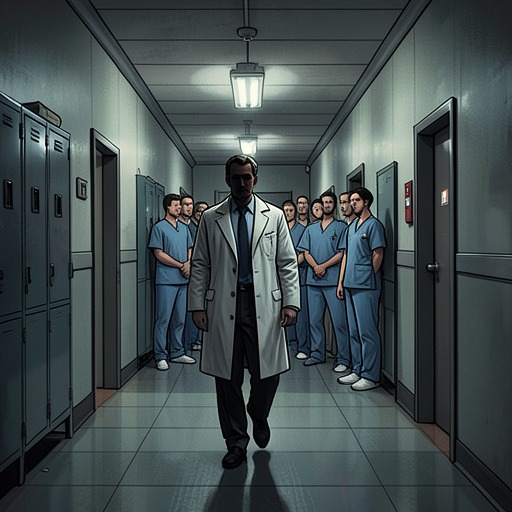
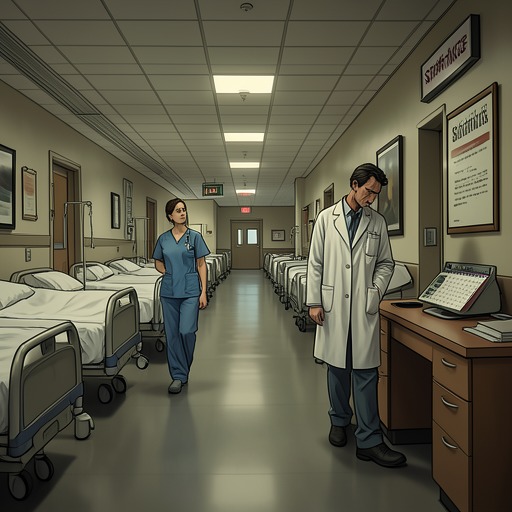
After the catastrophic birth, that mode breaks. The last diary entry is also the point after which the book has no more jokes. Kay is sent home for the rest of his shift, and colleagues tell him that he is not at fault and could not have done more. Yet the next day is still expected to begin as usual. In his account, the problem is not that colleagues are unkind; it is that bad events happen often, while the rota leaves little room for recovery or even a sick day. The professional routine absorbs the crisis without making space for its psychological aftermath.
Kay returns to work, but says he is a different doctor. He becomes unwilling to risk another terrible outcome: even a small drop in a baby’s heart rate can lead him to choose a caesarean section. He recognizes that some women will undergo operations they do not need, but judges that risk against the possibility of everyone leaving the room alive. He now understands why senior doctors fear taking risks: they too have lived through events that leave them imagining what might have happened. This shift is not presented as a solution. Kay says he is not truly coping, but merely carrying on; for the next six months he does not laugh, and his smiles are not genuine.
Leaving Medicine and Continuing to Speak
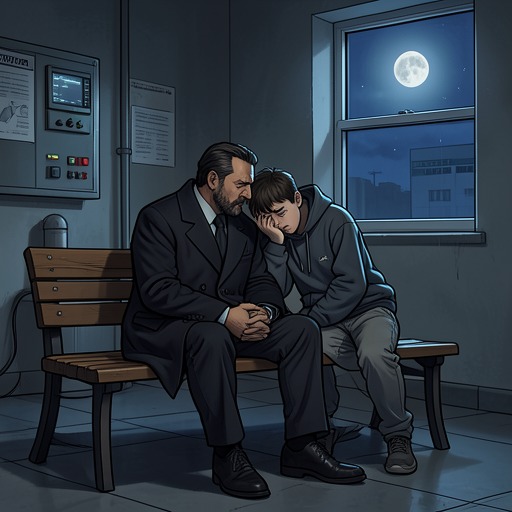
Kay believes he should have been able to talk to someone and that the hospital should have ensured support was available. Instead, he describes a culture of silence that withholds help from those who need it. He also understands that further terrible events cannot be prevented entirely. A senior doctor’s stark warning to students—that their careers may leave them responsible for remembering dead or brain-damaged children—makes the burden of clinical work sound like an accepted occupational condition. Kay wonders whether hearing such a warning earlier might have made him reconsider becoming a doctor.
He asks to work part-time and is refused unless he is pregnant. He considers retraining as a GP but is unsure whether he wants that work, and starting the training again would be required. A few months later, he hangs up his white coat and leaves medicine. He does not tell people the reason. At first, the experience is too difficult to discuss; later, silence becomes a habit, and he changes the subject by telling funny stories about patients. Some of his closest friends first learn the sad story through the book. His parents react to his departure as if he has announced something disastrous, underscoring the distance between the decision they witness and the reasons he has kept private.
Kay becomes a writer. He contrasts a bad day involving a crashed laptop or a poor review with the medical bad days he does not miss, while acknowledging that he misses colleagues, helping people, and the feeling of driving home knowing he has made a difference. Nor does leaving end every part of his professional identity: he still runs to help when someone falls from a bike and replies to pregnant friends seeking advice. His attachment to care survives the job, even as he cannot return to it.
In 2016, Kay speaks out when the government pushes doctors to work harder for less money and portrays them as greedy. He believes this misrepresents doctors’ concern for patients. Although the junior doctors lose their battle, the dispute convinces him that people working for the National Health Service must make the realities of their work audible to the public. He says he would not wish the job on anyone and respects those on the front line, while admitting that it became too much for him. Six years after quitting, he observes that changing careers has become far more common among doctors than it was when he left, and that colleagues continue to remember painful events in minute detail, their voices shaking as they recount them. His trajectory thus ends not in a recovery that restores his former career, but in a changed form of witness: the doctor who could no longer continue becomes a writer determined to describe both the work’s value and its cost.