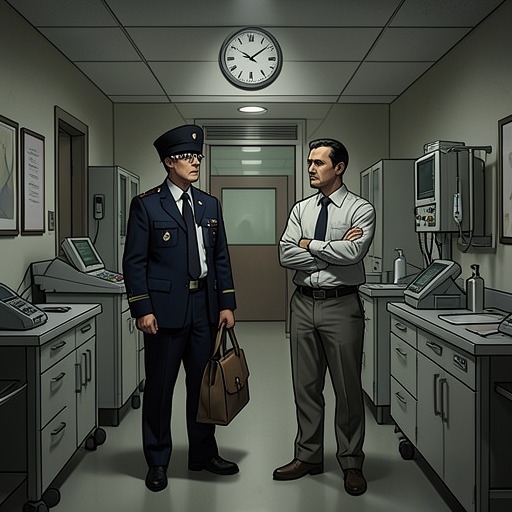
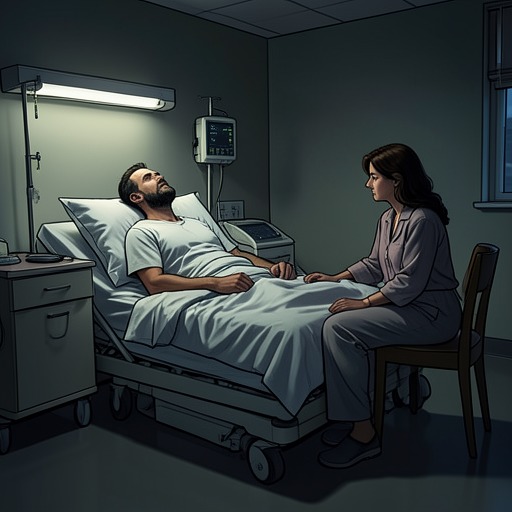
Adam Kay and Ron’s friendship
This Is Going to HurtAdam Kay and Ron’s friendship is a lasting bond strained by the demands of Adam’s medical work: repeated absences turn affection into a practical question of whether he can show up when it matters. Ron is not merely an old friend but someone Adam has known since school, whose family has been part of his life since childhood. Their connection survives years of missed plans and unequal expectations, but by 2010 Ron openly challenges Adam’s account of why he is absent. Adam’s love for him is clear; so is the cost of a job that keeps intruding on the friendship.
A friendship repeatedly displaced by work
The strain is already visible in July 2005, when Adam has to cancel Ron’s stag do at the last minute. He is sad for Ron and for himself: the cancellation costs him £400 and leaves him with a T-shirt bearing Ron’s face that he will never wear. Adam has tried to exchange shifts, but another doctor lets him down, supposedly because of a problem with one of their children. Adam even doubts whether the colleague has a child. The result is that he spends the stag-do weekend on the ward, sober and unable to join the celebration.
Adam recognizes that his friends struggle to understand why plans made well in advance can still be lost to the hospital rota. For him, the problem is not a lack of desire to attend: the people who make the rota do not take his social life into account. He sends Ron a bottle of whisky he cannot afford as an apology. They arrange to meet in two weeks, but even that reunion must wait until Adam has completed a run of night shifts and taken extra hours to cover the cost of the stag do. The gesture expresses care, while the circumstances surrounding it show how little control Adam has over the time in which that care can be acted upon.
Unequal conditions and shared milestones
Their contrasting experiences of professional examinations make the pressures on Adam more visible. In April 2007, after Adam passes the next stage of his medical training, he celebrates with Ron at a pub but drinks only orange juice because he must go straight on to a night shift. Ron has passed his own exams the previous week, giving them a reason to compare how each prepared. Ron’s bank reduced his working hours so he could study, granted him a full month off before the exam, and paid his fees. Adam, by contrast, tried to study after work with tired eyes, was refused a week off because of a gap in the rota, and paid around £300 for books, £500 for a course, and £400 for the exam.
Passing also means different things to them. Ron’s result brings a pay rise; Adam’s merely qualifies him to sit the next set of exams. Ron turns the imbalance into a joke about Adam spending more than a thousand pounds on a pencil, the pencil Adam had stolen to fill in the paper. The humour belongs to their friendship, but the comparison is pointed: Ron’s employer makes room for study and rewards success, while Adam’s training demands money, exhaustion, and further exams without an immediate increase in pay.
The separation imposed by medical work is not unique to Adam and Ron. Pete and Mary, both doctors, began their jobs in different parts of the country and spent five years working 120 miles apart; Pete moved house to be nearer his job and could return home only when the rota allowed, which it mostly did not. Their experience supplies a broader context for the friendship’s recurring problem. Work does not only consume individual evenings: distance and inflexible schedules can shape whether people are able to share ordinary life at all.
Intimacy, advice, and a breach of professional boundaries
In November 2008, Ron calls Adam for advice about his father, who has lost a great deal of weight and is in terrible pain. Adam understands the symptoms as alarming. In an exam, he says, he would identify a form of cancer with little chance of cure; speaking to a patient, he would stress that the condition was serious and that further tests were needed quickly. With Ron, however, professional clarity gives way to the wish that the news might be better. Adam reassures him that his father’s GP is doing the right things, which he believes, but also tells him that the illness could still be nothing, which he knows is unlikely. He wants everything to be all right and tells his friend that it will be.
The episode exposes the difficulty of separating medical judgment from personal attachment. Adam knows doctors are warned not to give medical advice to friends and family, yet he has long ignored that rule and acted as a private helpline. He feels that his work makes him a useless friend in many respects and that offering medical help is one way to remain connected, even enough to stay on friends’ Christmas-card lists. But this is precisely why the boundary exists: friendship makes it harder to give honest advice, and Adam’s attempt to comfort Ron leads him to offer false hope. Ron’s closeness to Adam includes access to his medical knowledge, but that access also places both men in a situation where care and professional responsibility pull in different directions.
The confrontation and the limits of apology
By July 2010, the missed occasions have accumulated into a direct challenge. Ron tries to end the friendship and asks why he should keep making an effort when, in his view, Adam uses work as an excuse. He lists the stag do and the first half of his wedding, his father’s funeral, and his daughter’s christening. Ron accepts that Adam’s job is busy but argues that a shift should be exchangeable for something important. His complaint is not about one unfortunate clash; it is about a repeated pattern in which significant events in Ron’s life pass without Adam beside him.
Adam puts a hand over his heart and swears that he loves Ron. He acknowledges that he has been a poor friend, while also saying that he has seen more of Ron than almost anyone else he knows. He insists that the job is very busy and never stops. These claims do not cancel each other out: Adam’s attachment is genuine, but Ron has grounds to judge the friendship by the occasions when Adam is absent. Most starkly, Adam admits that he lied about the christening. The admission sharpens the conflict beyond scheduling. Work explains many absences, but it does not explain that lie, and Adam does not try to make it disappear inside his general defense of the job.
What the friendship reveals
The relationship is marked by repeated efforts to repair what work disrupts: Adam sends whisky after missing the stag do, arranges a later meeting, offers medical help, and declares his love when Ron threatens to leave. Yet each gesture meets a limit. A gift cannot restore the lost celebration; a private medical helpline cannot make a difficult prognosis easier to tell; and an assurance of love cannot answer Ron’s complaint that Adam has missed several defining family occasions.
The tension is not simply between a devoted friend and an uncaring one. Adam’s account presents sincere attachment alongside choices and failures that hurt Ron, including reassurance Adam knows is untrue and a lie about the christening. Ron, in turn, names the practical measure of friendship that Adam’s explanations cannot settle: whether he will make time for the people he loves. Their bond therefore gives personal form to the conflict between hospital work and life outside it. Adam’s job repeatedly takes precedence in practice, even as he insists that Ron remains one of his closest friends; by the time Ron challenges him, love is present, but reliability has become the unresolved test.