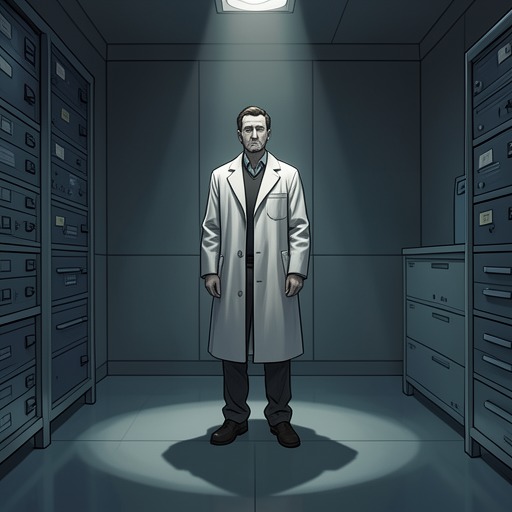
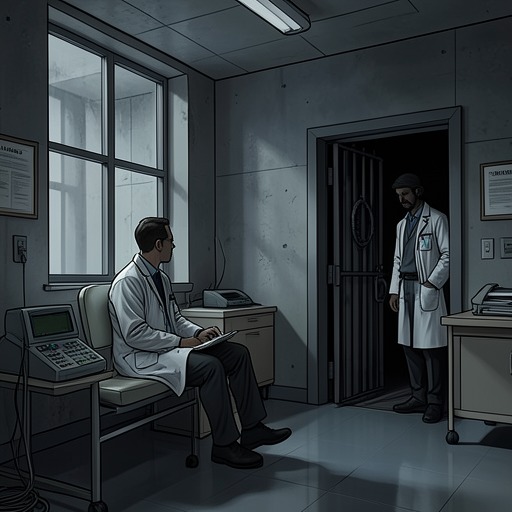
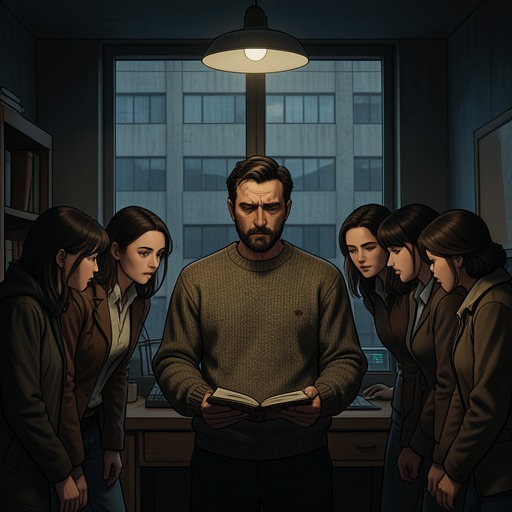
Kai's psychological trauma and breakdown after the obstetric tragedy
This Is Going to HurtThe psychological trauma that followed the obstetric catastrophe of 5 December 2010 marks a decisive break in Adam Kay’s life as a doctor: although colleagues told him he had done nothing wrong, he came to experience the outcome as a personal failure, changed how he practised, and eventually left medicine. The account moves from an emergency in which he was the most senior doctor present to a prolonged aftermath defined by self-questioning, emotional silence, and the loss of the comic voice that had carried the book.
The catastrophe and its immediate aftermath
On Sunday afternoon, Kay was working on the labour ward with an excellent junior doctor when they assessed a patient whose baby was in distress. The couple were having their first child and had married the previous year. They understood the recommendation for a caesarean section, and the junior doctor asked to perform it with Kay assisting. When the operation reached the womb, an unexpectedly severe haemorrhage began. Kay asked the junior doctor to deliver the baby, but she could not proceed because something was obstructing the way; Kay took over and recognized that something was seriously wrong. In his later account, he connects the crisis to a condition that should have been identified during the pregnancy scans, and says the patient should not have been allowed to go into labour.
The baby was delivered but could not be resuscitated. Meanwhile, the patient’s blood loss continued despite the measures Kay tried. As it reached five litres, he held her womb with both hands in an attempt to control the bleeding. His boss arrived, but the efforts still did not stop it. When the possibility of organ damage arose, the team waited for the most senior doctor, who had to remove the patient’s womb. By then, she had lost twelve litres of blood. The patient was transferred to Intensive Care, and Kay was told to expect the worst. With the husband sent out during the emergency and his boss speaking to him afterward, Kay tried to write his clinical notes but instead cried for an hour.
The hospital’s immediate response was supportive: colleagues said the right things, told Kay that the outcome was not his fault and that he could not have done more, and sent him home for the remainder of his shift. Yet reassurance did not settle his own judgment of what had happened. The crucial wound in his account is not a claim that he broke a rule; it is the distance between being told that his actions were appropriate and feeling, as the senior person everyone had depended on, that he had failed.
Responsibility, memory, and changed practice
Kay distinguishes this experience from earlier encounters with death. He had seen babies die and patients die before, but this was the first time he had been the most senior person on the ward during a catastrophe. Others had looked to him, and he could not stop the outcome. He acknowledges that he had not broken any rules and that other doctors would have taken the same actions with the same result. Nevertheless, he repeatedly turned toward the counterfactual possibility that events might have gone differently and that he might have prevented the tragedy. The assurance that there was no professional error and the persistent feeling of personal responsibility coexist rather than cancel each other out.
The next day, Kay returned to work, describing himself as outwardly the same person but a different doctor. He resolved not to risk another bad outcome: even a slight fall in a baby’s heart rate would lead him to perform a caesarean section. He knew that this approach would mean operations for some women who did not really need them, but judged that risk preferable if everyone left the room alive. The change was therefore not simply an internal feeling. Fear of repeating the catastrophe became a practical rule for making decisions, with consequences for future patients.
This shift also altered Kay’s understanding of senior colleagues. Before the catastrophe, he had not understood why his bosses were afraid to take risks. Afterwards, he could see that they too had lived through events that left them imagining what might have happened otherwise. Their caution, once puzzling to him, became legible as a response to remembered harm. The episode thus changes not only his own conduct but his interpretation of the professional culture around him: risk aversion appears as something learned through exposure to outcomes that cannot be undone.
Silence, exhaustion, and the end of the jokes
The return to work did not amount to recovery. Kay says that for the next six months he did not laugh, and that even his smiles were not real. He describes himself as broken by the experience, while also recognizing that he was not truly dealing with it; he was getting on with work. He believed he should have been able to speak to someone and that the hospital should have ensured he received help. Instead, he identifies a code of silence that prevents support from reaching those who need it. The contrast is stark: colleagues could offer kindness and reassurance, yet ordinary professional expectations still required him to return the next day and carry on.
That expectation sits within a wider account of work in which bad events occur too often for staff to mourn each one openly or take extended time away. The rota did not have room for a sick day, and Kay observes that no one could wear black every time something went wrong or take a month to recover. He does not describe colleagues as unkind; the injury lies in a working structure that treats continuation as necessary even when a doctor remains deeply affected. The catastrophe exposes the limits of goodwill when there is no dependable space for recovery or conversation.
The book’s form records that limit. Kay identifies the December entry as the last diary entry he wrote and the reason there are no more jokes in the book. Earlier clinical episodes had been narrated through comic reversals: a frightening labour-ward alarm turned out to have been pulled so hard that it brought down much of the ceiling, and a patient’s apparent emergency was eventually explained by the beetroot she had eaten. Such jokes made room for absurdity amid demanding work. After the catastrophe, that comic mode stops. The silence is not merely a subject he describes; it is also legible in the abrupt end of the diary’s joking voice.
Departure and the continuing cost
Kay says that another terrible event would inevitably happen at some point and recalls a senior doctor warning students that doctors would accumulate cases of dead or brain-damaged children over a career. He wonders whether hearing such a warning earlier might have made him reconsider becoming a doctor. After the catastrophe, he asked to work part-time but was refused unless he was pregnant. He considered retraining as a general practitioner, but that would mean starting training again, and he was unsure that he wanted that path. A few months later, he hung up his white coat and left medicine.
He did not tell anyone why he was leaving. At first he could not talk about it; later, he simply stopped doing so, changing the subject and telling funny stories about patients instead. Some close friends, he notes, would encounter the story for the first time in the book. This delayed disclosure gives the memoir a second ending: the event that ended his diary also remained concealed from people close to him until he chose to write about it.
Kay later worked as a writer. He does not miss the doctor’s version of a bad day, though he does miss the good days: the colleagues, the work of helping people, and the feeling on the drive home that he had made a difference to someone’s life. He also says that he never entirely stops being a doctor, still responding when someone falls from a bike or when pregnant friends ask for advice. The ending therefore holds departure and attachment together. The trauma ends his clinical career, but not his sense of responsibility or his memory of the care that made the work meaningful.