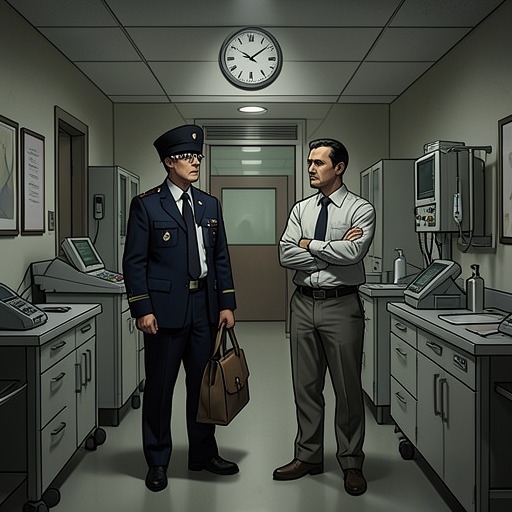
Ron
This Is Going to HurtRon is Adam Kay’s best friend from school, but their closeness does not shield their friendship from the costs of Adam’s medical career. Across years of missed celebrations and family milestones, Ron becomes both a constant in Adam’s life and the person most willing to confront how often work has taken precedence over being there for him.
Identity and Longstanding Friendship
Ron and Adam have known each other since school. By 2005, Adam describes Ron as his best mate, and later calls him one of his best friends. The friendship also reaches beyond the two men: Adam has known Ron’s father since Adam was eleven. That long familiarity helps explain why Ron turns to Adam when his father becomes seriously ill, and why the losses and omissions between them carry more weight than a simple tally of social engagements.
Their lives nevertheless take different paths. In 2010, Ron tells Adam that the divergence has become plain since their school days. The book does not present their friendship as a single dramatic rupture; instead, it shows pressure accumulating through recurring absences, each with a practical explanation but a personal consequence.
Work, Exams, and Unequal Conditions
In July 2005, Adam has to cancel at the last minute on Ron’s stag do because he is scheduled to work. The cancellation costs him £400 and leaves him with a T-shirt printed with Ron’s face that he will never wear. Adam has tried to exchange shifts, but the doctor who was meant to cover him has let him down, citing an issue with one of their children; Adam privately doubts whether that child exists. He spends the celebration sober on the ward, while his friends struggle to understand why he so often withdraws from plans made in advance. He attributes the pattern to hospital rotas that take no account of his social life.
The contrast between the friends’ working arrangements appears again in April 2007, when they meet at a pub to celebrate passing exams. Adam has passed the next stage of his medical training, but drinks only orange juice because he must leave for a night shift. Ron passed his own exams the previous week. His bank reduced his hours so he could study, and he had a full month off before the exam; Adam could study only after work and was denied the week off he requested because of a rota gap. Ron’s employer paid his exam fees, whereas Adam spent about £300 on books, £500 on a course and £400 on the exam. Adam jokes that the pencil he used to fill in the paper was his only gain from the costs.
Passing also has different consequences for the two men. Ron’s result brings a pay rise. Adam’s permits him only to enter the next set of exams. The celebration therefore contains a quiet comparison: both friends have passed, but Ron’s achievement is rewarded immediately, while Adam’s opens another stage of demanding training. Their different circumstances sharpen the sense that the job governs not only Adam’s availability but also his time and resources.
Trust and Family Illness
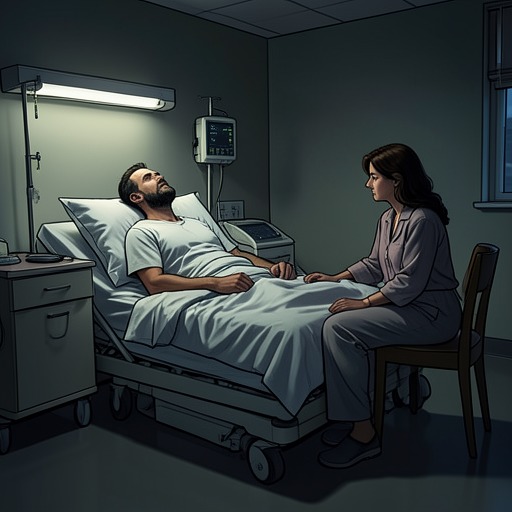
In November 2008, Ron asks Adam for advice about his father, who has lost a lot of weight and is in terrible pain. Adam recognizes that, in an exam, he would identify a form of cancer with little chance of a cure; speaking to a patient, he would describe the situation as serious and stress the need for more tests. Speaking instead to his closest friend, he says that Ron’s father’s GP is doing the right things and that the illness might still be nothing. He knows the latter reassurance is not true, but wants the outcome to be all right.
The exchange exposes a painful conflict between professional honesty and personal attachment. Adam’s usual rule is that patients should not be given false hope, yet with Ron he offers the very reassurance he would not give a patient. His knowledge does not make him able to protect his friend from fear; it leaves him knowing how bad the signs may be while trying to say something kinder. The later reference to missing Ron’s father’s funeral establishes that the illness ended in his death, though the account gives no further medical or family details.
Confrontation and Strain
By July 2010, the absences have become a direct grievance. Ron tries to end the friendship and says he does not know why he bothers maintaining it. He points to Adam’s work-related absences from his stag do, the first half of his wedding, his father’s funeral and his daughter’s christening. Ron understands that Adam’s job is busy, but challenges the idea that a shift cannot be exchanged for an occasion that matters. The list turns earlier incidents into a cumulative pattern: what Adam experiences as an unforgiving rota, Ron experiences as repeated failure to show up.
Adam puts his hand on his heart and swears that he loves Ron and would never lie to him. He admits to being a rubbish friend, while also insisting that he has seen Ron more than almost anyone else he knows. The insistence does not erase the missed occasions; it sets the ordinary closeness they have retained against the conspicuous moments when Adam was absent. He says the job is simply very busy and never stops, presenting the same pressure that had shaped the earlier entries as the continuing explanation for his conduct.
That defence has a limit. Adam admits that he did lie about the christening, undercutting his assurance that he would never lie to Ron. The admission leaves the friendship’s tension unresolved: his affection is genuine, but so is the hurt attached to his absences, and his account acknowledges that work does not explain every part of what went wrong. Ron’s importance in the narrative lies in making that cost visible not as an abstract loss of social life but as damage to a long friendship, tested at events that cannot simply be repeated.