Simon
This Is Going to HurtSimon’s story in Adam Kay’s diaries is one of repeated distress and imperfect but sustained connection. First encountered through a late-night Facebook post announcing a farewell, he becomes someone Adam Kay supports beyond the boundaries of clinical work: not through specialist expertise, which Adam Kay openly lacks, but by answering calls, listening, and continuing to offer contact. Simon’s later suicide attempt exposes the limits and emotional cost of that role; his eventual wedding invitation, after a long silence, reveals that their connection has endured in a different form.
Identity and First Contact
Simon is the younger brother of one of Adam Kay’s school friends. The diary gives little biographical detail beyond that connection, but his entrance is immediate and alarming. During a quiet night shift on Monday, 3 April 2006, Adam Kay is browsing Facebook at about two in the morning when Simon’s post appears: a brief goodbye that suggests he may be about to harm himself.
Adam Kay does not know Simon well. He nevertheless recognizes the possibility that, at that hour, he may be the only person seeing the post. He sends Simon a private message asking whether he is all right, tells him he is awake, identifies himself as a doctor, and gives him his mobile number. The exchange turns an online signal into direct contact, and a distant acquaintance into the person Simon calls.
Simon calls drunk and crying. He and his girlfriend have just separated. Adam Kay later describes himself as having almost no relevant training, comparing his competence in this area to his ability to lay bathroom tiles. The comparison makes the limits of his preparation explicit; what allows the conversation to continue is that Simon appears to trust him, and Adam Kay accepts that trust as enough to begin listening.
An Informal Lifeline
The first call lasts around two hours. By the end, Simon plans to take a taxi to his mother’s house and see his GP the following morning. Adam Kay hangs up tired but buoyed by the sense that he has helped, even wondering whether he has made more difference to Simon that night than to any of his patients. The episode establishes a pattern of care that is both personal and improvised: Simon is not being treated in a formal consultation, but the encounter still carries the urgency and emotional aftermath of a medical emergency.
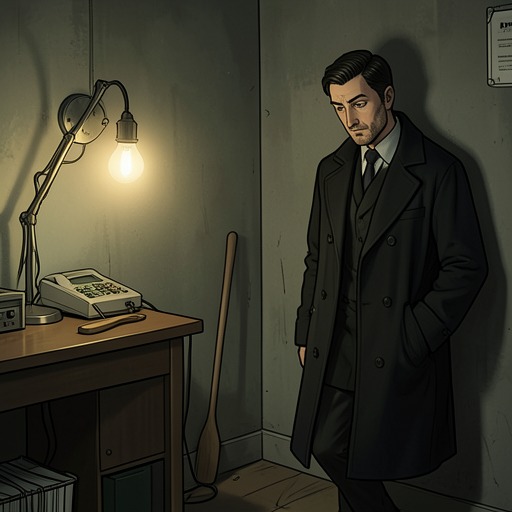
By Saturday, 7 October 2006, Adam Kay has spent six months acting as Simon’s mental-health helpline. He has told Simon that he can call whenever worry begins, and Simon does call. Adam Kay also repeatedly urges him to keep seeing his GP, but observes that Simon does not seem to take that part of the advice on board. The distinction matters: Simon accepts the immediate availability of a trusted listener, while the diary does not suggest that this support replaces the professional help Adam Kay recommends.
The arrangement is stressful for Adam Kay. The uncertainty of waiting for the next call with bad news feels too much like work, and he worries that Simon could receive better help from someone who did not have to search online for what to say to a person considering suicide. Yet he judges that talking to him is better than nothing and is glad Simon is still alive. A missed call can trigger panic: Adam Kay fears that if he calls back too late, Simon may have died, and wonders whether that would make him responsible.
Their conversations often return to the same ground. On one evening, Adam Kay listens and tells Simon that the way he feels will pass; he recognizes that they seem to have the same conversation each time. Repetition does not make the contact meaningless. Adam Kay comes to understand that Simon may chiefly need to know that someone cares, and sees that reassurance as part of what being a doctor can mean, even when no cure or resolution is available.
A Further Crisis
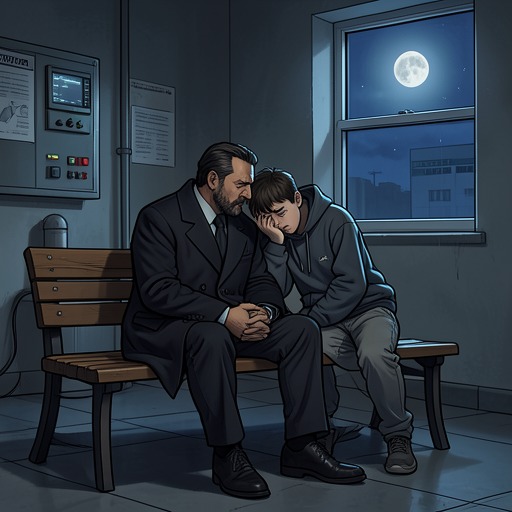
On Sunday, 8 February 2009, Simon calls with news of a more acute crisis. The previous night, after a fight with his new girlfriend, he cut his wrists and was taken to hospital. By the time he speaks to Adam Kay, he is back at home and says he is feeling all right. The account confirms both the seriousness of the episode and its immediate aftermath, without suggesting that the underlying difficulties have been settled.
Simon asks whether Adam Kay is angry with him. Adam Kay says he is not, but admits to feeling angry that Simon had not called before hurting himself, because he wanted the chance to calm him down. That anger is followed by guilt: he feels he has not done enough or has failed to stop the attempt, and then feels bad for resenting Simon. The exchange shows how their connection has become emotionally consequential for both of them, while also exposing the burden Adam Kay places on himself to intervene in a crisis he cannot control.
They talk for about an hour. Adam Kay again tells Simon he can call at any time, day or night, and recognizes that they have had versions of this conversation many times over several years. He is saddened that Simon’s situation seems no better than when the first Facebook post appeared. He then revises that measure of progress: unlike a broken leg, Simon’s feelings cannot simply be fixed, and learning to manage them may matter even when distress recurs. Adam Kay allows himself to be pleased that Simon has gone this long without something worse happening. The passage preserves both the persistence of the crisis and the possibility of gradual, less visible change.
Silence and Renewed Contact
After the February 2009 call, the diary records a striking gap. On Monday, 11 October 2010, Simon texts Adam Kay for the first time in eighteen months. The silence makes the appearance of his name worrying at first, but the message carries unexpectedly happy news: Simon wants Adam Kay’s address so that he can invite him to his wedding. Adam Kay is touched that Simon thought of him and looks forward to accepting, while already anticipating that work may force him to cancel at the last minute.
The invitation does not establish how Simon’s mental health has changed, nor does the diary say whether Adam Kay attends the wedding. Its significance lies in the change of register: after years in which contact has been organized around crisis, Simon reaches out to include Adam Kay in a major personal occasion. The eighteen-month interval prevents the relationship from being presented as continuous or easily resolved, but the invitation shows that it has not reduced Simon, in Adam Kay’s account, to the person who once posted a desperate goodbye.
Simon’s episodes also mark the limits of what a caring individual can provide. Adam Kay can respond quickly, stay on the phone, encourage contact with a GP, and remain available; he cannot guarantee that Simon will seek further help or prevent every recurrence. The narrative treats listening as meaningful without making it a substitute for treatment or a promise of rescue. Simon’s story therefore gives concrete form to a central tension in Adam Kay’s account of care: the impulse to remain available can sustain a relationship, while the responsibility one feels for another person’s survival can exceed what any single listener is able to control.