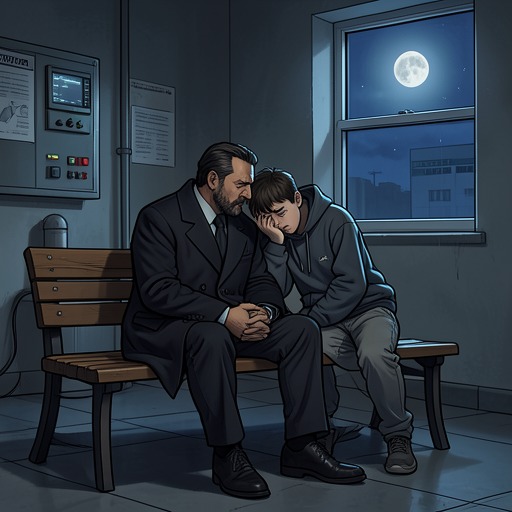
Simon’s suicide attempt
This Is Going to HurtSimon’s suicide attempt is recounted in Adam Kay’s diary as both an acute crisis and part of a longer pattern of distress. Simon survived, received hospital care, and was back home when he called Kay; the aftermath turns on the difficult work of staying close to someone whose feelings cannot simply be cured.
The Attempt and Its Immediate Aftermath
On Sunday, 8 February 2009, Simon told Kay that he had cut his wrists the previous night after a fight with his new girlfriend. He had ended up in hospital, but was home again by the time of the call and said he was feeling OK. The diary gives no further account of the attempt or its medical treatment; its focus is the conversation that follows and the emotional burden it leaves with both friends.
Simon asked whether Kay was angry with him. Kay reassured him that he was not, while privately recognizing that he was angry Simon had not called first, when Kay might have been able to calm him down. That anger was entangled with helplessness: Kay felt he had not done enough and had not been able to stop Simon, then felt guilty for resenting him. The episode is presented without reducing their response to a single emotion; care and frustration coexist.
A Recurring Crisis and a Friend’s Offer of Help
Kay and Simon spoke for about an hour. Kay again told him he could call at any time, day or night. The word again matters: they had had the same conversation many times over the preceding years, and Kay remembered Simon’s first cry for help on Facebook. The attempt therefore belongs to an ongoing history of concern, not an isolated disclosure.
That recurrence left Kay sad that things seemed no better, but he also questioned whether improvement should be measured as if Simon’s feelings were a broken leg. They were not so readily repaired. Simon, Kay reflected, was learning how best to manage them, and Kay could take some comfort in the length of time that had passed without something worse happening. The entry holds together the limits of a friend’s ability to intervene and the value of remaining available: Kay could not promise a cure, but he could keep offering a call, day or night.
Narrative Significance
The diary’s account makes support an ongoing practice rather than a decisive rescue. Simon’s question about anger brings Kay’s conflicting feelings into view, while the repeated offer of help shows a relationship sustained through recurring crises. Its measured ending does not claim that Simon is well or that the danger has passed; instead, it shifts the measure of hope from a cure to his growing ability to manage his feelings and the fact that a worse outcome has not occurred.