
The Flock and the Cost of Leaving
Three Bags FullThe flock’s fear of separation is tested by Melmoth’s return, Othello’s past, and the future journey to Europe.
increasing Bearing strength in each event
 decreasing
Bearing strength in each eventdecreasingA Rule Against Departure
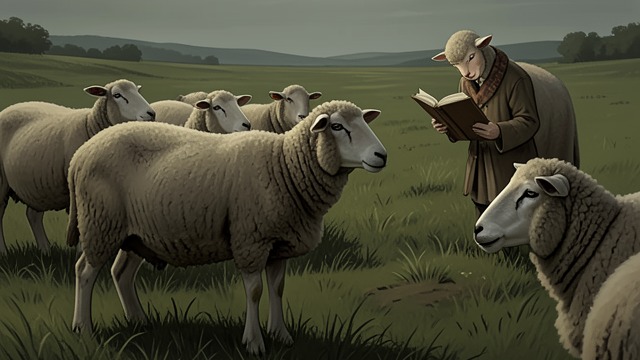
A Rule Against Departure
A rule made from loss
Sir Ritchfield tells the sheep that no sheep may leave the flock, connecting Melmoth’s disappearance with death and danger. The rule helps protect the group from frightening uncertainty.
Belonging as safety
The flock treats staying together as a natural law, not simply a choice. That belief shapes how they interpret every unexplained absence.
A Sheep Alone in the World
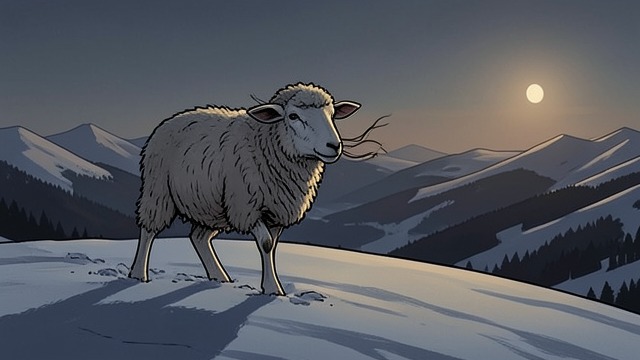
A Sheep Alone in the World
Survival outside the flock
Melmoth recounts traveling through cold hills and unfamiliar places without the protection of his companions. His experience proves that a sheep can survive alone, though survival carries fear and hardship.
Independence has a cost
His story challenges the flock’s belief that leaving is impossible, but does not make solitude attractive. The freedom Melmoth gains comes with a lasting distance from home.
The Rule Changes
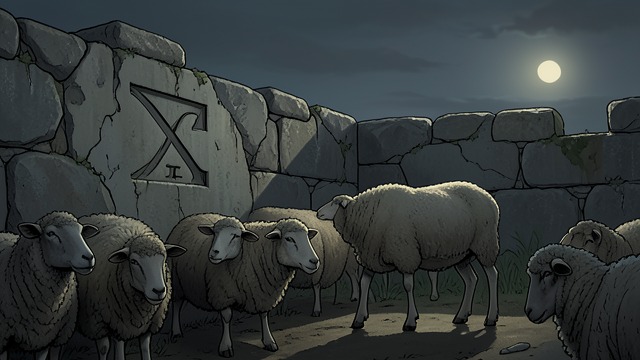
The Rule Changes
A return revises tradition
Melmoth’s return proves that departure need not end in death. Sir Ritchfield changes his formulation: a sheep may leave if that sheep comes back.
Belonging becomes more flexible
The flock preserves its value of togetherness while acknowledging a place for individual journeys. The rule now includes return rather than forbidding movement outright.
Europe as a Shared Risk
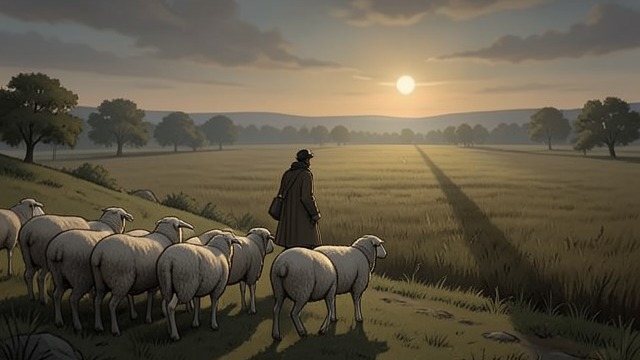
Europe as a Shared Risk
A promised pasture
The flock imagines Europe as a vast meadow of apples and good grazing. Their enthusiasm is challenged by Othello and Ritchfield, who remind them that no place is free of danger.
Leaving together
Unlike Melmoth’s solitary escape, the planned journey is collective and supported by Rebecca. The flock can leave its familiar pasture without giving up its bonds.
Melmoth’s Final Road
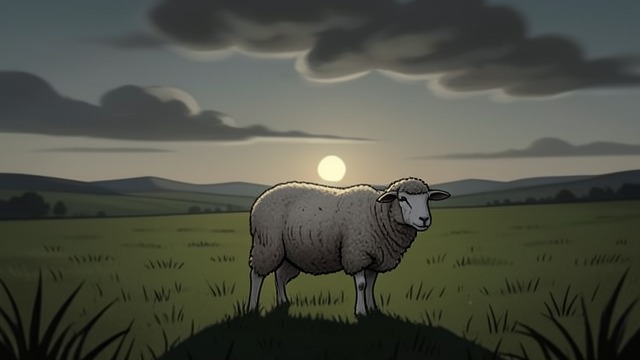
Melmoth’s Final Road
A departure no one can stop
Melmoth vanishes through the hidden passage beneath the pine tree. The flock interprets the moving cloud as his transformation, a story that makes his absence bearable.
Separation and belonging
Othello knows the practical truth but keeps silent. Melmoth’s departure confirms that belonging can endure in memory even when a sheep chooses a road away.
Before Melmoth returns
During Melmoth’s account of his wandering
After Sir Ritchfield and Melmoth reunite
After Rebecca is chosen as shepherdess
On the last evening before the journey
