
The Sheep’s Encounter with Mortality
Three Bags FullThe flock tries to understand death through bodies, ghosts, memories, and stories, while repeatedly meeting the limits of its own explanations.
increasing Bearing strength in each event
 decreasing
Bearing strength in each eventdecreasingA Body That Does Not Move
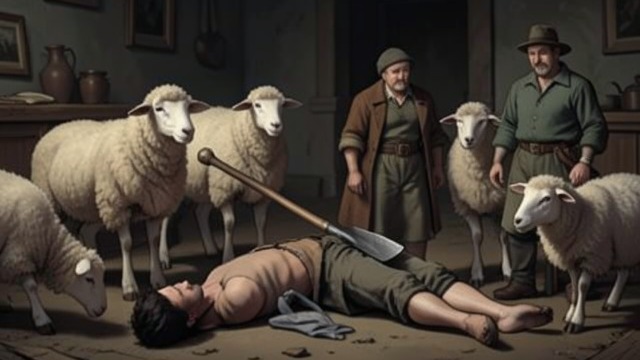
A Body That Does Not Move
The first encounter
The sheep find George lying in the grass with a spade through him. The physical fact of death is visible, but its cause and meaning remain unclear.
Familiarity fails
George had cared for the flock, yet he cannot explain what has happened. The sheep must interpret death without the voice they usually depend on.
Souls and Noses
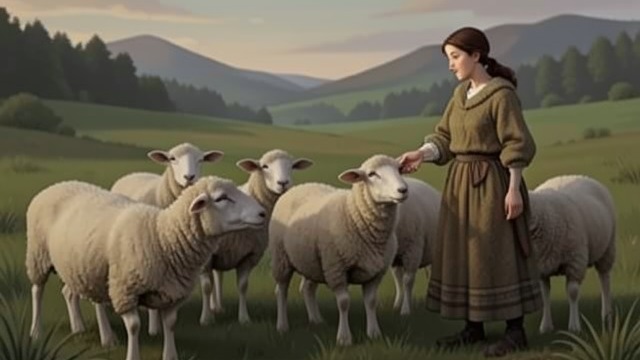
Souls and Noses
A sheep’s theory
Maude argues that a soul belongs in the sense of smell and wonders whether humans have souls despite their poor noses. The flock measures an unseen question using its most familiar sense.
Difference without certainty
The sheep cannot verify their theory, but the discussion shows how they reason from bodily experience. Their uncertainty is playful until death makes it urgent.
The Wolf’s Apparition
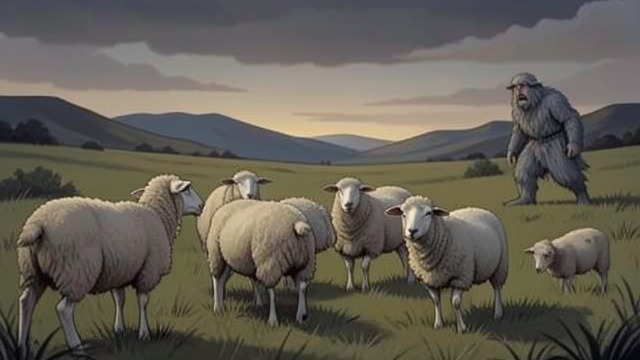
The Wolf’s Apparition
A frightened witness
A lamb says he saw a shaggy, gray figure near the spade before George’s body was discovered. The flock imagines a wolf’s ghost and fears a supernatural presence in the meadow.
A living explanation, perhaps
Melmoth later appears to match the lamb’s description, but he does not insist that the lamb was wrong. The story leaves room for what the sheep cannot see or verify.
The Sea and the Departed
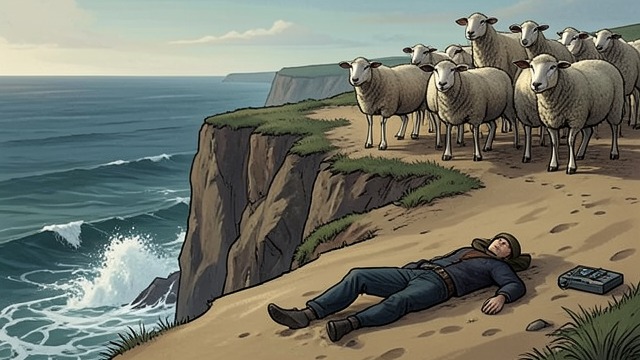
The Sea and the Departed
A disappearance below
The flock watches Ham lying far below the cliffs and wonders whether the sea will take him away. Their stories suggest that what disappears into the sea will not return.
Mortality made uncertain
Ham survives, contradicting the flock’s expectations. The episode teaches them that a body’s disappearance does not always have the meaning their stories predict.
A Human Death Explained
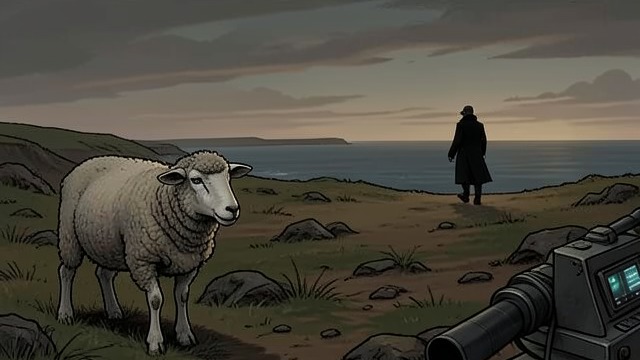
A Human Death Explained
A word the flock lacks
Fosco tells the sheep that George committed suicide. The explanation identifies his choice but cannot convey the inner despair that led to it.
A boundary of understanding
Zora recognizes that the “wolf” may be inside a human, like an abyss within. The flock accepts that some forms of suffering cannot be made sheep-like.
At the opening of the story
During the flock’s first debate about ghosts
During the lamb’s first account of a ghost
After Ham’s fall from the cliffs
After Fosco names George’s death
