Gabriel
Three Bags FullGabriel is a shepherd who first appears to George Glenn’s flock as an almost irresistible answer to the loss of their human caretaker. His woolly clothing, quiet handling of animals, and celebrated sheepdogs seem to promise a deep understanding of sheep. That promise darkens as the flock uncovers his concealment, his pursuit of a secret connected to George’s caravan, and his willingness to cut grass with George’s scythe. Gabriel’s decisive defeat is not a physical one: when the sheep must choose who will represent them, they leave his side and gather around Rebecca.
Identity and First Impressions
Gabriel enters the flock’s world in the company of a butcher and a thin man the sheep do not recognize. The butcher’s smell makes the sheep recoil, but Gabriel inspires the opposite response. A small man with a shaggy beard and slouch hat, he hurries to keep pace with the butcher and draws the flock’s affection without their knowing why. His dogs perform astonishing tricks, and he wins the sheepdog trials in Gorey every year. People say he can talk to animals, though the sheep do not understand his Gaelic. What they do respond to is his presence: they feel flattered and seduced into trotting trustfully toward him as he passes their meadow.
The flock’s expectations rest on physical details as much as reputation. Gabriel wears a cape of undyed sheep’s wool in winter and summer, perhaps even unwashed wool, and smells as much like a sheep as a human can—especially in wet weather. He also knows how to offer what the sheep experience as a compliment: he fixes his blue eyes on one of them without blinking. The gesture affects them more powerfully than words. They imagine him an excellent shepherd before he has shown what kind of caretaker he will be.
The New Shepherd and the Hidden Search
After George’s death, the flock wakes to a world without a shepherd or sheepdog. Gabriel’s approach with another flock marks a change in that exposed situation: dogs and human voices precede the unfamiliar group as it moves toward the meadow. His own dogs briefly gather the sheep and count them without a sound. They never bark; they stare, and the sheep feel the old, bodily fear of wolves. Gabriel then looks at each animal in turn and nods. Most take the movement for approval, but Othello recognizes that Gabriel is counting them. The difference between being admired and being assessed becomes an early warning about the limits of the flock’s trust.
Gabriel soon focuses on George’s caravan. During one conversation, he takes a key and leaves it carelessly on the caravan’s top step. Asked what will happen if the search fails, he answers that it is enough if nobody else finds the object either. When the thin man suggests that what they seek may be in George’s will rather than the caravan, Gabriel does not resolve the uncertainty. Later, he says that the other searchers know nothing about the cassette and that they are after their own belongings; he tells Josh to calm the people at the pub. The exchange distinguishes the visitors’ search for their own property from Gabriel’s knowledge of a cassette and his determination to keep it undiscovered.
The flock’s suspicions grow as Gabriel continues to deal with the caravan and its secrets. He returns early without his crook, dogs, or hat, carrying a ladder, but gives little attention to Melmoth or to the sheep. Later, he arrives with a restless-eyed man carrying a black bag and says that access to the caravan would let him leave his things there and perhaps spend the night. When the man presses him about what is happening, Gabriel insists that nothing is happening and that he is ensuring it stays that way. The sheep know the denial cannot account for the events they have witnessed. His controlled answer, rather than reassuring them, deepens their disappointment.
Shepherding, Land, and Suspicion
Gabriel’s pastoral authority is compromised by the possibility that he is pursuing an illicit cache. Villagers accuse George of using boats to bring drugs ashore and carrying the goods to the caravan, while arguing that the valuable coastal land should not have been left to sheep. These are the villagers’ claims, not proof that Gabriel shares George’s past. But Gabriel’s concern with finding what is hidden, his knowledge of the cassette, and his involvement in the search place him within the same uneasy world of secrets and competing claims to the land.
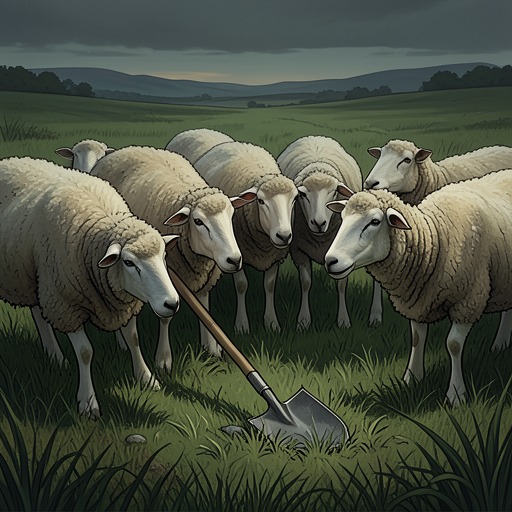
His treatment of the pasture offers a more immediate test of his supposed fitness as a shepherd. Gabriel takes George’s scythe from the toolshed and cuts grass on the side of the hill facing away from the sea. The sheep have never seen a human graze in this way. In Gabriel’s hand, the scythe passes through the grass like an iron claw; the blades fall flat, and the flock hears a hostile, singsong sound. The grass’s good smell makes the destruction worse. To the sheep, Gabriel is consuming the pasture without wanting the grass—a disturbing inversion of the feeding relationship they understand. Mopple begins to tremble, and the flock’s admiration gives way to alarm.
Miss Maple eventually identifies Gabriel as the master hunter. Her reasoning is specific to the flock’s way of knowing: Maude could not pick up his scent at once, and Gabriel can disguise it beneath damp wool and smoke. He also knows that Josh, Tom O’Malley, and Harry have been in the meadow at night, and knows that their presence has made the sheep nervous. Maple concludes that he must have been there himself. The discovery turns the signs of closeness that first charmed the sheep—his sheep-like smell and his apparent command of their surroundings—into evidence of concealment and surveillance.
The Will and the Loss of Authority
George’s will makes Gabriel’s role newly consequential. The estate is to provide the sheep with the means to go to Europe, and the money is to be administered for them. Their journey requires an authorized representative to accompany them as shepherd, under rights and duties specified in the will. Those duties include reading stories aloud to the sheep for at least half an hour each day; the will also prohibits selling or slaughtering them and makes a dense fleece the priority in breeding. The representative’s salary is reduced whenever a sheep dies, and a third party is to check whether the conditions are being met. The arrangement gives the flock material protection but also makes their welfare depend on who is empowered to act for them.
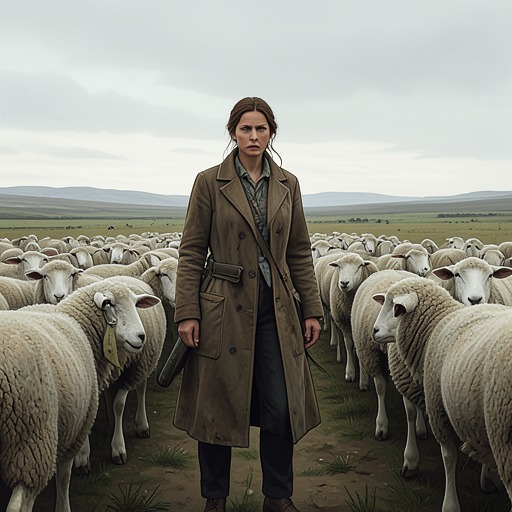
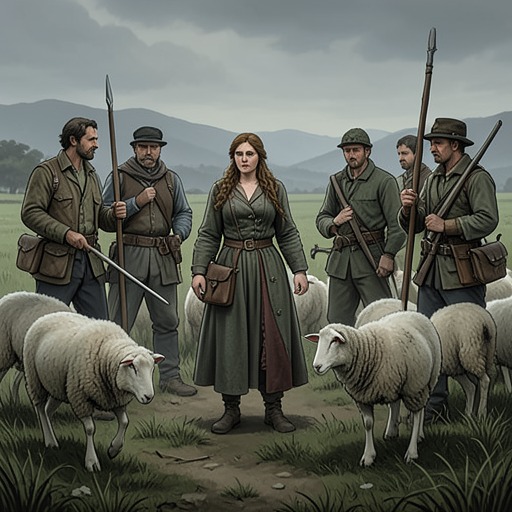
Gabriel stands beside the lawyer as the villagers consider the appointment. Their silence suggests how difficult it is to challenge a lead figure who has already taken a place of authority. But when the lawyer asks whether anyone else wants the job, Rebecca volunteers. The flock’s choice is visible rather than formally spoken: Othello steps forward, looks at Gabriel, turns, and trots to Rebecca; the other sheep follow and cluster around her. Gabriel murmurs in Gaelic, a sound that once might have enchanted them, but it no longer changes their decision. The sheep select Rebecca, not the shepherd who had seemed to understand them by instinct.
Narrative Role and Significance
Gabriel’s arc exposes the gap between the appearance of care and care that respects the flock’s interests. His clothing and gaze make him legible to the sheep as one of their own, while the silent dogs establish control through fear. His attention to the caravan, secrecy about the cassette, and scything of the pasture reveal other priorities. The novel does not make his sheep-like manner reliable evidence of shared purpose; the flock must revise its judgment by attending to what he does.
His loss of authority also clarifies that the will’s legal protections alone do not settle who should lead the sheep. The human process calls for a representative, but the flock’s response to Rebecca supplies its own judgment: the animals gather around the person they prefer, even while Gabriel’s voice remains alluring. Their choice gives the sheep an active role in an arrangement made for their future. Gabriel begins as the shepherd they long to trust and ends as the candidate they leave behind.