George Glenn’s last will and testament
Three Bags FullGeorge Glenn’s last will and testament makes his sheep beneficiaries of his fortune and gives their promised journey to Europe legal and practical force. More than a division of property, it sets conditions for their care and requires a human representative; when the lawyer asks the flock whom it wants, the sheep make their preference unmistakable by gathering around Rebecca.
Execution and Public Reading
George signed the will on April 30, 1999, in the presence of three witnesses, one of them the lawyer who later reads it. It directs that the document be read publicly under Glennkill’s old village lime tree at noon on the Sunday following George’s death, or one Sunday later. The setting makes the reading a public reckoning: villagers gather to learn who will inherit, while the sheep listen to a document written by the person who had cared for them and read aloud to them.
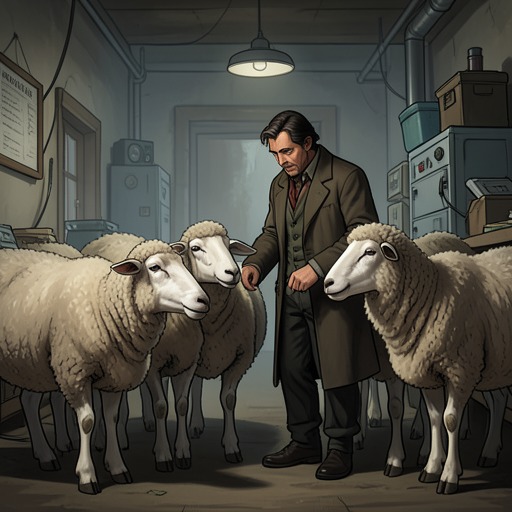
The lawyer presents the provisions in a deliberate sequence, first naming particular bequests and only later revealing the central one. The delay heightens the villagers’ anticipation, but it also makes the will’s importance to the sheep distinctive. They are not simply waiting to learn who owns the pasture. They are listening to George’s own words being read aloud, a practice rooted in their life with him: he had read to them in the meadow, including stories and books on subjects they did not always understand. The will therefore carries his care into a formal setting after his death, and makes continued reading part of the arrangement for their future.
Bequests and Beneficiaries
To Kate, George leaves his library, including seventy-three trashy novels, a detective story, a book of Irish fairy tales, and a book about sheep diseases, together with everything else the law considers due to her. The lawyer also tells her she can keep the house and will receive a small annuity. Her visible response is to nod while gritting her teeth; later, when the sheep inherit, she laughs hysterically. The reading thus exposes the distance between the will’s provisions for George’s wife and its unexpected provision for the flock.
George leaves Rebecca the landed property: pastures in Glennkill, Golagh, and Tullykinree. The announcement that she is his daughter startles the villagers, who whisper about the relationship. Rebecca, standing out in a bright red dress, turns pale and presses her lips together as attention fixes on her. The will names her as a human heir to land, but reserves its most consequential gift for the sheep: the rest of George’s fortune, whose amount the lawyer does not state aloud in terms the sheep can understand, is left to them so they can go to Europe as promised.
That promise has particular force because George’s estate is not merely pastoral scenery. Villagers have discussed the value of the land and imagined commercial uses for its coastal setting, while the sheep understand it as their home and grazing ground. The will directs money toward the flock’s journey rather than leaving the whole future of the estate to those human ambitions. It does not make the sheep owners of every asset: the land goes to Rebecca, while the money for Europe is administered for the animals’ benefit.
Care Conditions and Human Representation
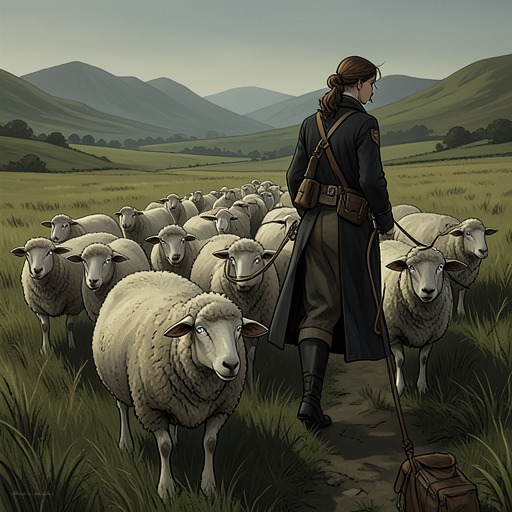
The sheep cannot manage the bequest through the ordinary procedures available to human heirs. The lawyer explains that they need an authorized representative to accompany them to Europe as their shepherd, with the representative’s rights and duties specified in the will. The lawyer will administer the money, and the representative’s work is subject to outside checking by the lawyer himself. The document thus assigns human responsibility without making the sheep’s needs incidental to it.
The stipulated duties are concrete. The representative must have stories read aloud to the sheep for at least half an hour each day. None may be sold or slaughtered, and breeding must give priority to a dense fleece. These conditions define the bequest as continuing care, not simply a sum of money handed over for unrestricted use. The salary is described as handsome, but decreases every time a sheep dies. That provision attaches the representative’s compensation to the flock’s survival, while also making clear that the arrangement depends on a human being accepting an ongoing, supervised obligation.
Choosing a Shepherd
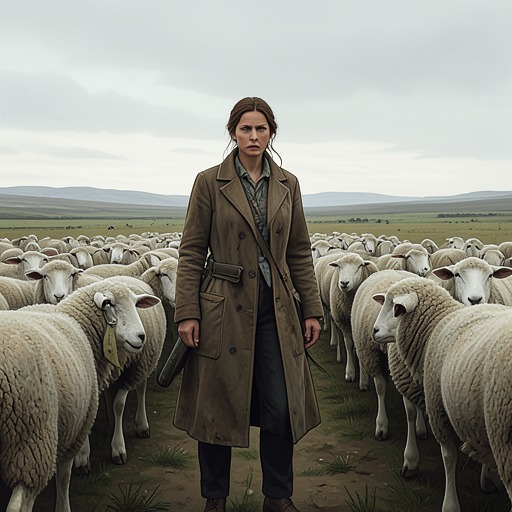
The will does not name the representative in advance. The lawyer is to use his own judgment in appointing one, preferably at the public reading, and asks whether anyone present wants the position. After the terms are explained, the villagers look between the printed pages, the lawyer, and Gabriel, who stands beside him. No one steps forward until Rebecca says she would like to do it. Her willingness offers the sheep a candidate, but the lawyer then makes their own preference part of the decision: he asks them whom they want to accompany them to Europe.
The answer comes through action rather than speech. Gabriel murmurs in Gaelic, a voice that has previously held a charm for the sheep, but Othello steps forward, glances at Gabriel, turns, and trots to Rebecca. The flock follows him. Maude begins calling Rebecca’s name, and the others join in; the lawyer declares the vote unanimous. The scene gives practical effect to the will’s requirement for a representative while exposing a limit in its procedure: the lawyer must interpret a choice the animals cannot state in human language. Their collective movement is legible enough to settle the appointment.
The will’s outcome is therefore both protection and a change of direction. It provides money for Europe, bars sale and slaughter, protects the flock’s breeding interests, and requires the daily stories that recall George’s former care. At the same time, it places the flock’s passage through human law in the hands of a representative, whose selection the animals themselves help determine. When they return to their meadow, they do not understand every legal detail, but they understand the promise the will has made possible: they are going to Europe.