God and Alice
Three Bags FullGod and Alice are bound by a past intimate relationship that ended in separation and left behind competing accounts of responsibility. In a confrontation overheard by the flock, God speaks as a rejected lover still haunted by Alice, while Ham identifies her as his sister and accuses God of failing her when she needed honesty. Their exchange makes the relationship’s aftermath—not its beginnings or full history—the clearest part of the story.
The Relationship and Its Rupture
The scene presents Alice as someone God loved deeply. He says she left him, rather than the reverse, and describes her absence as a lasting fate: he sees her in every woman he looks at. His account conveys continuing attachment, but it is also his own version of the breakup; the evidence gives no independent account of how the separation occurred.
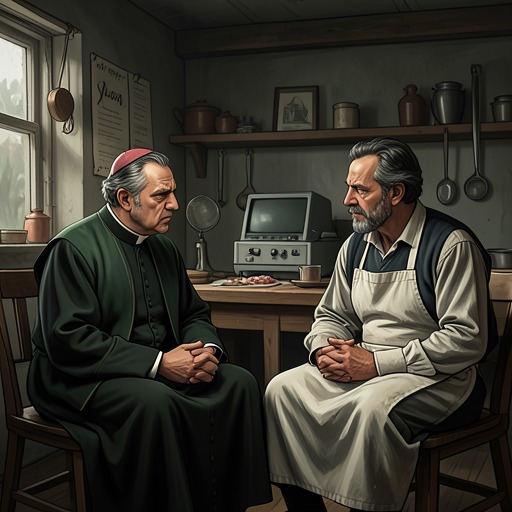
God’s anguish does not settle the question of how he treated Alice. Ham sharply distinguishes God’s present distress from the grievance that matters to him: Alice’s need for honesty and what God did—or failed to do—after she left. Ham’s accusation makes the relationship’s central wound a matter of conduct and accountability, not simply lost love.
Ham’s Intervention
Ham’s connection to Alice changes the force of the argument. He identifies her as his sister and rejects God’s description of her as a witch, insisting that she had asked only for honesty. The exchange therefore brings two perspectives into direct conflict: God dwells on being abandoned and on the persistence of his feelings, while Ham judges him by the harm Alice suffered afterward.
God’s response is physical as well as verbal. Faced with Ham’s cold anger, he slumps back into his chair. The gesture follows his earlier insistence that he would have done anything for Alice, exposing the gap between his sweeping declaration of devotion and Ham’s accusation that he did not give her the honesty she needed.
The Overheard Confession and Its Limits
The flock witnesses the confrontation from outside. A bottle has fallen and liquid spreads across the tabletop; Ham watches the dark puddle while the argument turns from sin and penance to Alice. In that charged setting, the private history becomes audible to the sheep, who learn both that God remains emotionally attached to Alice and that Ham holds him responsible for what followed their separation.
The disclosure is significant but incomplete. God’s claim that Alice left him and Ham’s insistence on her demand for honesty do not resolve the disagreement or explain the events behind it. No reconciliation or later change in the relationship is established here. Alice remains absent from the scene, represented through the opposed accounts of the man who says he cannot forget her and the brother who says she was owed the truth.