Kate Glenn
Three Bags FullKate Glenn, George Glenn’s wife, enters the flock’s understanding of their shepherd as both a character in his bitter stories and a grieving woman with her own account of their life together. George casts her as a red-haired Pamela whose apple pies could not replace his dream of traveling through Europe with his flock; Kate, arriving after his death, speaks instead of estrangement, regret, and what she did not know. Neither perspective supplies a complete history, and the gap between them gives her importance beyond the role George assigns her.
Identity and Background
The sheep first encounter Kate as a plump woman dressed in black, with fiery red hair, blue eyes, and rosy cheeks. They notice that she smells of apples. Her appearance recalls the red-haired heroines in the love stories George read aloud, but she is not simply one of those fictional Pamelas: George’s account identifies Pamela as the name he gave her in his romanticized telling, while explaining that her real name was Kate.
In George’s recollections, Kate had been the most beautiful woman in the village and, at the beginning of their marriage, his personal ideal of the romance-book heroine. His story then turns sour. He says that after they married she baked apple pies and gained weight, while he remained thin and grew increasingly dry in manner. These details reach the sheep through George’s readings and complaints, not through an impartial account of the marriage. His sharpness toward red-haired women, especially his wife, makes the story as much evidence of his resentment as it is a description of Kate.
Marriage and Conflicting Accounts
George’s most vivid complaint concerns the life he believes he lost. He had dreamed of traveling all over Europe with a flock of sheep; in his telling, domestic life and apple pie were no substitute. The sheep share his imagined destination, picturing Europe as a vast meadow full of apple trees, so his grievance also expresses a dream they have adopted as their own. Their hopes of travel become inseparable from their sense of what Kate’s marriage to George prevented.
Kate’s later remarks complicate that account without resolving the marriage’s history. She says that George had not wanted her to visit him at the meadow and that she might have brought him apple pie if he had allowed her to come. The same pie that stands in George’s story for an unsatisfying domestic life becomes, in Kate’s, a small, belated gesture of care. The contrast does not establish that either account is false; it shows how differently the two characters frame the distance between them.
Visit to the Meadow
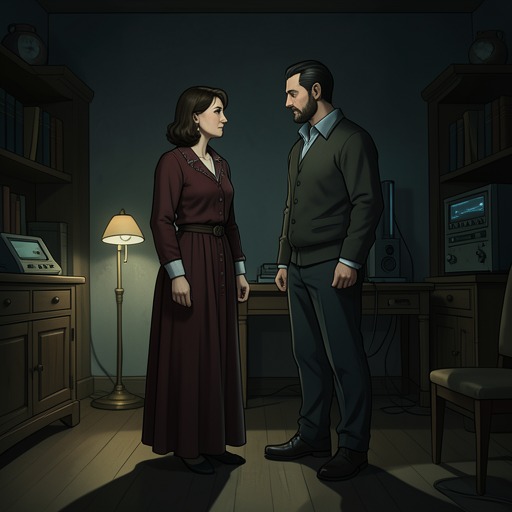
After George’s death, Kate comes to the dolmen with a black-clad, long-nosed man. She wonders whether she should have known George better and says his recent behavior had seemed strange to her. He had been going out in the car frequently and receiving letters she was not allowed to open. She also says that she discovered he had been secretly reading love stories. Her embarrassment as she confides this detail contrasts with George’s habit of reading those stories aloud to the sheep and using them to vent his grievances about red-haired women.
At the meadow, Kate’s attention turns to the place and to what George had kept from her. She says she had thought his strangeness was old age, and that she had not taken an interest in the animals: George brought wool home, and she took over from there. She becomes tearful over the possibility that she might have visited and brought him pie. Her regret is grounded in specific absences—she had not come to the pasture because he would not let her, and she had not understood what was happening in his life—rather than in any claim that she knew why he had died.
Kate is also asked what will happen to the flock. She doubts that Ham would care for them and says he is no shepherd. When the man with her offers to approach Ham, she refuses, saying that the matter between them was long over. Her response keeps Ham’s possible role in the flock’s future distinct from her own past with him; the exchange supplies no further explanation of that past.
The Will and the Question of Inheritance
Kate says that she does not know whether everything belongs to her. George left a will with a lawyer in town, and, according to her, spent a long time looking for the right lawyer. She expects the document to determine who receives everything but says she does not want it. Her worry is more personal than material: she hopes George has left nothing to another woman. The identity of the woman is not established in this conversation, and Kate’s concern remains unresolved here.
Her uncertainty makes the will a sign of how little access she had to George’s private affairs. The letters she could not open, his secret reading, his frequent trips, and his search for a lawyer form a cluster of things she noticed only incompletely. Kate does not claim to understand them; she reports them as clues whose meaning may lie beyond her knowledge.
Grief, Lilly, and the Family Story
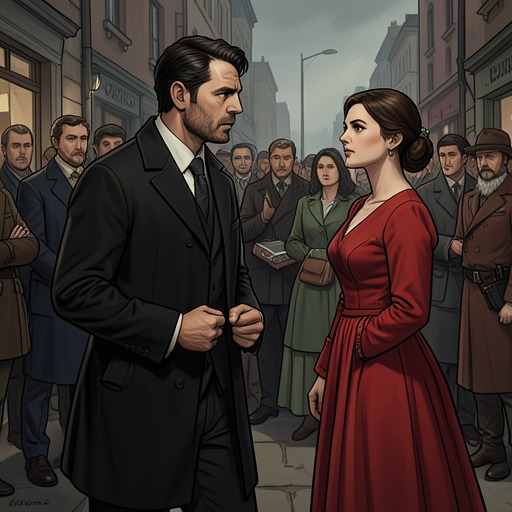
Later, after mourners have visited Kate in small groups, Miss Maple recounts another encounter: very late in the evening Lilly comes to the door to apologize. Kate stops crying, rebukes Lilly, and shuts the door in her face. Her words distinguish Lilly’s regret from the loss Kate herself has suffered: at least Lilly did not have George. Miss Maple likens Kate’s manner to an angry cat, but the scene also marks a sharp change from the quiet, tearful widow the visitors had seen during the day. Kate’s grief does not make her receptive to Lilly’s apology.
Rebecca’s story of a girl with two fathers offers a further, indirect view of the family’s fractures. In the tale, a beautiful queen dislikes the girl’s secret father; after a quarrel, the girl tries to make him angry, then hides her joy when his letter says he plans to travel to Europe and wants to see her. She keeps him waiting, and he dies before they meet. The story echoes George’s wish to travel and the estrangement between him and Rebecca. Its framing places the mother in opposition to the secret father, but it is Rebecca’s compressed, story-like telling, not Kate’s testimony, and does not provide a full account of Kate’s relationship with her daughter.
Narrative Role and Significance
Kate is presented through competing forms of speech: George’s aggrieved recollections, her own remarks overheard by the sheep, Miss Maple’s report of the confrontation with Lilly, and Rebecca’s family story. Each offers details but leaves important matters uncertain. George’s comic complaint about pies and red hair obscures the circumstances of their separation; Kate’s regret exposes missed opportunities without explaining why George kept her away; Rebecca’s tale gives their family history the shape of a belated tragedy without naming every fact directly.
The recurring apple image concentrates this contrast. For George, apple pie measures the distance between the life he wanted and the marriage he had; for Kate, the pie she might have brought becomes a modest kindness that can no longer be offered. Her presence also reveals that George’s private life was not as transparent to those closest to him as his public role as shepherd might suggest. She cannot explain his secrets or undo their estrangement. Instead, the flock’s limited, pieced-together knowledge of Kate makes the marriage—and the family loss behind George’s death—part of the mystery the sheep are trying to understand.