Soul
Three Bags FullSoul, as the flock understands it, is an invisible but vulnerable part of a living being, bound to the body yet not identical with it. Miss Maple’s account turns an abstract religious idea into a question of scent, death, and possession; her theory about Beth and George shows how readily the sheep make human spiritual language concrete, even as their own evidence leaves room for uncertainty.
The Sheep’s Understanding of Soul
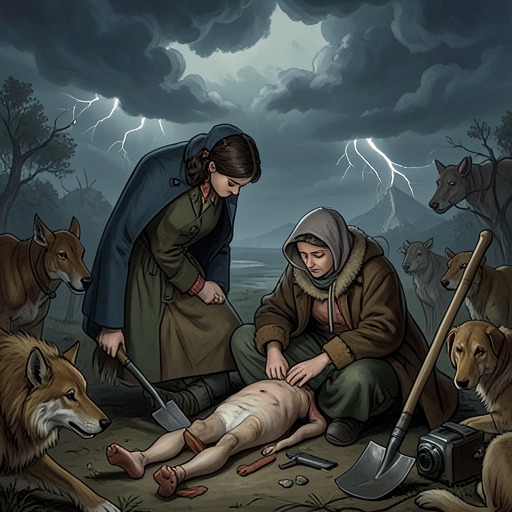
Miss Maple connects souls with death through the flock’s knowledge of the body’s smell. Once a person dies, she reasons, the soul must leave the body because the stench is unbearable to its sensitive nose. It is then exposed to danger, including the Devil’s hounds. Applying this scheme to George, she concludes that the murderer wanted his soul before it could fall into their jaws. This is Maple’s interpretation of the murder, not a fact independently established by the account.
Her reasoning also takes in God. The flock has heard that God is deeply afraid for his own soul, and Maple sees it as logical that he might seek a replacement. The soul is therefore imagined not only as a spiritual necessity but as something that could be threatened, taken, or substituted. The sheep’s explanation gives bodily terms to a mystery they cannot otherwise observe.
Beth’s Desire and George’s Resistance
Maple interprets Beth’s visits to George’s caravan as part of a long effort to obtain his soul. Year after year, Beth brought him books because she knew he liked reading; Maple believes she hoped that George would grow to love her and eventually give it to her. In this account, the soul stands for an intimacy Beth desperately wants but cannot secure by affection alone.
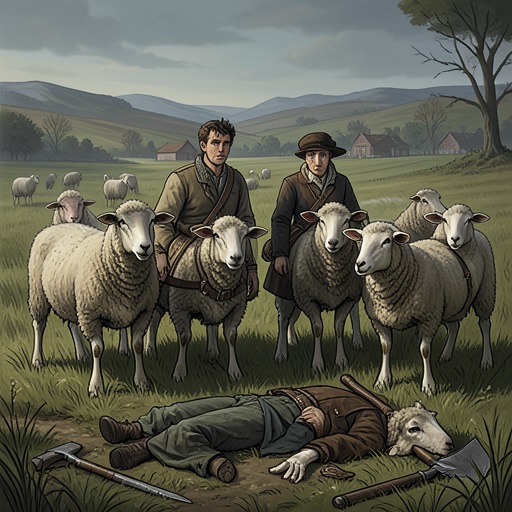
Beth spoke of good works and of George’s soul being in danger, presenting its removal as a rescue: she would take it somewhere safe, where it could do good. Maple believes this was an excuse and that Beth would have kept the soul, leaving George without it. George’s work in the vegetable garden, using his spade, undercut Beth’s stated justification: he could do good works himself, so she had no reason to take his soul away. The garden and the spade thus become part of the sheep’s moral argument about whether spiritual care is genuine or a means of possession.
Death and the Limits of the Theory
The flock’s later recognition of George’s death shifts the emphasis from a soul sought by someone else to a human being’s decision not to continue living. When Beth speaks, the sheep can tell by her scent that she is not lying; Fosco names what happened as suicide. The sheep understand this as a new word and note that George can no longer explain it to them. Fosco adds that humans sometimes look at the world and decide they do not want to live.
That revelation does not settle what happened to George’s soul or confirm Maple’s earlier theory about who wanted it. Instead, it places the soul beside a more painful limit: the flock can reason about death through scent, stories, and religious language, but George’s final choice is something he can no longer explain to them. Soul remains the sheep’s way of thinking about what makes life precious and what death puts beyond their reach.