Stories as a Way of Understanding the World
Three Bags FullStories as a Way of Understanding the World is the flock’s practical theory of how narratives make confusing events legible. The books George Glenn read aloud teach the sheep to recognize genres and anticipate their patterns; after his death, those patterns become tools for interpreting the people around them. Yet the flock’s competing readings also expose the limits of borrowed plots: a story can direct attention, but it cannot guarantee that life will follow the same rules.
George Glenn’s Readings
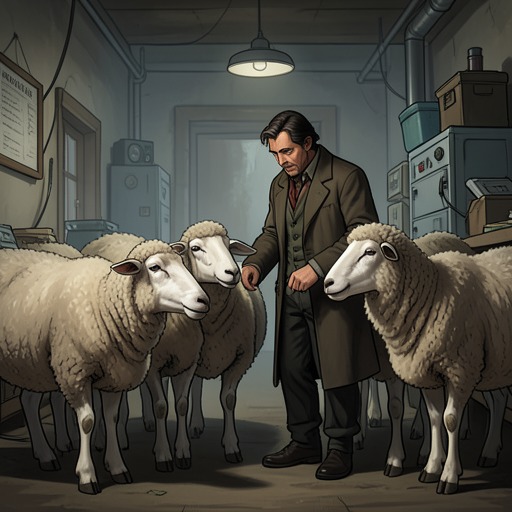
George Glenn’s storytelling belongs to the flock’s daily rhythm. In the morning, the sheep graze while he works in the garden or makes repairs; by afternoon, they gather by the steps of his caravan to listen. The contrast matters: stories enter an ordinary shared life, not a formal lesson. Through them, George brings human subjects into the flock’s world, where a fairy tale can explain how dew falls, a book about sheep diseases can frighten its listeners, and a detective story can leave them baffled.
The abandoned detective book becomes a particularly important absence. George throws it away halfway through, and the flock never learns who the murderer was. At the time, the sheep are disappointed; later, when they confront a death they cannot explain, that unfinished mystery offers a warning as well as a precedent. A story may be difficult to follow, and its ending may remain out of reach, but the unresolved question does not disappear simply because the book has been put aside.
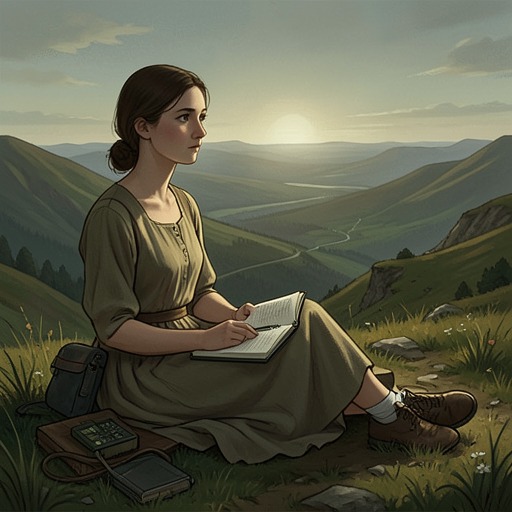
George’s favorite readings are usually love stories, with heroines named Pamela and red hair compared to a sunset in the South Seas. His choice is not presented as evidence of a romantic temperament: he reads to release his frustration. The tales of red-haired women ensnaring pirates, doctors, and barons let him complain about his own marriage. He tells the flock that Kate, once the village’s most beautiful woman and his personal Pamela, began baking apple pies after their wedding and grew fat, while he stayed thin and increasingly dry in manner. His lost dream was to travel through Europe with a flock; to the sheep, Europe itself becomes an immense meadow of apple trees. Thus the flock’s early knowledge of love, marriage, and human dissatisfaction arrives through George’s personal grievance as well as through fictional plots.
Genre as a Guide to Attention
When the sheep try to understand George’s death, Cordelia proposes that they first identify what kind of story they are in. Her reasoning follows the books they know: the Pamela novels concern passion, the fairy tale concerns magic, the sheep-disease book concerns disease, and the detective story concerns clues. Genre, in this account, is a way to decide what to look for. Naming a pattern does not solve the mystery, but it gives inquiry a direction.
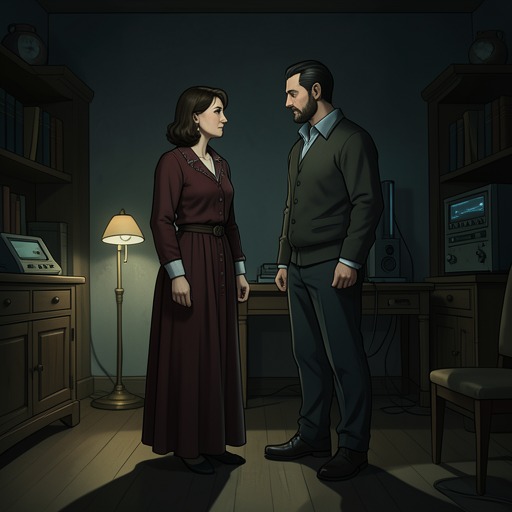
Miss Maple confidently calls the situation a detective story. Heather instead recognizes a love story in the relations among George Glenn, Kate, and Lilly: George likes Lilly, Kate likes George, and jealousy accompanies death. Her excitement briefly makes her frolic like a lamb. Miss Maple grants that the events have the feel of a love story, but objects that its expected outcome does not fit: if the Pamela pattern held, Lilly, not George, would have died, and rivals would have fought over the person they loved. Heather’s reading captures an emotional possibility; Maple’s reply tests it against the actual event. Neither familiar genre fully contains the evidence.
The flock’s expectations have been shaped by the conventions of George’s novels. The sheep anticipate a mysterious stranger whose suspicious appearance will identify him as the murderer, followed shortly by a duel and a decisive resolution. Instead, their investigation feels like the detective book George abandoned: real events do not promptly supply a recognizable culprit or explain themselves. The gap between a satisfying fictional pattern and an unclear human reality is not incidental. It is the problem the flock’s theory of stories must confront.
The Dispute Over an Ending
The disagreement deepens when Sir Ritchfield argues that the sheep cannot find all the answers and should stop asking questions, just as George stopped reading his detective story. Miss Maple refuses to accept that conclusion. The death happened, she insists, and therefore the story must have an ending; she also recognizes that the others are curious, even as they shrink from the effort of understanding. Cordelia names a practical obstacle: there are too many human things they cannot understand, and no one remains to explain words to them.
For some of the flock, forgetting is a familiar way to recover from sorrow. Cloud quietly suggests that forgetting everything would make life simpler, and the others agree. Maple sees a deeper cost: if they forget, there will be no more stories. Her point is not merely that memories preserve information. Remembering keeps the event open to interpretation and makes continued inquiry possible. Forgetting would quiet their distress by closing the question without answering it.
Maple invokes The wolf in sheep’s clothing, a frightening tale George once told, to insist that recognition matters for survival: either the flock finds the wolf, or the wolf finds them. She rejects the idea of abandoning a book midway merely because it is hard to understand and resolves to investigate alone if necessary. Cloud’s response, that the flock needs a shepherd, reveals the distance between Maple’s demand for inquiry and the others’ wish for guidance and safety. Maple ignores the appeal, flicks her tail, and goes to stand beneath the crows’ tree, apart from the flock, staring into the dark. The concept therefore ends not with a solved mystery but with a choice: continue reading events as a story, even without assurance that its meaning or conclusion will come easily.