The Way Back
Three Bags FullThe Way Back is both a way of understanding return and a test of whether return can still be achieved after separation, grief, and time have altered the traveler. In the vision beneath the dolmen, it is not a path discovered somewhere in the world but something carried in the fleece all along. Yet recognition does not make the journey easy: the soul can move ahead while the self remains stranded before its last step, searching for words that might make crossing possible.
A way carried within
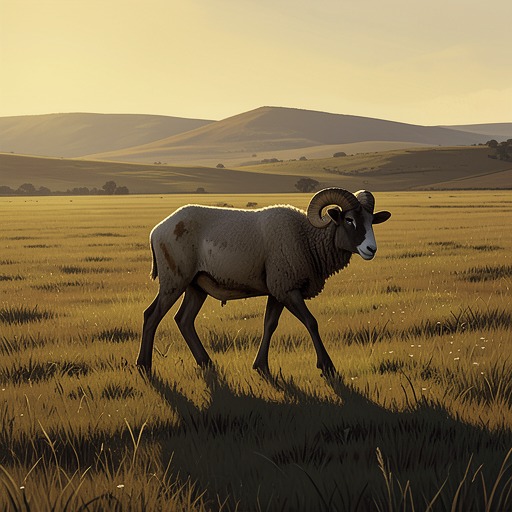
The vision first imagines the Way Back as a meadow that cannot exist, lying beyond the dolmen. Its seeker has looked for it everywhere: under smooth stones, beyond the wind, in the eyes of night birds, and in still pools. Each search returns only his own reflection. The reversal is intimate rather than geographical: the way was behind his ears, in the tips of his fleece where rain cooled it, close enough to tickle without being noticed. The detail of parasites in the wool makes recognition uncertain and bodily. What matters most might be mistaken for an irritation, or hidden among the ordinary things carried on the body.
The leaves give this inward discovery a seasonal rhythm. They insist that the Way Back remains most important, even as they grow away from the traveler and seem to flee the withered brown. When cold smoke and dark days arrive, brown ground threatens to catch at his hooves and climb his legs. The image makes return a practice of attention under changing conditions, not a guarantee that the landscape will stay welcoming. The leaves whisper from hedgerows, holly, ivy, pine trees, and the traveler’s own shivering soul; their message is repeated across the living world, while crows remove parasites without disturbing the way hidden in the fleece. Swallows return with the leaves, giving the passage a recurring pattern of departure and renewal without erasing the danger of the intervening season.
The last step
Once the Way Back has been recognized, it contracts into a single step. Beyond it, the others are gathered, warm and alive like clouds of winter breath in an empty world. The black ram, marked by anger and scars beneath his fleece, belongs among them now. Belonging appears as a matter of being gathered with others, but the vision cannot settle who has the power to make that happen. George Glenn knew how to bring sheep together and drive them apart; the thought that he should have herded this wanderer into the Way Back makes his absence part of the obstacle.
The passage does not let the soul’s movement stand in for the traveler’s own. His soul gallops ahead, while he remains where he was, watching it go. He has no bridge or ford, and imagines the final crossing as drowning. The vision then offers language as a possible ford: ancient words preserved in the soul, remembered and cherished like spells. But the soul has grown crowded with every road he has ever taken, and the words cannot be found. Return therefore depends on more than knowing where home is. It requires recovering a form of speech at the precise moment when time is running out.
The fifth day and the waiting shepherd
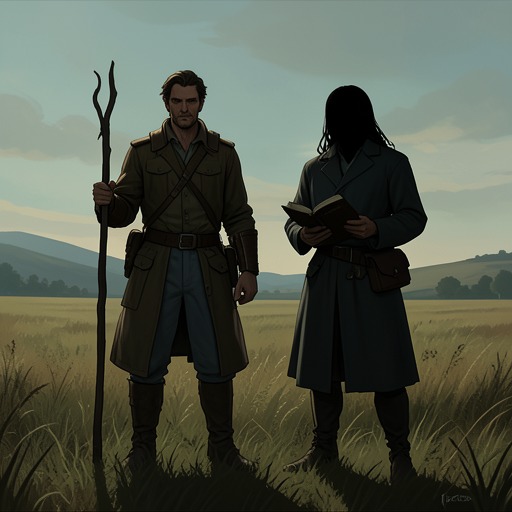
The urgency gathers around the fifth day. For four days, daybreak has driven the silent shepherd away from beneath the dolmen; now morning is rising again, and the traveler hesitates. The threshold is not simply a return to a familiar pasture. It is a decision made under the pressure of a possible ending, with the fleecy forms beyond the step seeming as brief as winter breath. The scene holds open a question the vision cannot resolve: whether the traveler can complete the passage before daylight takes away the figure who waits there.
The Way Back thus resists an easy heroic pattern in which departure leads to discovery and discovery guarantees a triumphant homecoming. Recognition comes, but it is not yet arrival; the soul reaches the others before the self can follow. The dolmen, described in the vision as a wheelless caravan for Death, gives waiting a physical image. Its stillness contrasts with the imagined meadow beyond it, where life gathers, and with the slow movement of morning above the sea. The return remains possible, but possibility is not rescue.
Loss, land, and failed return
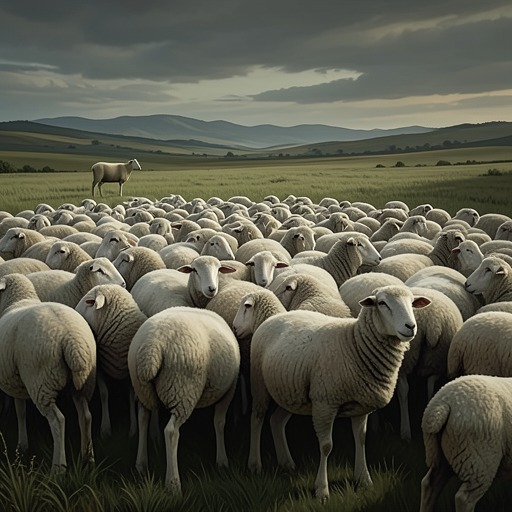
Elsewhere, the flock’s life after George Glenn’s death gives the idea a grounded counterpoint. His body lies in the grass beside the hay barn, with a spade protruding from it; the sheep meet apart from him, trying to stay calm and understand a world without their shepherd. The next day, they venture out led by hunger and raid the fenced garden behind George Glenn’s shepherd’s caravan. Their brief abundance ends in shame and silence, and Othello draws attention to the missing garden spade. These episodes do not name the Way Back, but they show how the familiar pasture changes when the person who organized and guarded it is gone. What once made a place feel held together cannot simply be recovered by walking back into it.
The land is also contested by human uses that make a simple pastoral homecoming impossible. People discuss George Glenn’s supposedly hidden drugs alongside plans for a dolmen attraction, pony rides, a cultural center, whiskey, and a seaside hotel; the pasture is at once a flock’s home and a prospect for development. When Gabriel takes up George Glenn’s scythe and cuts grass for his sheep, the flock sees grazing transformed into destruction: the grass lies flat, and the act appears senseless because the cutter does not want the grass himself. The scene sharpens the distinction between living in a place and treating it as material to be cleared or exploited. Return cannot mean merely reclaiming a landscape whose meanings and uses are under dispute.
Rebecca’s tale of a little girl with a secret father brings the motif of belated return into family memory. The girl and her father are fond of one another, but after a quarrel they stop speaking. When his letter finally says that he plans to travel to Europe and wants to see her first, she hides her joy and keeps him waiting; he waits himself to death. The parallel is not an assurance that every separation can be repaired. Rather, it gives the Way Back a human cost: recognition and desire may arrive too late to become reunion. Across the vision, the flock’s changed pasture, and Rebecca’s story, return depends on belonging, attention, and words—but none of these can promise that the final step will still be available.