
Erik Wilson’s Handler’s Dilemma
Three SecondsThis thread follows Wilson’s balancing of operational success, personal attachment, and professional distance as Hoffmann’s mission places him beyond reliable protection.
increasing Bearing strength in each event
 decreasing
Bearing strength in each eventdecreasingConstructing Paula

The Handler’s Work
Building access
Wilson recruits Hoffmann and constructs an intelligence profile that will persuade criminals that he belongs among them. He regards the work as necessary and has learned to separate usefulness from ordinary friendship.
The fabricated record gives Paula increasing access to Wojtek.
A complicated attachment
Despite his professional discipline, Wilson grows close to Hoffmann and his family. He warns him that the operation is not worth losing Zofia and the boys.
His personal concern conflicts with the police system that treats informants as expendable sources.
The Government Guarantee

Seeking Protection
A case before officials
Wilson brings Hoffmann to a secret meeting with senior authorities, arguing that the prison operation can disrupt Wojtek’s expansion. Hoffmann’s role in the Västmannagatan killing makes immunity a condition of continued work.
Wilson argues that the operation requires both a prison placement and protection from prosecution.
A limited promise
The officials agree to use confidential humanitarian procedures and arrange a prison placement. Wilson believes the institutional decision will allow the operation to proceed.
The agreement offers no dependable protection once Hoffmann is exposed inside prison.
The Apparent Death
A Handler Loses Paula
A presumed killing
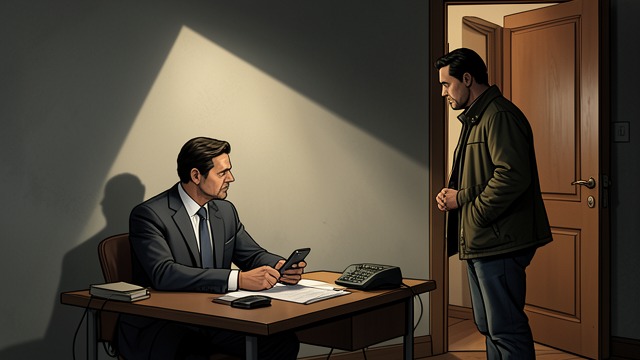
Wilson hears that a sniper has shot Hoffmann and an explosion has destroyed the workshop. He believes that the person he calls Paula has died in the operation.
The loss disrupts his ability to remain detached from the informant’s fate.
Professional denial
In Jacksonville, Wilson initially resists Sundkvist’s evidence and claims that he never considered Hoffmann a friend. His response reveals the handler’s protective role as a performance that has become emotionally costly.
He remains loyal to the work even as he confronts the system’s failure to protect its source.
Admitting the Recording

The Truth Confirmed
A colleague’s challenge
Sundkvist shows Wilson the recording, passports, and images linking the siege to the government meeting. Wilson recognizes that Hoffmann left the evidence deliberately.
He weighs his loyalty to the informant against the danger of confirming a scandal.
The admission
Wilson finally states that the meeting took place and that every recorded word is genuine. His confirmation allows Grens and Ågestam to move forward against the officials involved.
He does not offer a full emotional apology, but his decision helps prevent the conspiracy from disappearing into secrecy.
A Call from the Living

The Secret Phone Rings
An impossible signal
Wilson notices a missed call on the phone associated with the dead informant. He is shaken because the device should no longer be in use.
He calls back, unsure whether he will reach a pursuer or a remnant of the operation.
The reunion deferred
Hoffmann answers and reports that the mission is complete, then proposes a meeting. Wilson smiles, relieved that the source survived.
Their relationship remains shaped by secrecy, but the call reopens the possibility of personal contact beyond the handler’s formal duties.
Nine years before the prison operation
The May 10 meeting at Rosenbad
May 27, as Wilson receives the siege news
Four days after the siege
The final pages, after Wilson returns to Georgia
