
Oscarsson’s Conscience
Three SecondsThis thread traces Lennart Oscarsson’s obedience to senior orders, his growing recognition that those orders are connected to violence, and his refusal to surrender his remaining moral authority.
increasing Bearing strength in each event
 decreasing
Bearing strength in each eventdecreasingA Hard-Earned Office
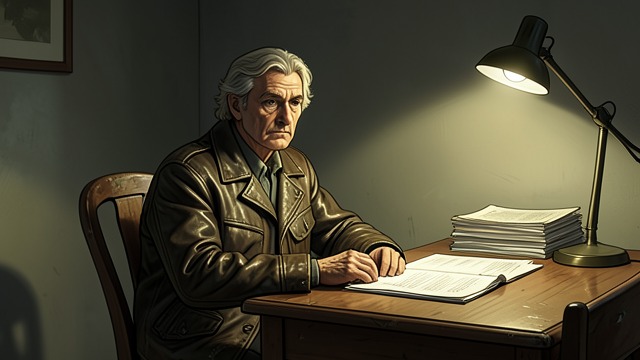
The Chief Warden
A long ambition
Lennart Oscarsson has worked in prisons for decades and recently gained the chief warden’s office he once dreamed of. His job has given him a world and identity, even as his private life has become lonely.
He believes he understands difficult prisoners and the rules that keep them alive.
A new unease
Orders arrive that interfere with ordinary prison procedures. Oscarsson initially follows them without asking who benefits, but begins to feel that his professional judgment is being used against his own principles.
His conscience becomes the pressure point in a system built on obedience.
Lying to Grens
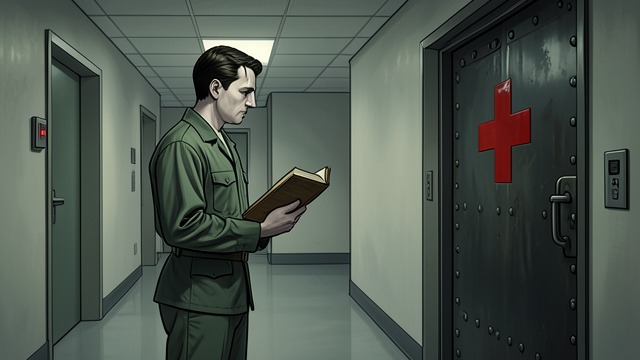
A Required Falsehood
An invented illness
Oscarsson tells Grens that Hoffmann is in the hospital unit with an apparent infection. In reality, Hoffmann is not there, and the prison doctor has not ordered such isolation.
The lie prevents the investigator from reaching the prisoner.
Recognition of complicity
Oscarsson understands that he has obeyed a direct order, but the false explanation keeps troubling him. His discomfort grows when he learns that Hoffmann has been attacked and moved.
The lie is his first visible participation in a plan he does not understand.
Refusing Jacobson’s Return
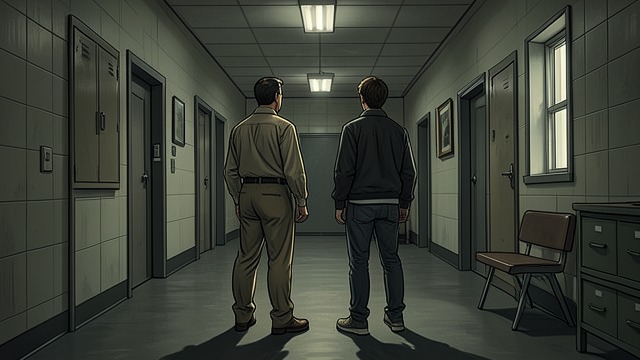
A Line He Will Not Cross
The transfer order
Oscarsson is instructed to return Hoffmann to the unit where prisoners have threatened him. Martin Jacobson warns that the decision violates the protection normally given to a threatened prisoner.
Oscarsson nevertheless tells Hoffmann that he is going back, carrying the authority of his office and the order from above.
Friendship under strain
Jacobson refuses to carry out the instruction and asks whether the order is personal. Oscarsson cannot explain the full situation, but the friendship exposes the moral cost of silence.
His obedience has now placed both a prisoner and a colleague in danger.
A Hostage in His Prison
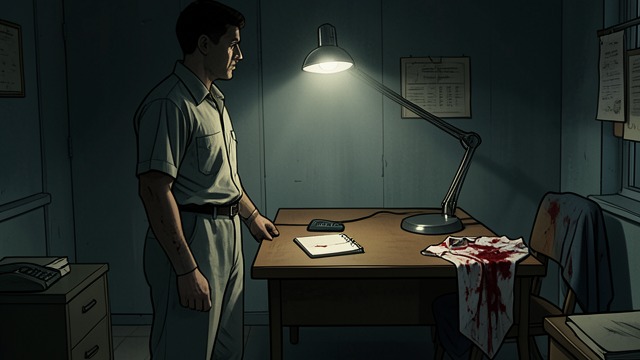
The Consequence Arrives
A crisis he helped create
Oscarsson learns that Hoffmann has taken hostages and killed a prisoner. He recognizes that the earlier orders and the subsequent attack are connected, though he does not yet know every detail.
The official response treats the event as a security emergency, while Oscarsson sees the chain of decisions that led there.
Speaking to Hermansson
He tells Mariana Hermansson that someone has been ordering him to block Grens, permit a lawyer’s visit, and return Hoffmann to danger. He wants Jacobson to live more than he wants to protect the people who gave the orders.
His testimony begins to break the officials’ control of the story.
The Uniform Cut Apart

Rejecting the Office
Naming the order giver
Grens confronts Oscarsson at home and presses him to identify who gave the orders. Oscarsson names Pål Larsen, the general director who passed on instructions from higher authorities.
The admission places the chain of command into the investigation.
A symbolic refusal
Oscarsson cuts his prison uniform into strips rather than continue wearing it as a symbol of the position he had long desired. He tells Grens the pieces can be used to clean a car.
The gesture expresses his rejection of an office compromised by obedience.
At the beginning of the prison operation
The morning Grens arrives to question Hoffmann
The night before the workshop siege
May 27, after Hoffmann takes the workshop
After the escape and after Grens confronts him
