
The Officials Who Abandon Paula
Three SecondsThis thread traces the authorities’ shift from authorizing Hoffmann’s infiltration to withholding protection, exposing him, and attempting to shape the siege’s lethal outcome.
increasing Bearing strength in each event
 decreasing
Bearing strength in each eventdecreasingA Mission Authorized

Permission with Conditions
A strategic argument
Wilson argues that Hoffmann can infiltrate Wojtek’s prison expansion and provide intelligence unavailable through ordinary policing. The state secretary and senior police leaders consider the opportunity against the risk of his involvement in a murder.
They agree to protect the operation through confidential arrangements and a planned pardon.
An unstable promise
Hoffmann asks for explicit guarantees, while Wilson stresses that the authorities can burn him if he becomes a threat. The agreement is therefore built on both official support and anticipated abandonment.
The mission is authorized, but protection remains conditional on usefulness.
The Informant Is Exposed
Information Passed Into Prison
A lawyer as messenger
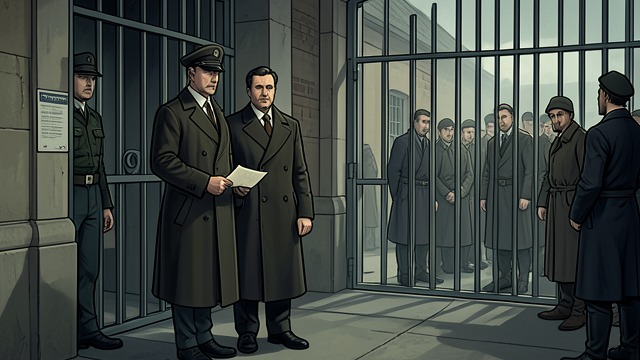
A lawyer visits Stefan Lygas after lock-up, carrying information that Hoffmann is a snitch. The visit is permitted through a senior prison order rather than an ordinary legal schedule.
The message moves through the inmate network, and Hoffmann’s criminal identity collapses into the hidden police one.
No extraction
The authorities have imposed a no-contact rule and Wilson is abroad. Hoffmann cannot reach the person responsible for his operation when the threat materializes.
The confidentiality measures that were meant to protect Paula instead leave him without a route to safety.
A Denial on the Phone
Protection Withdrawn
A failed appeal
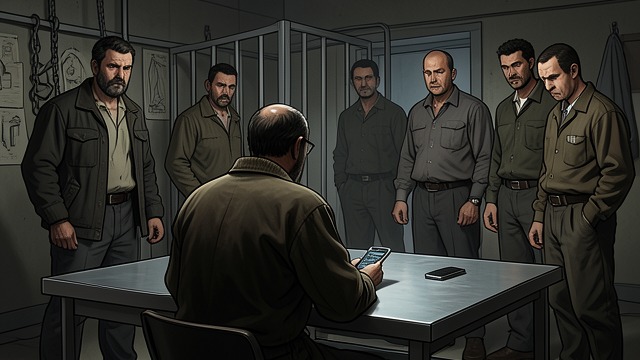
Hoffmann calls the city police and asks to speak with Göransson. When the official answers, he denies knowing who Hoffmann is.
The denial signals that the operation’s protectors have chosen to distance themselves from the informant.
A source abandoned
Hoffmann’s attempts to reach help fail while prisoners gather outside his cell and call him a snitch. His only remaining protection is the prison’s physical isolation, which may not last.
The authorities’ silence transforms a controlled operation into a survival crisis.
An Order to Send Him Back
The Trap Tightens
A dangerous instruction
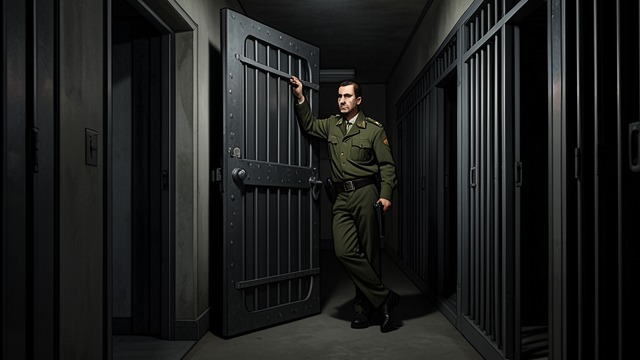
Pål Larsen orders Oscarsson to return Hoffmann to G2, despite the known threat. He also gives instructions that would prevent the prison from releasing Hoffmann and the hostages if the siege escalates.
The ordinary emergency policy is being bent to keep Hoffmann trapped inside the prison.
A crisis becomes inevitable
Oscarsson obeys enough of the instructions to let events proceed, though Jacobson protests. The order ensures that Hoffmann sees no viable path except violent self-protection.
The later hostage crisis cannot be separated from the officials’ deliberate choices.
The Fatal Solution
Outsourcing the Shot
A legal workaround
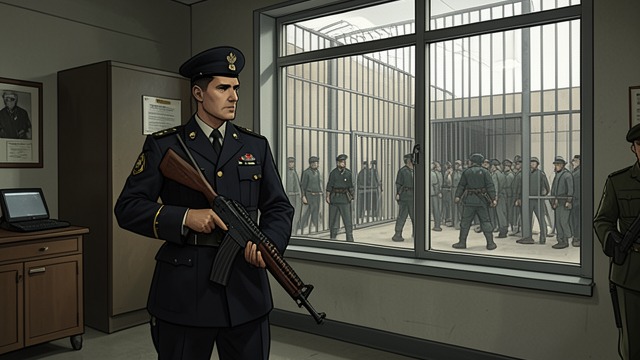
Senior officials arrange for a discharged military marksman to work briefly as a police officer, avoiding the restriction on using the armed forces against civilians. The technical solution makes a long-range shot possible.
The arrangement is framed as lawful procedure, though everyone understands that the weapon can kill.
Responsibility shifted
Officials provide the capability while leaving the gold commander to issue the order. Grens believes he is saving a hostage from a documented violent killer.
The institutions have arranged the conditions for death without taking the trigger decision themselves.
May 10, at the Rosenbad meeting
The evening before the G2 attack
The first day of Hoffmann’s voluntary isolation
The night before the hostage-taking
May 27, during the final siege negotiations
