
The Prison’s Closed-System Conflict
Three SecondsThis thread traces the prison’s competing rules of order, criminal power, and personal survival as Hoffmann learns that legal protections can be overridden by people controlling the institution.
increasing Bearing strength in each event
 decreasing
Bearing strength in each eventdecreasingCriminal Status Rules
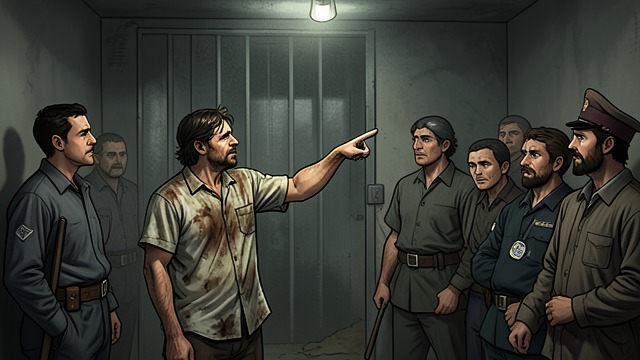
The Inmate Hierarchy
Testing a newcomer
Hoffmann provokes another prisoner by accusing him of assaulting women and uses the guards’ attention to establish a violent reputation. He wants the story of his aggression to spread through the prison.
The performance helps prevent him from being categorized as vulnerable.
Order through fear
Inmates judge one another through criminal history, violence, and the shared hostility toward sex offenders and informants. Hoffmann learns to use those rules to gain status.
The prison’s informal hierarchy competes with the official rules governing the same space.
The First Twenty Minutes
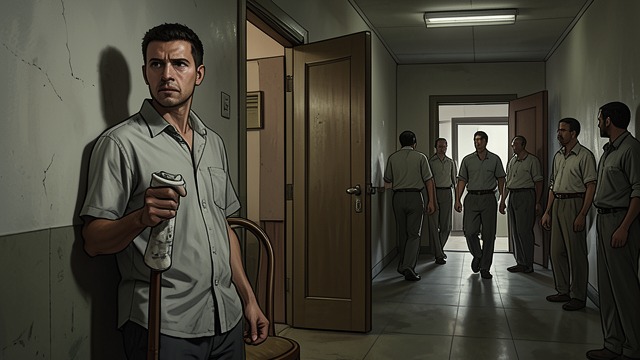
Danger at Unlocking
A daily ritual of defense
Hoffmann prepares for an attack at the moment cells are opened, using a sock, chair, and staged bed to gain a few seconds. He waits against the wall, ready to fight or run.
The routine is a practical response to the prison’s history of assaults during staff breaks.
Living under suspicion
No attack comes at first, but the possibility shapes his mornings and keeps him alert even when the corridor seems ordinary.
The repetition shows that prison safety is not guaranteed by doors and procedures; it is negotiated minute by minute.
The Search Dogs
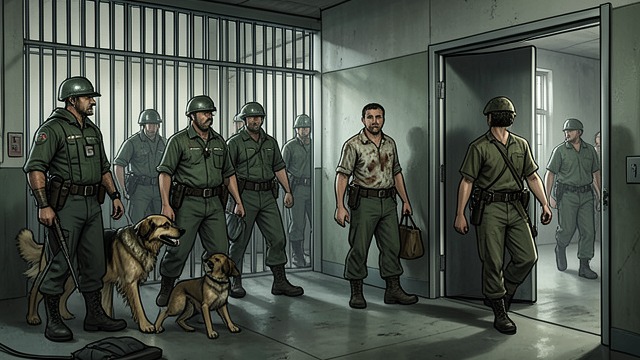
Enforcement as a Weapon
A coordinated search
Dogs and guards search cells after the prison orders a major inspection. Hoffmann has planted amphetamine in rival dealers’ rooms, expecting the search to remove them.
The inspection appears neutral, but its timing and result serve the operation’s hidden purpose.
Unequal consequences
Three inmates are caught and transferred, while Hoffmann’s own cell and books pass inspection. Formal enforcement becomes a tool that redistributes power rather than ending drug supply.
The episode shows how institutional rules can be manipulated by those who understand them.
Voluntary Isolation Fails
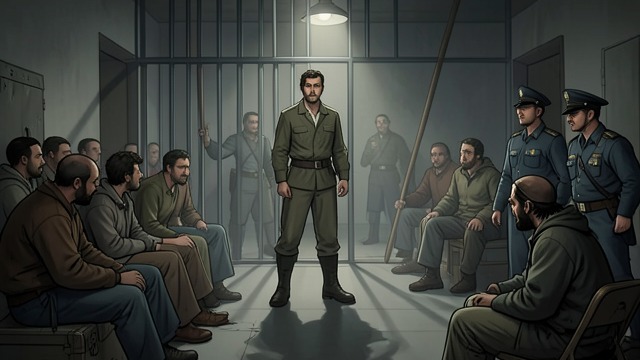
A False Shelter
A request for protection
Hoffmann enters voluntary isolation, expecting that distance from other prisoners will protect him. The unit separates groups but does not prevent hostile inmates from being moved nearby or messages from circulating.
He hears his code name and is recognized as a snitch.
Seeking the hole
To obtain enforced solitary confinement, Hoffmann attacks Oscarsson, making himself a danger under the prison’s rules. The act succeeds in moving him to a more secure cell but adds a new assault to his record.
Protection is available only when he can force the institution to classify him correctly.
Rules Overridden
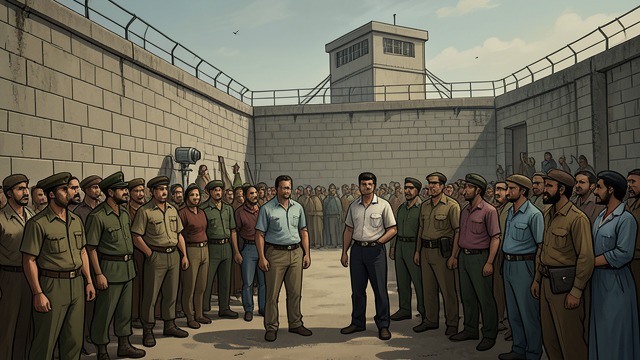
Orders Against Procedure
A threatened prisoner returned
Oscarsson receives an order to return Hoffmann to G2, contrary to the usual threatened-prisoner transfer rule. A separate instruction limits the prison’s ability to release hostages during an emergency.
The official policy is no longer a dependable guide to what staff may do.
A closed system exposed
Hoffmann’s crisis demonstrates that a prison is physically closed but not sealed from outside influence: lawyers, corrupt channels, senior orders, and informant networks reach inside.
The walls constrain the prisoner while the people outside control the rules.
On the transport bus to Aspsås
The mornings after Hoffmann arrives
The second night at Aspsås
After Hoffmann’s cover is exposed
The night before the workshop siege
