
Drug Dependence and Institutional Tolerance
Three SecondsThis thread explores how addiction, supply, and prison policy become mutually reinforcing forces, turning the drug trade into a governing structure inside the walls.
increasing Bearing strength in each event
 decreasing
Bearing strength in each eventdecreasingDependence Enters Prison
Addiction as Demand
A captive population
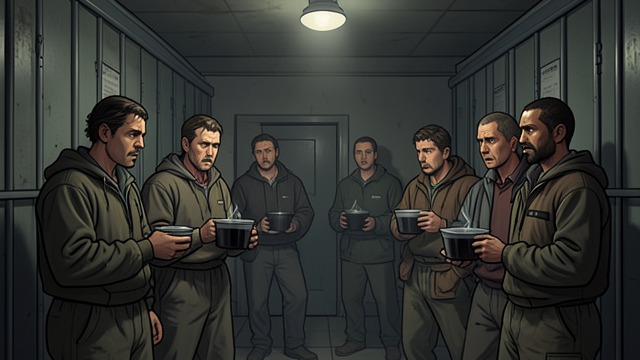
Wojtek’s leaders understand that many prisoners already depend on drugs and will continue seeking them inside. The prison walls restrict movement but do not remove addiction.
Scarcity increases price and makes supply valuable.
A system shaped by need
The organization sees dependence as a predictable market rather than a problem to solve. Its strategy uses inmates’ needs to create revenue and future debts.
The prison’s criminal economy grows from vulnerabilities that predate Hoffmann’s arrival.
The Dealer’s Authority

Power Through Supply
The new source
Hoffmann takes over by removing rivals and selling small portions at a lower price. Inmates come to him because the product is available and the cost initially appears manageable.
His authority derives from control over access rather than formal office.
From users to debtors
Those unable to pay become indebted to the organization. Their dependency gives Wojtek influence inside prison and leverage outside it.
Drug supply is both commerce and a way to organize people through coercion.
Flowers in the Governor’s Office

Normal Things Carry Contraband
A delivery disguised
Yellow tulips arrive as a business gift for the prison governor. Their buds conceal amphetamine, and Hoffmann extracts the packets during his cleaning work.
The innocent appearance allows the shipment to pass through ordinary institutional space.
Complicity without knowledge
The governor may not know what the flowers contain, but the prison’s routines enable the transfer. The scene makes the boundary between normal administration and criminal logistics unsettlingly thin.
The market does not need every participant to be knowingly corrupt; it can exploit ordinary procedure.
Anxiety Managed by Drugs
A Chemical Order
Temporary relief
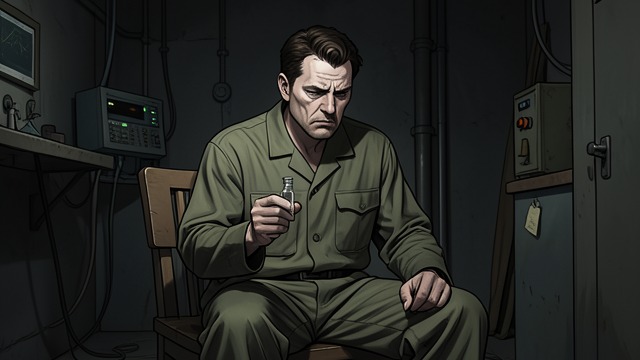
Amphetamine offers users a brief escape from anxiety, boredom, and the predictable pressure of confinement. A supply can quiet immediate distress even while deepening dependency.
The prison’s drug economy becomes an informal method of managing emotions that the institution does not otherwise address.
The institution’s calculation
The authors’ closing note argues that removing drugs would expose needs the prison system is not prepared to meet. A drug-free institution would require greater staff capacity and new forms of care.
Tolerance is presented as an institutional choice with human costs.
A Market That Outlives Its Dealer
The Structural Problem
One takeover ends
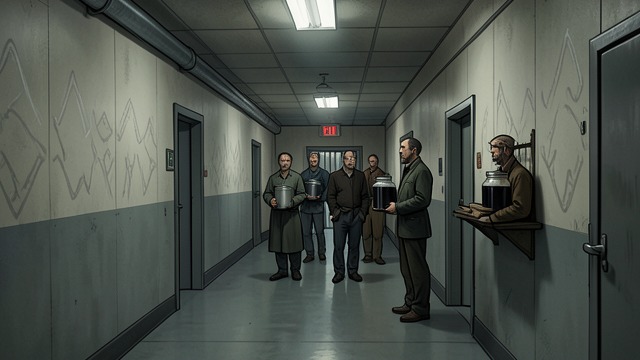
Hoffmann’s operation is interrupted by his exposure, the siege, and escape. The immediate supplier disappears, but the prison’s underlying demand remains.
Nothing in the ending suggests that removing one dealer ends drug circulation.
A repeated system
Wojtek’s plan was built to expand across prisons and recruit debtors after release. The larger structure can replace particular operators as long as dependence and institutional tolerance persist.
The thread frames prison drugs as a social and administrative problem, not merely a criminal plot device.
At the Warsaw discussion of the prison market
After Hoffmann removes the existing suppliers
The day the prison market expands
As Hoffmann’s first sales spread
After Hoffmann leaves Aspsås
