
The Human-Mule Shipment
Three SecondsThis thread follows the dangerous movement of amphetamine from Poland into Stockholm, showing how criminal logistics turn vulnerable people into concealed transport and how the delivery fuels the later investigations.
increasing Bearing strength in each event
 decreasing
Bearing strength in each eventdecreasingThe Crossing

A Human Cargo
A frightened traveler
A young Polish courier crosses by ferry while carrying swallowed amphetamine capsules. He fears the dark sea, avoids food and drink, and knows that failing to retain the cargo could cost him his life.
The journey moves through Świnoujście and onward toward Sweden, turning an ordinary passenger route into part of an organized supply chain.
The body as container
The courier’s fear is physical and immediate: each swallowed capsule has scraped his throat, and the rubber covering is meant to protect his stomach.
The shipment depends on a person who does not know the identities of the other couriers or the full scale of the operation. Human vulnerability is built into the logistics.
Fifteen Arrivals
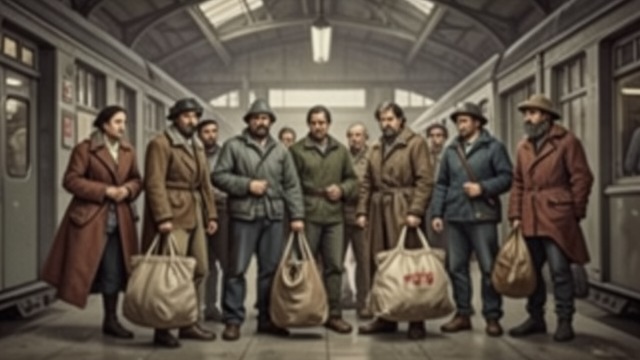
A Distributed Delivery
Many carriers
Fifteen couriers bring amphetamine into Stockholm by ferry and train, each carrying a substantial quantity. They are processed at separate locations so that no one carrier can see the whole shipment.
Hoffmann’s operation has arranged a large delivery before any buyer has been confirmed. The logistics continue even as the planned transaction begins to fail.
Risk spread across bodies
Experienced and new couriers carry different loads, with payment tied to the quantity recovered. Irina, a student from Gdansk, is among those whose bodies become temporary storage.
The organization treats people as replaceable containers. Their relative inexperience makes the extraction slower and exposes them to further harm.
Milk and Capsules

Emptying the Couriers
Forced recovery
At Hoffmann’s flat, a courier is made to drink milk and vomit repeatedly so the capsule cargo can be recovered. Hoffmann checks the output while Mariusz and Jerzy help manage the process.
The work is rough and degrading, but the product is valuable enough that the organization will not accept a shortfall.
An operation gone wrong
The buyer’s shooting forces the remaining couriers to be emptied in a second apartment, linking the drug extraction to a location meant to remain separate from criminal work.
The emergency response preserves the shipment but increases the chance that the investigation will uncover its trail.
The Counted Shipment
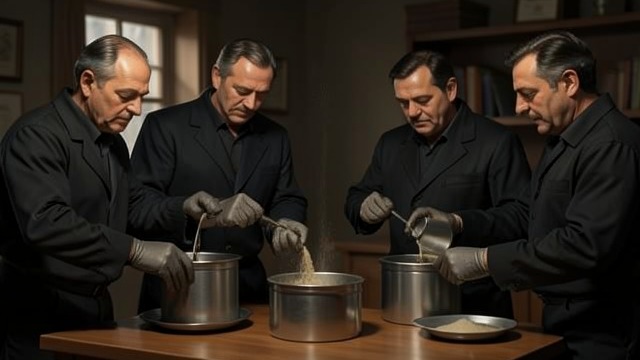
Processing the Product
A precise inventory
Hoffmann and his associates collect thousands of capsules, remove their rubber coverings, and combine the powder with grape sugar. A large quantity of pure amphetamine becomes a larger street-ready supply.
The work turns bodily contraband into standardized merchandise, with each tin weighed and sealed.
Erasing traces
They remove fingerprints and burn the clothing associated with the shooting. Hoffmann destroys evidence not only to protect the shipment but to protect his position within Wojtek.
The routine of packaging and concealment shows how quickly violence is absorbed into business operations.
A Clue in the Debris
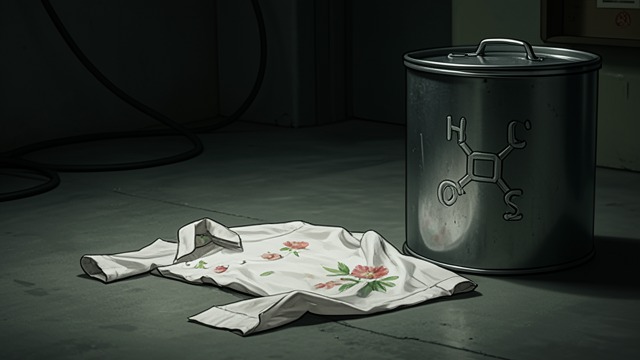
The Chemical Trail
The smell of flowers
Krantz identifies Polish Blossom residue on the discarded shirt, connecting the shooter’s clothing to the same amphetamine supply that passed through the couriers.
The product’s unusual composition provides a rare geographic lead toward a factory near Siedlce.
From shipment to murder
The courier operation was designed to supply a drug deal, but its evidence also helps investigators connect that deal to the fatal shooting.
A hidden commercial network leaves traces in bodies, clothing, and waste even when participants destroy obvious evidence.
Sunday night, aboard the ferry from Świnoujście
Monday morning, as the delivery reaches Stockholm
Monday morning, during the apartment extraction
Later on Monday, after the couriers have left
During the investigation’s Poland follow-up
