
The Prison’s Drug Economy
Three SecondsThis thread follows the mechanics of prison dealing and the way apparent enforcement, debt, and institutional tolerance allow a criminal market to reproduce itself behind the walls.
increasing Bearing strength in each event
 decreasing
Bearing strength in each eventdecreasingA Captive Market
Business Behind Walls
Demand and price
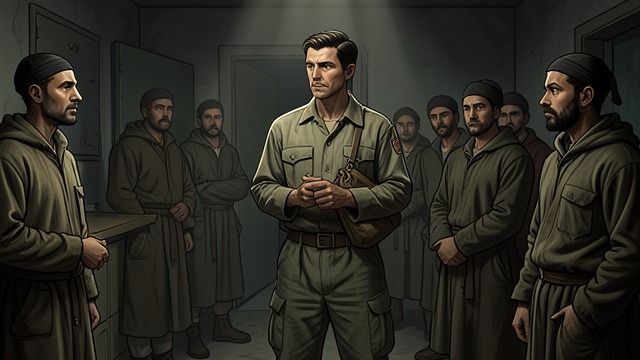
Wojtek’s leadership calculates that thousands of imprisoned addicts will pay several times street prices for amphetamine and heroin. The closed prison market offers predictable demand and limited competition.
The organization plans to control both wealthy customers and those who cannot pay.
Debt as recruitment
Inmates who incur drug debts may leave prison owing more than they can repay legally. Wojtek expects to turn them into outside workers or criminals.
The market is therefore designed as a pipeline from consumption to organized coercion.
Old Suppliers Removed

A Change of Ownership
Planted contraband
Hoffmann uses the books to plant small drug packages in rival dealers’ cells, prompting a prison-wide search with dogs. The target inmates are caught and transferred to other prisons.
The intervention looks like enforcement but serves a planned commercial purpose.
The vacancy
Removing three established suppliers creates an opening for Hoffmann to offer a new product and price. His associates help carry news between units.
The prison’s drug market is not stopped; it is handed to a new operator.
Small Sales, Large Debts
Making Customers
Controlled portions
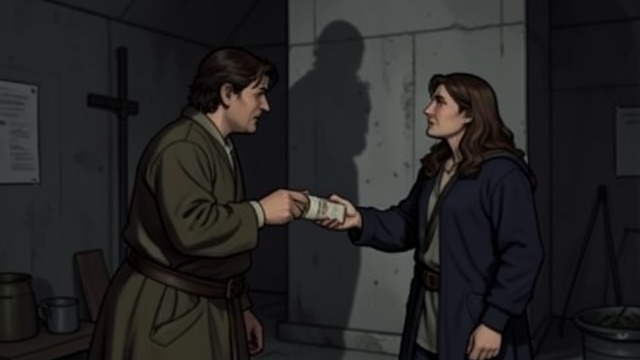
Hoffmann refuses to supply more than a small quantity to each first-time buyer. The low price attracts users while preventing them from immediately reselling his product.
He directs customers to trusted intermediaries and keeps the distribution concentrated.
Different kinds of debt
Some prisoners pay with money earned through crime; others receive drugs on credit and become liabilities that the organization can exploit.
The same sale creates immediate demand and a future means of control.
Staff as Supply Channels

The Internal Route
Corrupt access
Hoffmann plans to take over prison employees who previously smuggled drugs for the displaced dealers. Their access can provide a more reliable source than improvised concealment.
The operation depends on people entrusted with maintaining order.
A compromised institution
The prison market operates through routines, staff access, and uneven enforcement. Removing individual packages does not eliminate the demand or the routes that replenish them.
Wojtek’s expansion exposes the weakness of a system that treats drug traffic as manageable background rather than a core institutional problem.
A Market Reproduced
The System Persists
New control, same harm
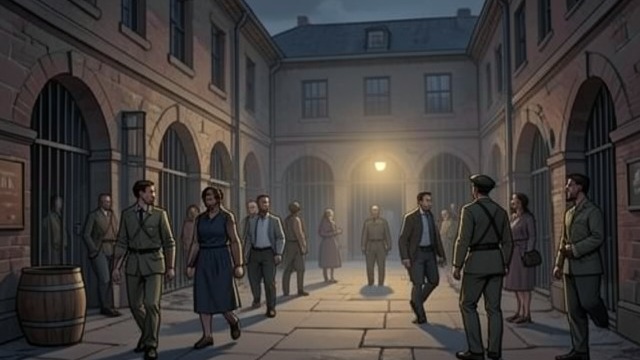
Hoffmann’s success demonstrates how quickly a prison drug network can replace its former suppliers. The organization can profit from dependence without changing the conditions that created it.
Customers remain vulnerable to addiction, punishment, and debt.
Beyond one dealer
The operation’s larger purpose is to link prison customers to criminal labor after release. A controlled market can outlast the individual who initially built it.
The plot presents drug circulation not as an isolated smuggling trick but as a structural feature of the prison economy.
At the Warsaw planning meeting
The first two days of the Aspsås operation
The first afternoon of Hoffmann’s sales
As the prison market expands beyond Hoffmann’s unit
After the takeover and before Hoffmann is exposed
