Erik Wilson
Three SecondsErik Wilson is the lawyer and covert-operation associate whose practical support helps Piet Hoffmann infiltrate Wojtek Security International and enter Aspsås prison under a fabricated criminal identity. His role is consequential because it joins personal loyalty to the machinery of undercover policing: he helps construct Hoffmann’s credibility, sets the terms of their separation, and is later left to confront the apparent death of Paula, the identity through which Hoffmann has worked. Wilson’s story traces the costs of turning a trusted person into an operational asset, while leaving open how far his own involvement extends into the concealment surrounding the mission.
Identity and Background
Wilson occupies several connected positions in the novel. He appears as a defense lawyer in a trial, as a contact within City Police, and as a participant in the long-running effort to penetrate Wojtek Security International. The evidence does not reduce him to one institutional role: legal work, intelligence handling, and personal association overlap, making him a point of contact between official procedure and covert activity.
He has an established connection with Piet Hoffmann before the prison operation begins. Three years earlier, the national crime operations division had identified Wojtek Security International as a thriving branch of Eastern European organized crime already established in Norway and Denmark. The City Police CHIS controller forwarded intelligence to Wilson and emphasized why Hoffmann could plausibly work against the organization: Polish was his other mother tongue, he appeared in the ASPEN criminal-intelligence database, and his existing criminal record could withstand scrutiny. Wilson is thus involved not simply because he knows Hoffmann, but because he is positioned to turn relevant intelligence into an undercover plan.
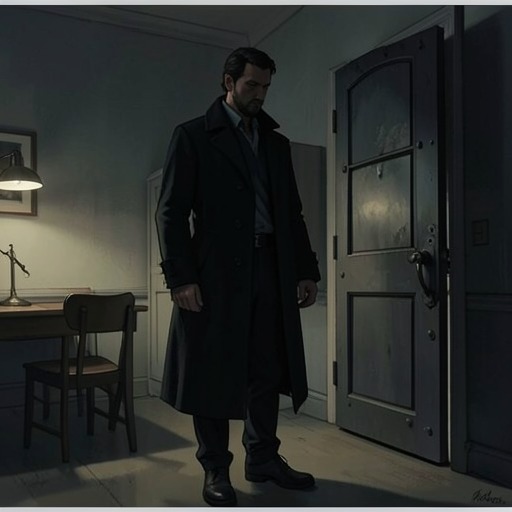
The novel also gives Wilson brief moments outside that work. He enjoys walking in central Stockholm, and on another morning he remains in bed, slow to return to the day. These details do not displace his operational role, but they place it within an ordinary life that the covert relationship repeatedly interrupts. At one point he sits on a plastic-covered sofa as the man who can now only be called Paula enters through a water-damaged hall. The scene marks the disorienting personal dimension of a transformation Wilson understands as necessary but does not find emotionally easy.
Constructing the Undercover Identity
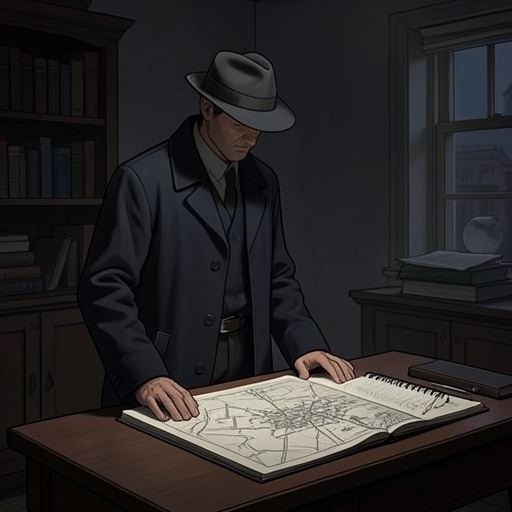
Wilson’s most concrete contribution is the manufacture of Hoffmann’s criminal standing. A petty thief is built, document by document, into one of the country’s most dangerous criminals. The supporting record draws on criminal-record files, National Court Administration databases, and police criminal-intelligence material. Patrol officers responding to incidents rely on the information available to them without knowing that the record has been engineered to support an undercover operation.
Wilson’s work goes beyond accumulating records. When Hoffmann needs greater standing to move closer to Wojtek’s nerve center, the fabricated reputation is strengthened again. Wilson copies a DSM-IV-TR psychopathy assessment that had been carried out on a Swedish criminal held at one of the highest security classifications. The detail shows how the operation borrows authority from real institutions and real classifications: a constructed identity becomes persuasive because it is embedded in systems whose ordinary users have no reason to suspect the construction.
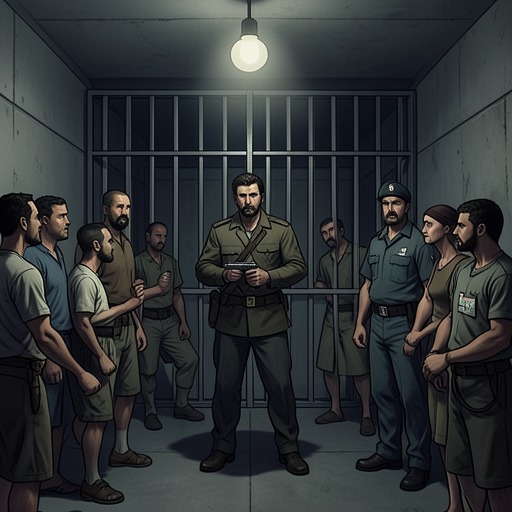
Wilson’s role also reaches the prison stage. Hoffmann has studied Aspsås prison from outside and learned about its staff and prisoners with Wilson’s help while on remand. When Hoffmann enters the high-security prison for the first time, the groundwork is already part of his preparation, although the physical experience of entry—escorts, gates, registration, and restraints—cannot be reduced to the prior research. Ten days later, the prison unit’s routines become his immediate world. Hoffmann studies the other fifteen prisoners, chooses a seat where each will see him, and deliberately behaves as though he is not afraid or waiting for permission to belong. Wilson’s preparatory assistance enables the operation, but Hoffmann must perform the identity himself in the prison’s face-to-face hierarchy.
That performance depends on corroboration. Stefan and Karol Tomasz have been discussing Hoffmann’s arrival for days and have obtained copies of his police, intelligence, prison, and judgment records through Stefan’s lawyer. At supper, older prisoners test him with questions, while Stefan and Karol are ready to intervene. Hoffmann waves them back and answers the challenge on its own terms. The sequence clarifies the division of labor: Wilson helps make the documentary identity credible, while prison allies and Hoffmann’s own conduct make it legible to the inmates around him.
Separation and Operational Risk
Wilson defines the limits of contact before Hoffmann’s staged arrest. He tells Hoffmann that he will be arrested the next day and that afterward there must be no communication with Wilson or anyone else from City Police until Hoffmann is ready and asks to leave. The instruction is framed as protection: if anyone suspects that Hoffmann is working for the police, his life will be in danger. The arrangement is therefore both a safeguard and a severance. The same secrecy that helps preserve Hoffmann’s cover removes the ordinary means by which he might seek help.
The novel makes that cost concrete when Hoffmann later tries to reach the police. He knows Wilson is in the United States, attending a course in the southeast, during the period when contact is forbidden, but he calls Wilson’s office because that is where he must begin. He asks for City Police whenever he gets through. On one attempt he counts twenty rings for Wilson and Göransson, and neither answers. The evidence establishes their absence, not that either man knowingly rejects him. From Hoffmann’s position, however, the protected silence has become indistinguishable from abandonment: he concludes that someone who was supposed to protect him or help him escape has burned him.
Wilson’s absence becomes more than a scheduling fact because Hoffmann’s position inside the prison is increasingly precarious. In one episode, Hoffmann relies on a pillow, a chair at the threshold, and a sock caught between the door and its frame as a rudimentary warning system, giving himself only a few seconds if someone attacks when the guards cannot see or hear. Later, after violence in Block G, ten members of the prison riot squad arrive in helmets and shields; six remain to deter further violence, while four escort a vulnerable prisoner to the voluntary-isolation unit in Block C. These scenes show the tightly managed institution in which Wilson’s operation unfolds, and the narrow margin between a carefully prepared cover and immediate danger.
Paula, Loyalty, and the Limits of Protection
Wilson experiences Hoffmann’s transformation into Paula as a recurring emotional shock. He has sensed Hoffmann retreating over recent days, and the last conversation has been with someone who could only be called Paula. Wilson knows the transformation is necessary and even advocates for it, yet it still unsettles him whenever someone he likes becomes someone else. His response is not evidence that he misunderstands the assignment; it shows that professional understanding cannot prevent the personal relationship from being altered by the role.
Paula is also the identity attached to the phone Wilson grips. The object gives the undercover persona a presence outside the prison and links Wilson physically to the person he is trying to protect. The relationship is not merely administrative: Wilson later thinks of Paula as both his responsibility and his friend. Those two terms carry different obligations. Responsibility belongs to the operation and its risks; friendship makes the apparent loss personally consequential even after the operational identity has displaced the familiar person.
The gap between protection promised and protection available remains unresolved. Wilson’s no-contact instruction is intended to preserve Hoffmann’s life, but when Hoffmann calls, Wilson is away and unreachable. The narrative does not establish that Wilson arranged the betrayal Hoffmann fears. It does, however, place his earlier instructions beside the unanswered calls, forcing the reader to see how a strategy designed to protect an informant can leave that informant alone at the moment of need.
Exposure, Grief, and the Recording
Four days after Sven Sundkvist asks Wilson to drive seventy kilometers to the state line and Jacksonville for lunch, Wilson has seen Paula’s face in a prison window and then an explosion with black smoke. He believes a sniper’s shot has torn apart a human being. The scene turns the undercover operation’s abstract danger into an apparent death, and Wilson’s response is direct: Paula was his responsibility and his friend. The sky seems to close in; a missed call follows, then a voice he recognizes. The sequence places presumed loss beside the possibility of renewed contact, without making the relief of certainty immediate.
Wilson is also tied to the later uncovering of the operation’s concealed history. A subsequent account identifies him as the person Sven went to meet and notes that Wilson had his laptop. Wilson eventually confirms that the meeting recording under discussion is genuine, every word of it. His confirmation makes the recording more than rumor or manufactured evidence; it verifies that the meeting occurred and that its words can be treated as authentic. The material does not establish every decision Wilson made in the wider cover-up, but it places him within the chain of people and information through which the hidden operation comes to light.
Wilson’s narrative role rests on this tension. He helps create the records and conditions that allow Hoffmann to pass as a dangerous criminal; he insists on silence as a condition of survival; and he later confronts the human consequences of a mission whose participant appears to have died. The recognizable voice at the end unsettles the finality of the presumed death, while the verified recording unsettles any simple division between private loyalty and official secrecy. Wilson is neither merely the handler who disappears nor simply the grieving friend: the plot makes him a custodian of both the undercover identity and the evidence that can expose what was done in its name.