Fredrik Göransson
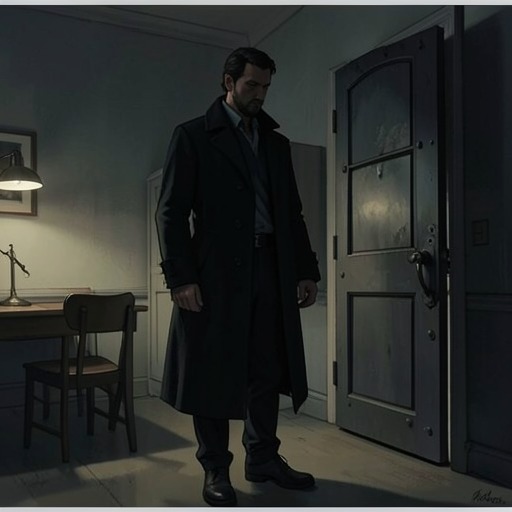
Three SecondsFredrik Göransson is a chief superintendent at the center of two connected but competing police concerns: protecting an undercover operation and investigating the killing at Västmannagatan. As Erik Wilson’s superior and the city police district’s CHIS controller, Göransson occupies a position where confidential intelligence can shape what the police pursue—and what they leave aside. His decision to prioritize the prison operation over the murder inquiry is presented not as an uncomplicated exercise of authority, but as a choice whose consequences return in the form of mounting unease.
Authority and the undercover operation
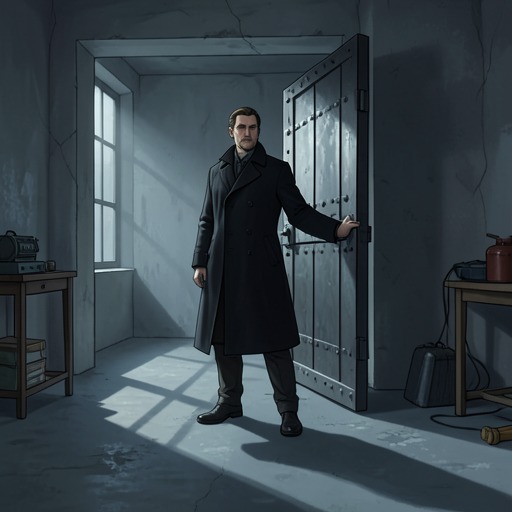
Göransson is identified through his institutional relationships. He is Wilson’s boss, and also Ewert Grens’s boss; he controls the CHIS system in the city police district. That chain of authority places him between an informant operation whose details must remain protected and an investigator who is working without access to the same information. When Wilson sits down before him, he explains that he has already met Grens, who is investigating the Västmannagatan killing. Wilson is not conducting that investigation, yet knows considerably more about what happened than its appointed investigator. The disparity establishes the difficulty Göransson must manage: privileged intelligence may be relevant to a murder inquiry while remaining entangled with the protection of a covert source.
The intelligence is not presented as a vague suspicion. A secret report from Västmannagatan 79 consists of five closely written letter-size sheets, crammed into an undersized plastic sleeve. Göransson has read it four times in the space of an hour before taking off his glasses and looking up at Wilson. The repeated reading marks the report’s weight in the scene: the information has been examined closely, but its implications do not dissolve into a simple instruction. The physical document also gives secrecy a material form, a compressed account that Göransson can study but cannot straightforwardly place into the hands of the investigator who needs answers.
Choosing between competing priorities
Wilson presses Göransson to consider what will be lost if the operation is abandoned. He argues that without Paula the opportunity will disappear and will not return, pointing to prison systems in Finland, Norway, and Denmark as a warning about the consequences of waiting. The appeal frames the undercover work as a chance to limit criminal expansion, rather than merely preserve an intelligence asset. Göransson must weigh that prospective public-safety benefit against the immediate demands of a murder investigation.
At Rosenbad, he has already made the choice. He weighs the prison infiltration against control over the Polish mafia and decides to prioritize restricting criminal expansion. The decision is therefore connected to a larger strategic calculation, not simply to a reluctance to cooperate with Grens. Yet the two priorities remain in tension: choosing the operation does not make the murder inquiry less consequential, and protecting the operation does not erase the questions the inquiry is beginning to raise.
The investigation closes in
The cost of that decision becomes personal and persistent after Grens’s visit. In the homicide corridor, beneath lights that flicker beside the vending machines, Göransson feels the dread of the previous day returning. It has outlasted the visit, the afternoon and evening, and a night’s sleep. He recognizes that placing prison infiltration above the murder investigation was not a good solution. His earlier strategic judgment now appears beside a more immediate institutional responsibility: a detective superintendent is following up a name at the edge of the case, and the investigation is moving toward a person whose record and associations demand scrutiny.
The details attached to that name sharpen the conflict. The person had worked for official Wojtek, had a conviction for aggravated assault, and had nevertheless been granted a gun licence. He is now serving a long sentence for drug offences and is due to be questioned the next morning in connection with the killing at Västmannagatan 79. The record presents a troubling sequence of official decisions as well as a possible investigative lead. In the context of the inquiry into Piet Hoffmann, those details bring the hidden criminal past and the current murder investigation into dangerous proximity. The question is no longer only whether the undercover operation can be preserved; it is also what the authorities’ own records reveal, and whether their earlier handling of the man can withstand investigation.
Contact with senior leadership
Göransson is shown in contact with the highest levels of police authority. On a national police commissioner’s sofa, he listens as a voice on the telephone shifts from an indistinct murmur to clear, emphatic words. Later, he answers Wilson’s call after the first ring, speaking quietly as though he is in a meeting and leaning forward to be heard. These brief scenes do not disclose the full content of his conversations, but they establish that his decisions sit within a wider institutional network. He is both a decision-maker and a conduit, receiving pressure and information while the investigation and the covert operation continue to intersect.
That position gives Göransson neither a clean separation between intelligence and ordinary police work nor an easy means of resolving their conflict. The report has been read repeatedly; Wilson has made the case for preserving Paula’s opportunity; and Grens’s inquiry keeps returning to a name connected with Wojtek and a serious criminal record. Göransson’s unease follows from the convergence of those facts. The novel presents his authority as consequential precisely because it cannot make the competing obligations disappear: a choice made to restrict criminal expansion leaves the murder investigation waiting, and the investigation’s next steps threaten to expose how much has been held apart.