Jens Christian Toft
Three SecondsJens Christian Toft, also identified as Carsten, is the murdered informant whose case connects a killing in Stockholm to Copenhagen Police’s use of criminal infiltrators and to the Polish group Wojtek. His identity is established through both investigative testimony and DNA comparison, but that certainty does not solve the murder: the inquiry confirms who he was and what work he had done, then runs into a wall over who killed him and why.
Identity and Background
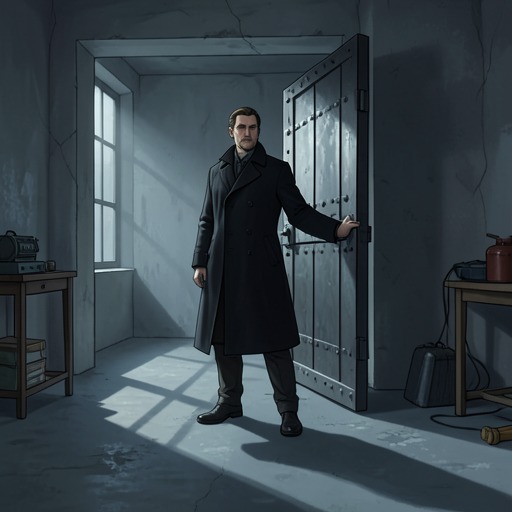
At a meeting where investigators examine his photograph, Toft is described as a man somewhere between thirty and forty, with a crew cut, fair coloring, and coarse features. Those details provide a visual description, not a complete account of his life. The more consequential facts emerge from his records and from the explanation of his recruitment: he was a Danish citizen, born and raised in Sweden, and had convictions for aggravated assault, perjury, and extortion. Before becoming an informant, he served two years in D Block at Vestre Prison in Copenhagen.
His background makes him legible to the police as a potential infiltrator, but it also defines the risk built into that role. Copenhagen Police recruited him from a criminal context in which he had already been convicted and imprisoned. The account explicitly places his recruitment alongside the practice of taking informants from prison or even from remand. Toft was therefore not an outside observer entering organized crime for the first time; the police selected someone with a criminal record and put that experience to operational use.
Recruitment and Work as an Infiltrator
Copenhagen Police trained Toft and supplied him with a background, then paid him to initiate deals with major organized-crime figures. The stated objective was broad: he was to approach as many important players as possible. The groups named include Hell’s Angels, Bandidos, Russians, Yugoslavians, and Mexicans. These examples convey the reach of the assignment, but the account does not specify what information Toft gathered from each group or what consequences followed from his contacts. His work is presented through the risks and scope of the task rather than through a detailed record of successful operations.
Wojtek was not a one-time contact. Toft had initiated a deal with the Polish group three times, making the meeting connected to his death the third such approach. Investigators describe Wojtek Security International as an officially legitimate security business—providing security guards, bodyguards, and cash-in-transit services—that served as a facade for organized crime. This distinction matters to Toft’s role: he was not simply dealing with an identifiable criminal gang operating openly, but making approaches to an organization whose public business concealed its criminal character. The evidence establishes his repeated contact with Wojtek; it does not establish that he understood every part of the organization or explain what the third deal was intended to accomplish.
Identification and the Murder Investigation
Toft is first connected to the case through an enlarged color photograph presented to Ewert Grens. The image prompts the identification of the man as Carsten, followed by the clarification that the name was Toft’s. A separate description from the autopsy identifies features of his internal surgical and dental work as consistent with someone who had probably grown up in Sweden. That assessment accords with the biographical information that he was born and raised there, despite his Danish citizenship. In the investigation, identity emerges from the convergence of a face, a forensic description, and records of a life divided between nationalities and institutions.
The laboratory comparison provides a more exact link. Nils Krantz shows Grens a DNA profile supplied by Copenhagen Police for Jens Christian Toft and compares it with blood found on a shirt recovered from the trash at Västmannagatan 73. The STR markers match, identifying the blood as Toft’s. The same shirt also carries blood and gunshot residue associated with the flat at Västmannagatan 79, where Toft was killed. The forensic findings connect the garment, the victim, and the crime scene, but Grens is focused on the murderer, not on confirming a victim’s identity. The comparison strengthens the case’s factual foundation without, by itself, pointing to a perpetrator.
What the Evidence Leaves Unresolved
The murder investigation establishes that Toft was an informant for the Danish police and that drug mules and amphetamines were connected to traces found in the case. Investigators also confirm that at least one other Swedish-speaking person was in the flat when the alarm was raised. The voice that reported the emergency becomes familiar to Grens through repeated listening, but when he asks whether it is Toft’s voice, the answer is no; the available recording is not enough to make a definite identification. This distinction leaves an important gap between knowing that another person was present and knowing who that person was.
Within days, the investigators have identified Toft, found traces linked to the drug operation, and established the existence of Wojtek, assumed to have its head office in Warsaw. Yet those discoveries do not carry them to the killer. The case is described as being at a standstill, and Grens finds that repeated efforts over the following two weeks have not taken the inquiry past that barrier. Toft’s narrative significance lies in this imbalance: his biography and police role can be reconstructed in considerable detail, while the central question raised by his death remains unanswered. He is both a person with a documented criminal and professional history and the point at which the investigation’s verified facts stop yielding a solution.