Jerzy
Three SecondsJerzy is an associate in Piet Hoffmann’s drug operation, present during the emergency processing of a shipment of amphetamine in a Stockholm flat. He works alongside Mariusz, helping to recover capsules from drug couriers, but the episode also shows how quickly his practical role can turn threatening: when the word police enters a heated exchange, Jerzy shouts for Mariusz to pull the trigger. His characterization rests on this sharp contrast between disciplined participation in the delivery and readiness for violence when suspicion takes hold.
Identity and Position
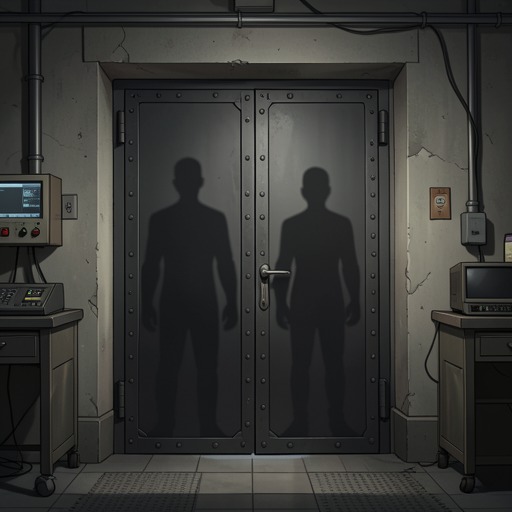
Jerzy is one of two similar-looking men in their forties who work with Hoffmann during the shipment crisis. They wear expensive suits that look cheap, have shaved heads with a visible halo of day-old brown hair, and rarely show amusement; Hoffmann has never seen either man laugh. The description gives Jerzy little individual distinction from Mariusz at first. Their sameness is part of the impression they make: they appear as a pair, emotionally closed and difficult for Hoffmann to read.
The men understand Polish, the language Hoffmann uses when giving them instructions, and they do not understand the Swedish spoken during the later confrontation. Their work is subordinate to Hoffmann’s direction in the immediate operation: he tells them what to do, and they carry it out. Yet this does not make them harmless or reliably controlled. Hoffmann recognizes that they have no limits, and the shooting already connected to the botched delivery makes the danger behind their efficient obedience concrete.
Work in the Shipment Crisis
Hoffmann’s shipment has gone badly wrong, and the couriers have to be emptied before anyone can explain the failed delivery to Warsaw. Jerzy and Mariusz enter the kitchen to deal with a courier who is vomiting. In the wider operation, the pair are also shown at the sink in yellow rubber gloves, picking fragments of brown rubber from the material brought up by a young woman as she vomits into buckets. Their work is not an abstract part of the drug trade: it is physical, messy, and necessary to recover the concealed capsules.
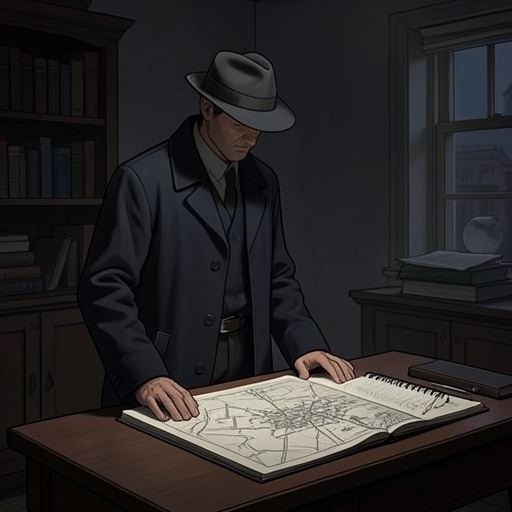
The crisis expands beyond the first flat. Hoffmann does not want his flat to be associated with drugs or Poles, but the shipment has gone wrong and there is no time to keep the operation elsewhere. The couriers are brought there for processing, and the last one is the fifteenth and final mule. Jerzy and Mariusz are still working beside the sink as Hoffmann crosses his office, with its antique desk, locked gun cabinets, and open fire, to check the recovered goods.
At the round kitchen table, Hoffmann finds 2,749 cleaned, regurgitated capsules, amounting to a little over twenty-seven kilos of pure amphetamine. The capsules are the accumulated result of the recovery effort in which Jerzy has participated. The exact count gives the scene a stark measure of the operation’s scale: what began as an improvised response to a failed delivery has become a substantial quantity of recovered drugs that must still be dealt with.
The Confrontation
Jerzy’s most revealing moment comes during the argument over the buyer. Hoffmann has been speaking Swedish to the third man, and the dispute grows loud enough for Jerzy and Mariusz to open the kitchen door. Hoffmann waves them back, an effort to keep them out of the exchange. When the men later shout again, Jerzy is the louder voice: he roars at Mariusz to pull the trigger while Hoffmann raises both arms and steps closer.
The word police does not need translation. Jerzy and Mariusz may not understand the surrounding Swedish, but they recognize that accusation, and Jerzy responds as though the threat requires immediate violence. Hoffmann tells them to back off and identifies the man as police. The sequence puts Jerzy’s readiness to shoot beside Hoffmann’s attempt to stop him, making clear that Hoffmann’s authority depends on managing armed associates as well as conducting the deal.
Afterward, Hoffmann takes measured breaths and returns to the kitchen table. He explains that he heard the man say police and that Mariusz heard it too. The exchange does not establish that Jerzy has understood the full conversation or why the word was spoken; instead, it shows how little is needed to trigger his response. A single recognizable word cuts through the language barrier and turns a dispute into an imminent threat.
Narrative Role
Jerzy’s role in the episode is defined by action more than personal history. The narrative provides no independent account of his past, private loyalties, or motives. It does show him as a functional member of the delivery operation: he follows Hoffmann’s instructions, works with Mariusz to process the couriers, and helps recover the shipment after the plan has gone wrong. That practical competence sits uneasily beside his shouted demand for a shooting.
The contrast also sharpens Hoffmann’s precarious position. He is responsible for a large shipment, for a flat he wants to keep separate from the drug business, and for associates whose capacity for violence he respects. Jerzy is not simply a background worker in that pressure; when he urges Mariusz to fire, he makes the risk immediate. His presence helps define the operation as a system in which routine labor, criminal discipline, and sudden violence occupy the same cramped domestic space.