Karol Tomasz Penderecki
Three SecondsKarol Tomasz Penderecki is a long-sentenced member of the Wojtek organization inside Aspsås Prison, where he helps Piet Hoffmann establish control over the prison drug market. Hoffmann counts him among his useful allies in the takeover and, at the same time, among the men who could become his executioners if his identity as Paula is exposed. That double role makes Karol part of the prison’s informal power structure and one of the risks built into Hoffmann’s plan.
Role in the prison takeover
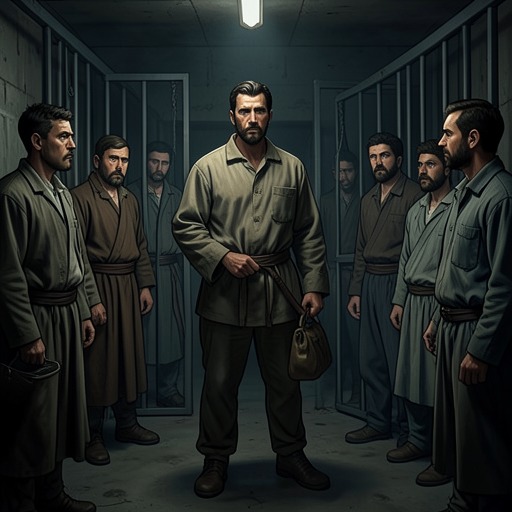
Karol is introduced alongside Stefan Lygas as one of four Wojtek members serving long sentences at Aspsås Prison. The narrative pairs the two men with sharply distinguishing facial descriptions: Karol is associated with the thinner, longer face, a nose broken in several places and poorly healed, and a chin and cheek stitched by an unskilled hand. Hoffmann has been looking for both men as he enters the unit, since they are his helpers in removing the competition and taking over the drug trade. Yet their usefulness depends on the secrecy of his undercover identity: if they learn that he is Paula, Hoffmann expects them to turn from allies into executioners.
Karol and Stefan have prepared for Hoffmann’s arrival before he joins the unit. Through Stefan’s lawyer, they obtain copies of material from the National Police Board’s criminal-record files, the criminal intelligence database, prison records, and Hoffmann’s most recent judgment. They have also circulated information about why Hoffmann was imprisoned, whom he had worked with, and his standing with Eastern European organized crime. The advance briefing gives the new arrival a criminal history legible to the prisoners, helping establish the basis on which they will judge him.
At supper, two older prisoners demand to see Hoffmann’s papers. Karol and Stefan get up as if to intervene, but Hoffmann waves them back and handles the challenge himself. Their readiness to act shows their protective role, while his decision to answer for himself lets him make his own first impression. The scene presents prison respect as something negotiated face-to-face: the documents and reputation prepared in advance matter, but so does the manner in which a newcomer responds to pressure.
The takeover and its risks
After learning his cleaning duties, Hoffmann waits in his cell until the other prisoners return, then catches Karol and Stefan’s eye and silently signals that the operation will begin that evening. The signal turns their earlier readiness into action: Hoffmann uses forty-two grams of 30-percent manufactured amphetamine to fell the prison’s three main dealers. Karol is placed among the collaborators who make the first move possible, although the account does not isolate his individual part in carrying it out. The operation is consequential beyond the unit: reports reach Warsaw and the deputy CEO, who mark the next stage of the plan.
Karol’s alliance also belongs to the threat surrounding Hoffmann’s undercover identity. When Hoffmann realizes that someone has exposed him as Paula, he thinks the betrayer must be one of the four men who had served as his protection and means of escape. Karol is included in that circle, but the evidence does not identify him as the informer. The uncertainty sharpens the danger of the partnership: the same Wojtek members whose support helps Hoffmann seize control could become his executioners if they discover who he really is.
An ally within the story’s uncertainty
Karol’s importance also lies in what the narrative does not settle about him. When Hoffmann concludes that one of the men who had served as his protection has betrayed him, Karol belongs to the circle under suspicion, but no evidence establishes that he was the informer. The distinction matters: his involvement in the takeover is concrete, while his part in the exposure remains unresolved. The danger is therefore not a confirmed personal treachery but the collapse of trust within the very network Hoffmann relied upon.
That uncertainty keeps Karol’s role tied to the prison’s shifting allegiances rather than to a separately developed private history. He is named as a collaborator and potential threat, but the evidence gives no account of his motive, response to Hoffmann’s exposure, or eventual fate. The narrative leaves him inside the unresolved space between those functions: a member of the alliance that enables Hoffmann’s rise, and one of the men among whom the source of the betrayal may be found.
Informal hierarchy and narrative function
Karol’s place in the takeover connects him to a prison hierarchy governed not only by the crimes prisoners had committed but by control of what they could obtain inside. Murderers ordinarily commanded the greatest respect, followed by major drug dealers and bank robbers; yet control of drugs and syringes could make even murderers defer to the supplier. Karol is not shown independently directing that market, but as one of Hoffmann’s collaborators he belongs to the alliance through which its established order is overturned. His significance is therefore structural: the narrative places him at the point where organized-crime loyalties become practical power within the prison.