Kronoberg Police Headquarters
Three SecondsKronoberg Police Headquarters is the Stockholm police workplace where Ewert Grens keeps an office that has become inseparable from his working habits and private grief. Its ordinary spaces—a corridor, a small pantry, the courtyard, and the offices reached through the switchboard—frame both the practical business of policing and Grens’s repeated confrontation with the absence left in his life.
Setting and daily routine
Kronoberg appears as a working headquarters rather than a grand institutional landmark. Its courtyard is already warm and bright at half past four on one morning; inside, Grens moves between his office, the corridor, and a small pantry where a towel hangs beside the tap. The details establish a place used at hours when much of the building is quiet, and where the boundaries between work and private time have worn thin.
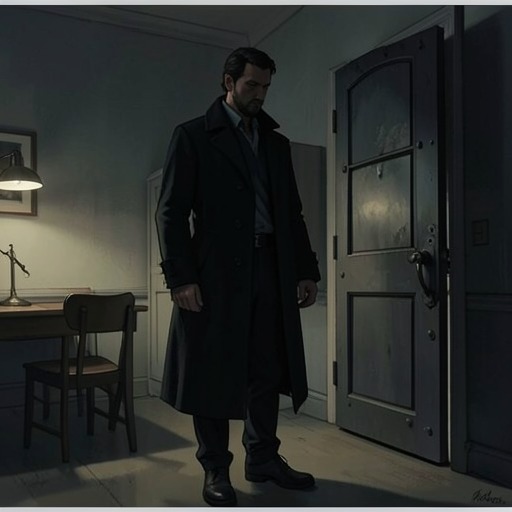
Grens’s office is often lit early. He normally sleeps there and is at his desk as soon as daylight comes, a routine so established that Göransson walks slowly past it expecting to find him. The office is not simply an assigned room: it is a regular sleeping place and the center of a working day that has consumed decades.
Grens’s office and the traces of loss
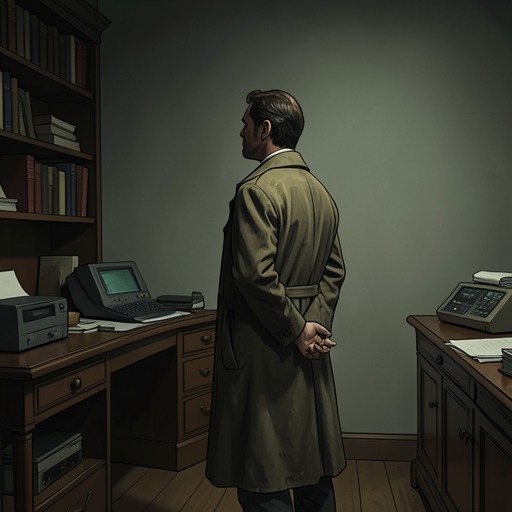
The office shelf behind Grens’s desk becomes a recurring focus. Its marks record the former positions of a cassette recorder, the cassettes, a photograph, and two loudspeakers. The recorder had been given to Grens for his twenty-fifth birthday, and the objects had occupied a substantial part of his life over thirty-five years. After they are gone, he wipes the outlines away; later, he looks at the shelf again, now filled by files and a cactus, and finds that even the dust is no longer there.
That physical clearing does not settle what the room represents. Grens returns his attention to the shelf, then to the ceiling’s cracks, while postponing a visit to the cemetery. At headquarters, the residue of a long personal history sits beside the files of current police work. The office makes that overlap visible without resolving it: the objects can be removed, but their absence remains part of the room’s meaning.
A workplace shaped by urgent business
The headquarters also functions as a point of departure and communication during the investigation. Grens leaves early for Aspsås prison, and his absence is immediately noticeable to Göransson, who arrives at the building anxious and hoping to speak with him. Göransson finds Grens’s office empty and eats breakfast in the national police commissioner’s office instead. The scene places the investigation’s urgency inside the routines of the institution: coffee, sandwiches, corridors, and offices continue even as key people are trying to reach one another.
On another occasion, Grens tries to contact Göransson because he needs help with a critical matter. When the office does not answer, he calls the switchboard and asks to be connected to Göransson’s mobile phone. Göransson answers, but says he is occupied with a separate critical problem. The headquarters’s communication chain connects the men, yet it does not guarantee that their priorities or availability align.
Narrative significance
Kronoberg’s significance lies in this double function. It is a practical base for police work, with offices and channels through which urgent decisions are pursued, but it is also the setting in which Grens’s personal history repeatedly presses into the present. The contrast between institutional routine and the emptied shelf gives the headquarters a quiet emotional weight: the place keeps operating, while the objects that once structured Grens’s private hours have disappeared.