M107 anti-materiel rifle
Three SecondsThe M107 anti-materiel rifle enters the prison siege as a weapon whose formidable power is inseparable from its unsuitability for the task demanded of it. The military marksman Sterner is expected to help stop a threat, but the rifle he has been given is designed for material targets, not a controlled shot against a person. Its ammunition can penetrate reinforced glass; it cannot make the intervention nonlethal. The weapon therefore brings the crisis into sharp focus: having the capacity to strike is not the same as having a safe way to do so.
Design and Intended Use
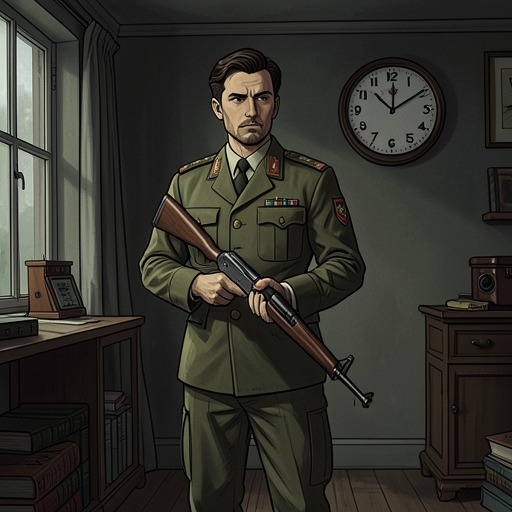
Sterner identifies the weapon as an M107, a heavier and more powerful anti-materiel rifle rather than a normal sniper rifle. He describes it as intended for targets such as buses, boats, and mines. That stated role matters in the siege because the request is to shoot at a human target, while the M107’s power is suited to damaging or destroying equipment. The difference is not merely one of scale: it determines what the rifle can responsibly be used to do.
The weapon is presented through practical distinctions rather than technical specifications. Sterner says that the ammunition he has with him consists of fire and explosive ammunition and cannot be used against a person. He also estimates the rifle at about fifteen kilograms when he hands it to Ewert Grens. Its substantial weight makes it an object to be physically managed, not an effortless extension of the marksman’s aim. The scene supplies no broader account of the weapon’s construction or operating mechanism; its defining characteristics here are its anti-materiel purpose, its weight, and the destructive ammunition available for it.
The Rifle at the Prison
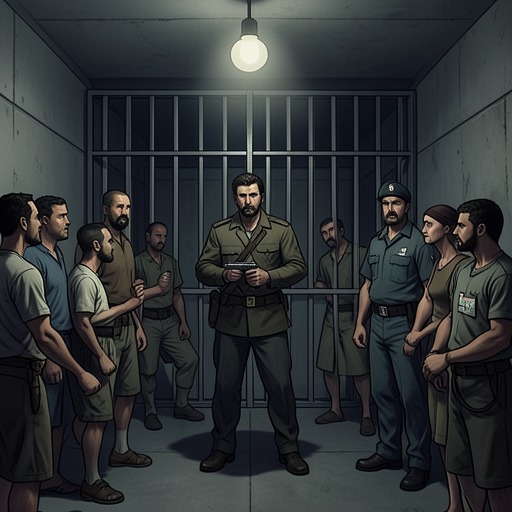
The M107 arrives at a moment when an armed response is being considered during the prison crisis. Sterner has emerged onto a narrow balcony and taken the place of one of the men already positioned there, with another colleague acting as observer. For a further five hours and thirty-eight minutes, Sterner will legally serve as a policeman. That temporary legal status places a military marksman and his rifle inside a police operation, but it does not change what the weapon is capable of doing.
The rifle is directed toward the prison, with Sterner focused through its telescopic sight on a window at the top of Block B. He has been told to prepare for a long-distance shot. Yet the assignment and the equipment do not align: the person he is being asked to target is a soft target, not a vehicle or other piece of materiel. Sterner objects to firing on a person with the ammunition he has. His hesitation is not uncertainty about whether the rifle can reach its target; it is an insistence that the likely effect of a successful shot cannot be separated from the weapon’s destructive force.
Ammunition and the Limits of a Shot
The account distinguishes the ammunition Sterner has from the ammunition he would have preferred. Proper information in advance would have allowed him to load under-calibrated ammunition, which is on its way by helicopter from Kungsängen but will not arrive in time. The contrast makes the shortage consequential: the operation has a weapon in position, but not the ammunition Sterner considers appropriate for the human target before him.
With the ammunition already available, the rifle can penetrate reinforced glass. Sterner explains that this capability does not provide a way to injure the target without killing him. A shot intended merely to wound is not presented as a viable compromise; once fired, the shot will be lethal. He also warns that firing at a limb would not make the result controllable, since a miss is possible and even a hit could cause further destructive injury. In the exchange with Grens, the rifle’s destructive reach is thus recast as a limit: it can deliver force through a barrier, but cannot offer the precision of consequence the situation demands.
Object and Narrative Significance
When Sterner hands the rifle to Grens, its weight becomes part of the decision confronting them. Grens has argued that the immediate danger to others must be stopped, while Sterner makes the physical consequences of using this particular weapon explicit. The exchange does not resolve the disagreement by making the rifle more versatile. Instead, it exposes the conflict between urgency and the limits imposed by the equipment at hand.
The M107 consequently functions as more than a marker of the siege’s military scale. Its stated uses, the ammunition’s destructive character, and the delayed arrival of an alternative together explain why the marksman refuses to treat a shot at a person as an ordinary sniper task. The weapon makes the choice materially specific: the question is not simply whether Sterner can fire, but whether the only available shot can avoid a lethal outcome. In that sense, the rifle concentrates the scene’s central tension between stopping a threat and accepting what the available means would do.