Mariana Hermansson
Three SecondsMariana Hermansson is a police investigator whose alertness and initiative repeatedly turn uncertainty into actionable evidence. She helps Ewert Grens and Sven Sundkvist investigate a murder, then plays a consequential role in the Aspsås Prison hostage crisis: her inquiries expose a false account of Piet Hoffmann’s supposed isolation, and her urgent attempt to reach Grens becomes entangled with the operation’s fatal timing. Her characterization rests less on biography than on the way she works—observant, independent, and willing to pursue an answer even when events are moving faster than the people directing them.
Identity and Introduction
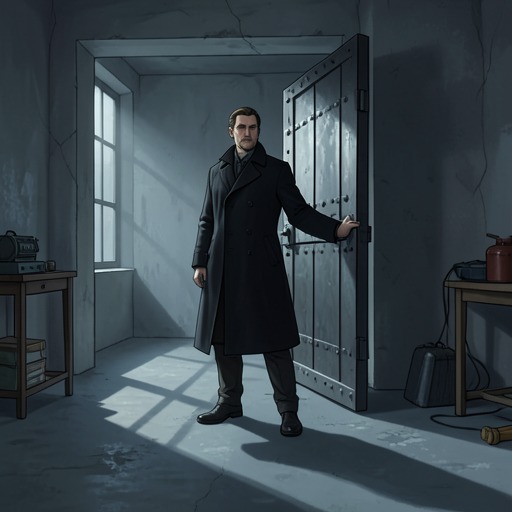
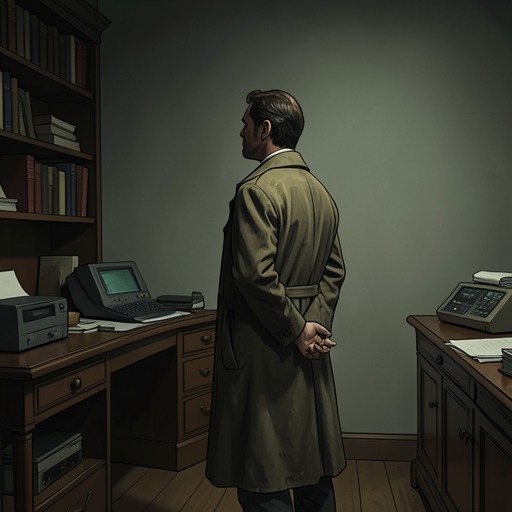
Hermansson first appears at a moment of private change for Grens. He has removed the music that usually fills his room and is packing away belongings; a gap on the bookshelf makes the alteration visible. When Hermansson enters without knocking, she stops at the empty shelf and asks what he has done. The missing music and boxes register to her as an unmistakable break in his routine, though she does not yet know what the change means to him. Her arrival also shifts the scene back toward police work: she tells Grens that the investigators have received a call-out at Västmannagatan 79, where the killing appears to have been an execution.
At the address, practical authority matters more than familiarity. Three police cars and a forensic vehicle have crowded the street, and a young uniformed officer approaches the unfamiliar people in a red car. Hermansson anticipates his question, lowers the window, and presents her police identification. She identifies herself and her colleagues as investigators, securing their way into the scene without waiting for the officer to recognize Grens. Upstairs, she has her identification ready again, but notices that the older officer on watch already recognizes Sundkvist. The contrast leaves her wondering whether she will ever remain in one place long enough to be known beyond her immediate colleagues; she does not see herself as someone who stays.
Working Relationship with Grens
Hermansson’s early scenes establish her as both a colleague and a counterpoint to Grens. She drives through busy Stockholm traffic, while Grens sits in the back because she drives better than either he or Sundkvist. He has no music to play and no desire to answer the radio, so the usual ways he withdraws from conversation have fallen away. Her competence is presented plainly, through the job she performs rather than through a claim about her ability.
The crisis response makes that working relationship more complicated. Driving north toward Aspsås Prison with the siren sounding and blue lights flashing, Hermansson and Sundkvist travel in near silence. Sundkvist finds cassettes of Siw Malmkvist’s songs, music associated with Grens’s past and their habit of avoiding difficult conversation. Grens orders him to take the cassette out. The moment shows how closely the others have learned to accommodate Grens’s grief, but it also marks a limit: Hermansson is present in a partnership whose shared habits and losses do not entirely belong to her.
Grens nevertheless comes to value her judgment. During the siege, he thinks of her as intelligent and good at her work, and recognizes that she looks at him directly, without the deference many people show him. His imagined prospect of asking her for coffee and cake expresses a wish to resume ordinary human contact after prolonged withdrawal. The thought of her as the daughter they never had belongs to Grens’s private imagination, not to an established family relationship or a stated reciprocal attachment. Their connection remains grounded in professional respect and in the possibility that Grens may again reach out to another person.
Investigation at Aspsås Prison
At the prison, Hermansson contributes to the operation by testing what officials say against what can be verified. Grens studies the workshop from the churchyard and hands her his binoculars, bringing her into the shared assessment of the building and its entrances. Later, as the siege develops, he takes command from a control post in Aspsås Church. The surrounding circumstances are tense: the prisoners are locked in their cells, armed officers are positioned around the prison, and a marksman is preparing for a shot that Grens understands will be lethal.
Grens asks Hermansson to contact the prison doctor and establish how Hoffmann, supposedly placed in isolation in the hospital unit, can now be standing with a gun and threatening hostages. She goes to the hospital unit in another part of the prison. The doctor’s account contradicts the explanation: Hoffmann has not been in any of the beds, there has been no identified epidemic, and no isolation has been ordered. Her findings convert a suspicion into evidence that the official story is false. The discrepancy matters not simply because it concerns one prisoner’s movements, but because it undermines the account on which the operation has been proceeding.
Hermansson brings the information back to Grens. In the prison yard, she tells him about her conversation with the doctor; Grens concludes that the claimed epidemic and isolation are part of a broader lie and instructs her to continue by finding the chief warden and demanding an explanation. Later, she knocks on a locked door in a passage under the prison and looks toward the camera before running in the direction of central security and the exit. Her actions connect the inquiry inside the prison to the effort to reach Grens outside it, even as control of the crisis tightens around the workshop.
The Warning That Arrives Too Late
Hermansson also investigates Hoffmann’s family circumstances. She checks personal details and finds that Zofia Hoffmann is registered at an address in Enskede and that her employer is Ericsson Enterprise AB. According to the employer, Zofia disappeared from work shortly before lunch on the previous day, while the hostage crisis was under way. This establishes a concrete connection between the unfolding prison emergency and Hoffmann’s household, although the evidence does not establish where Zofia has gone.
Hermansson tries to take important information to Grens in person. She later explains that she ran through the prison corridors and drove as fast as she could toward the church. Grens’s phone was switched off, and she could hear his conversation with the marksman over the car radio, including the order and the sound of the shot. The account makes the timing of her failure painfully specific: she is not described as choosing to withhold what she knows, but as being unable to reach Grens before the operation’s irreversible moment. The information she has gathered and her urgency to deliver it are distinct from the decision to fire, which belongs to Grens.
Continuing Role and Significance
Hermansson remains part of the larger effort to understand what happened. When Grens later confronts Erik Wilson, he names Hermansson among the investigators Wilson allowed to spend weeks on an inquiry whose answer Wilson already possessed. Grens’s accusation places her within the cost of concealed information: she has worked alongside him and Sundkvist without access to the truth Wilson was withholding. Grens also later reviews her interviews alongside Sundkvist’s, the forensic material, and the prison surveillance footage, treating her account as part of the evidentiary record.
Across these episodes, Hermansson’s role is both investigative and relational. She notices a change in Grens before he explains it, performs the practical work that secures access to scenes, verifies a prison doctor’s account, and tries to deliver information under severe time pressure. Her independence is not a guarantee that she can control events: she can discover that the isolation story is fabricated and still arrive too late to prevent the shot. The contrast gives her competence its narrative weight. She does not resolve the crisis by authority or force; she contributes by questioning what officials claim, following the evidence, and continuing to act when the larger operation has narrowed toward a decision that cannot be undone.