The prison drug economy
Three SecondsThe prison drug economy is the system of supply, use, debt, and inmate power that persists behind prison walls. The novel presents it both as a practical feature of prison life and as an institutional failure: drugs remain available even though they contribute to anxiety, reoffending, and the debts that can drive released inmates back to crime. At Aspsås Prison, that economy also determines status and danger, making control of the trade central to Piet Hoffmann’s undercover strategy.
Supply and institutional tolerance
The novel’s closing factual commentary describes several routes by which amphetamines can enter high-security prisons: concealed in bunches of yellow tulips sent to wardens, hidden in the margins of hardback library books, or carried in plastic bags introduced through toilets with the aid of elastic bands and spoons. These methods make the prison’s apparent closure deceptive. The commentary argues that the Swedish Prison and Probation Service could stop the supply, but does not do so, despite recognizing drug abuse as a major contributor to reoffending.
The stated institutional rationale is practical rather than exculpatory. Drugs reduce anxiety among inmates; without them, the commentary suggests, anxiety and disorder would increase, placing new demands on staff. Meeting those demands would require improved skills and competence, at a cost society is described as unwilling to bear. Tolerance thus becomes a way of managing the pressures of confinement, while leaving the drug economy and its harms in place.
Dependence, debt, and the closed system
The book links prison drug use to what happens after release. An inmate who leaves prison with an ongoing habit may return to crime to finance it and repay drug-related debts accumulated inside. The economy therefore does not end at the prison gate: dependence and obligations incurred during a sentence can carry into life outside and help reproduce the cycle of offending.
The commentary also connects drug availability to the prison’s everyday regulation. It describes an amphetamine user who, after getting a dose, borrows pornographic magazines and withdraws to a cell. The example makes drug use part of the institution’s ordinary rhythms, not merely a hidden criminal enterprise. The surrounding argument is deliberately uncomfortable: the system that could prevent supply is represented as tolerating it partly because chemical relief helps contain the demands that a drug-free prison would impose.
Inmate hierarchy and Hoffmann’s takeover
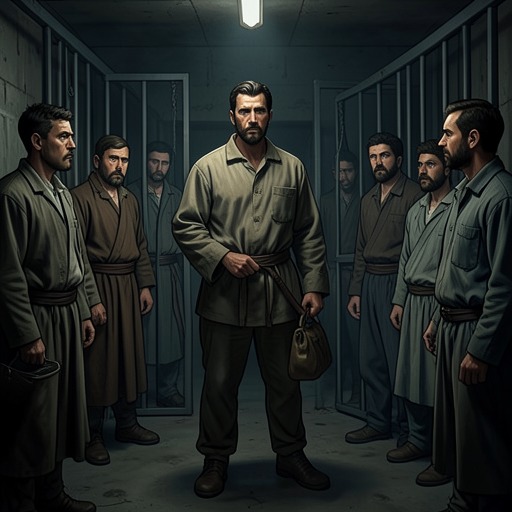
At Aspsås Prison, the drug market is inseparable from informal authority. When Hoffmann arrives, he has studied the unit and its inmates in advance. He deliberately takes a visible place in the television corner, occupying another prisoner’s preferred chair and using marked cards without asking. The performance is meant to establish that he is neither frightened nor waiting for permission to belong. His arrival is tested at supper, where two older inmates demand to see his papers; Hoffmann treats the confrontation as a contest over respect, while Stefan Lygas and Karol Tomasz Penderecki initially move to intervene.
The market’s existing personnel are also the means by which Hoffmann can change it. Stefan and Karol Tomasz have prepared the ground by discussing his arrival and circulating records and information about his criminal identity. Hoffmann needs their help to eliminate the competition and take control, but he also understands that the same men could become his executioners if they discover that he is Paula, his undercover identity. Cooperation in the prison economy is therefore conditional: the people who provide protection and access also embody the danger of exposure.
Hoffmann’s first decisive move is to use forty-two grams of manufactured amphetamine at 30 percent strength to fell the prison’s three main dealers. Reports reach Warsaw and a deputy CEO, who celebrate the next stage. The episode shows how quickly a drug seizure or supply can become a transfer of power: Hoffmann’s operation is not simply about getting drugs into prison, but about reshaping who controls their distribution. The intended respect, the practical alliance with Stefan and Karol Tomasz, and the threat of betrayal all belong to the same market order.
Confinement, isolation, and vulnerability
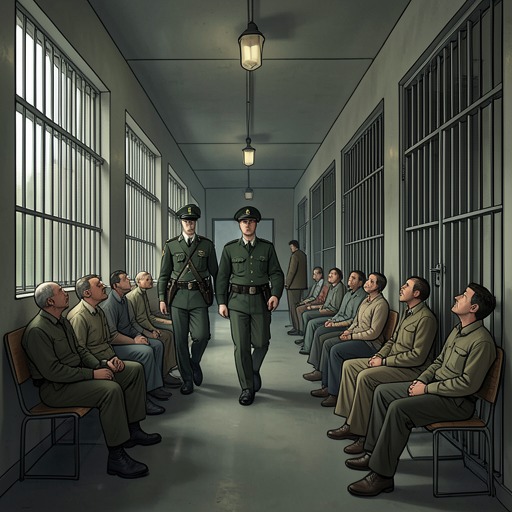
The prison’s formal control of space and time forms the setting in which this informal economy operates. On arrival, Hoffmann is searched, issued clothes, and placed in a sterile waiting room. Ten days later, he has spent twenty-three hours a day in a five-square-metre cell, without visitors or access to newspapers, television, or radio. After moving into the unit, he learns its routines, including the time of lock-in, and must establish a place among inmates who already have their own customs and claims.
When he fears exposure, Hoffmann seeks voluntary isolation. A ten-person riot squad escorts him from Block G to the isolation unit in Block C, where inmates can move around the unit but are kept apart from prisoners in other units. The separation does not remove danger: Hoffmann recognizes that the prisoners there can still threaten one another. He invokes his right to make a phone call, but the prison distinguishes that requested move under Section 18 from enforced solitary confinement under Section 50, which is an official decision rather than a prisoner’s choice. The distinction shows how rules govern movement and contact even as the drug market and its threats cross the boundaries of formal order.
Narrative significance
The prison drug economy binds institutional policy to individual survival. The postscript’s claim that Aspsås Prison is fictional sits alongside factual commentary about drug circulation and the incentives for tolerating it, separating the invented setting from the broader social argument. Within the story, Hoffmann’s rise depends on the same economy that makes inmates vulnerable: drugs can buy leverage and establish authority, but control attracts rivals, and an apparent ally may expose him. The market is therefore both a criminal structure inside the prison and a measure of how the institution manages pressures it could, in principle, confront more directly.