Three-second interval
Three SecondsThe Three-second interval is the measured passage of a sniper’s bullet from a church tower to a prison workshop window—and the brief opening Piet Hoffmann uses to ignite a fuse beneath a rug. The interval makes distance into a countdown: Hoffmann must remain still while he is watched, then act at the instant the shot reaches the window.
The measured flight
The shot has already been fired when the narration fixes the interval at exactly three seconds. Its flight is calculated for a distance of 1,503 metres, a wind speed of seven metres per second, and a temperature of eighteen degrees Celsius. These specific conditions turn the bullet’s journey into a timed sequence rather than an uncertain wait.
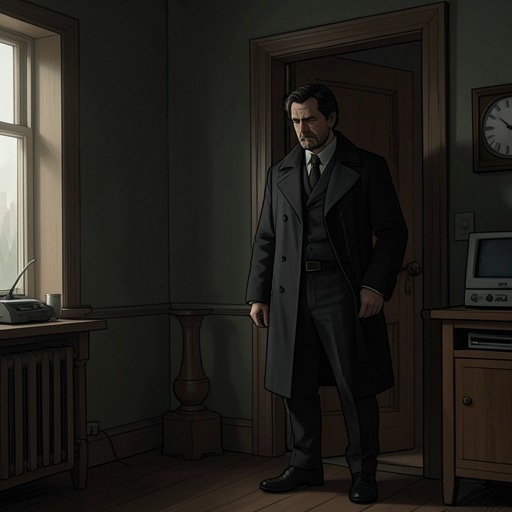
The shot is aimed at a head visible through a workshop window. Hoffmann knows the sniper’s observer is watching him through binoculars, so moving too soon could expose the deception. He holds his position and counts, making the interval both a physical measure of the bullet’s travel and a limit on how long he can safely delay.
The opening Hoffmann uses
As the bullet reaches the window, Hoffmann steps forward and brings a flame to the fuse attached to a body beneath a rug. The timing is exact: the shot damages the window, obscuring the object from view, while Hoffmann uses the moment to light the fuse. The narration then marks two seconds remaining, extending the countdown beyond the bullet’s arrival and sustaining the scene’s tight coordination of shot and ignition.
The interval therefore depends on two linked actions with different purposes: the sniper’s shot creates the instant Hoffmann needs, and Hoffmann’s movement must follow closely enough to use it. His stillness is part of the timing, not an absence of action; he waits under observation until the shot makes the next move possible.
Prison time and narrative pressure
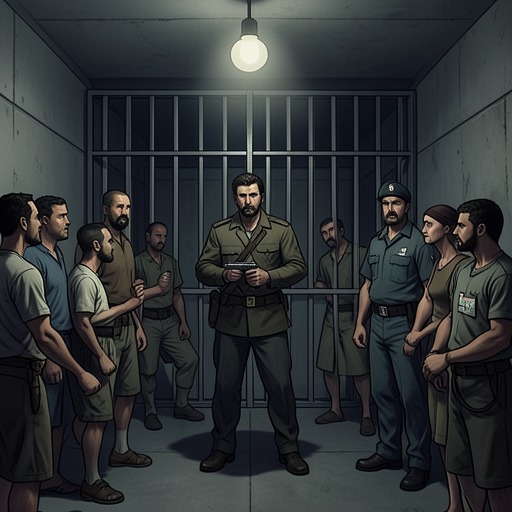
Elsewhere in the prison narrative, time is measured through routines and confinement. On entering Aspsås prison, Hoffmann faces security procedures and an unfamiliar institution; after ten days, he has spent twenty-three hours a day in a small cell. A guided tour teaches him the unit’s rules, including its lock-in time. Later, armed members of the prison riot squad escort a vulnerable prisoner to voluntary isolation in Block C. These details establish a system that regulates movement, contact, and daily time on a far longer scale than the three-second window.
Against that institutional rhythm, the interval is a concentrated exception: a few seconds in which carefully controlled movement can change what observers are able to see. Its precision also reflects the novel’s attention to the meeting of criminals and the police and Prison and Probation Service. The countdown gives that collision a literal measure, making the scene’s narrow margin of action legible in seconds, metres, wind, and temperature.