
The State of the Higher Men
Thus Spoke ZarathustraThis flow follows the visitors’ arrival, temporary recovery, comic regression, and Zarathustra’s final recognition that they are not yet his companions.
increasing Bearing strength in each event
 decreasing
Bearing strength in each eventdecreasingThe Cry Reaches the Cave

The Cry Reaches the Cave
A distant distress
Zarathustra hears a drawn-out cry echoing among the mountains. The Prophet of the Great Weariness names the caller as a Higher Man and urges Zarathustra to respond.
Pity becomes the test
The cry threatens to draw Zarathustra away from his own course. His willingness to seek the distressed visitor begins the final part’s examination of rescue and self-command.
Visitors in the Cave
Visitors in the Cave
A gathering of distinct failures
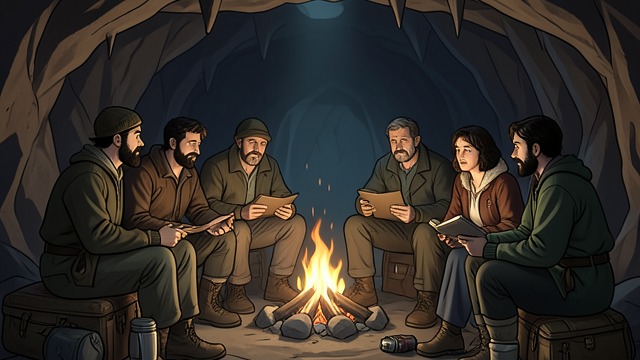
Kings, a former pope, a sorcerer, a scholar, a beggar, and other figures converge at Zarathustra’s cave. Each carries a different response to the collapse of old certainties.
Welcome with reservations
Zarathustra offers safety and hospitality but tells them they are not yet strong enough for his mission. Their arrival is significant without making them his desired future.
A Meal and a Moment of Joy
A Meal and a Moment of Joy
Common table
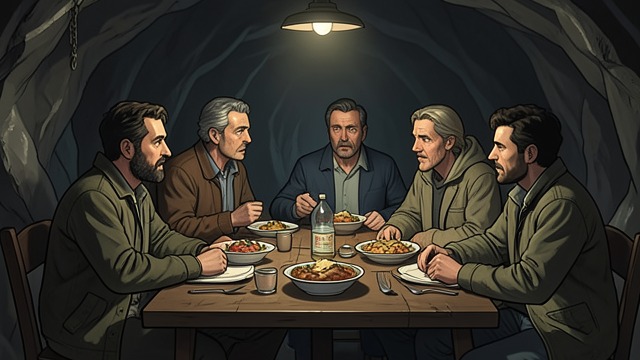
At Zarathustra’s request, the visitors help prepare a meal and speak together. The practical gathering briefly replaces abstract despair with shared activity and bodily pleasure.
Hope made tangible
The Ugliest Man declares that one day with Zarathustra has made life worth affirming. His question, “Was that life? Once more,” gives the group a moment of genuine transformation.
The Ass Becomes an Idol
The Ass Becomes an Idol
A comic return to worship
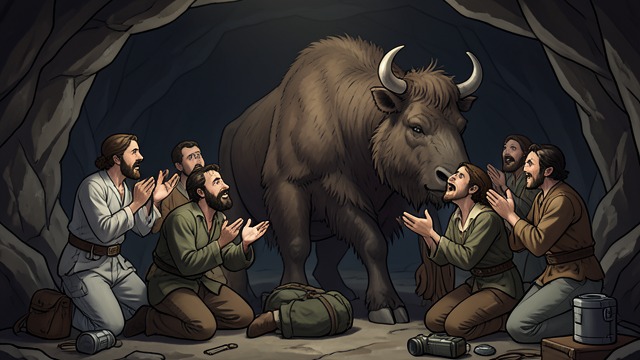
Zarathustra discovers the visitors kneeling before the Ass and chanting a litany. Their apparent recovery has turned into a parody of religious devotion.
The persistence of need
Their worship reveals how easily people recreate an object of reverence when old faith has collapsed. Zarathustra interrupts the ceremony but treats it as childishness rather than a final catastrophe.
The Lion Sends Them Running
The Lion Sends Them Running
A sign appears
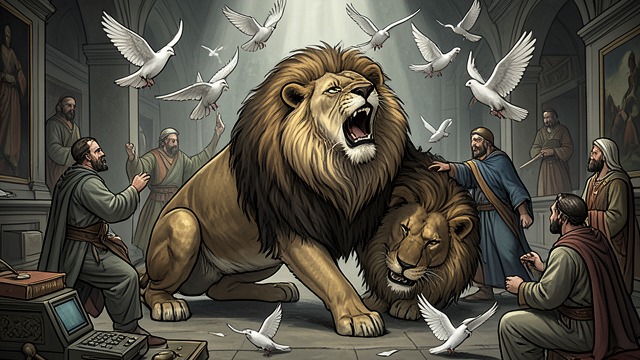
A lion presses against Zarathustra, while doves gather around him. The Higher Men approach and flee when the animal roars.
The distinction becomes final
Zarathustra interprets the sign as announcing his hour and the nearness of his children. The visitors’ flight confirms that they remain an intermediate generation rather than the future he seeks.
Part Four, before Zarathustra meets the visitors
Part Four, as evening approaches
The evening of the visitors’ arrival
Later that night, inside Zarathustra’s cave
At dawn, after the Ass Festival
