
The Tightrope Walker’s Quiet Dignity
Thus Spoke ZarathustraThis flow centers the dying walker’s brief passage from public performance to private fear and Zarathustra’s final act of recognition.
increasing Bearing strength in each event
 decreasing
Bearing strength in each eventdecreasingA Performer Under Watch
A Performer Under Watch
The crowd expects a show
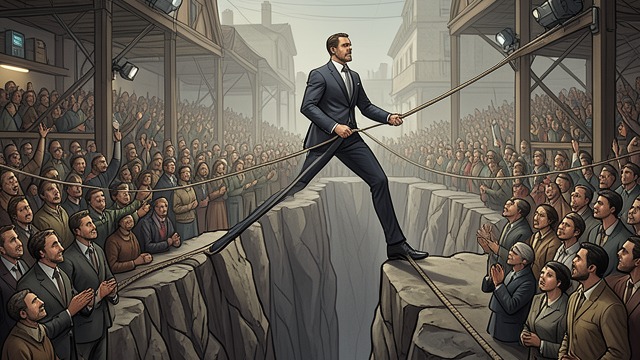
The tightrope walker begins his performance above the gathered people. His skill turns bodily danger into an event observed by spectators.
The scene becomes a human measure
The rope over the crowd resembles the perilous crossing Zarathustra sees in humanity. Yet the audience’s attention remains fixed on spectacle rather than interpretation.
The Threat of the Buffoon
The Threat of the Buffoon
Humiliation enters the act
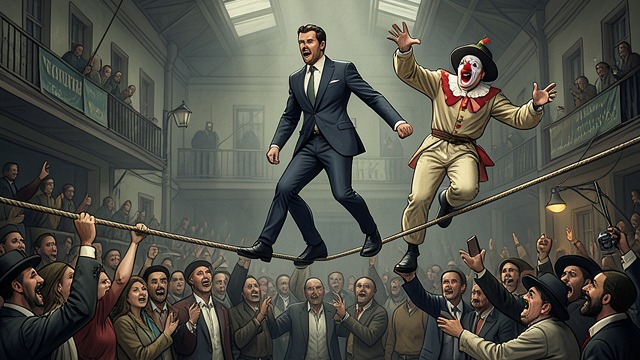
The buffoon follows the walker with insults, pressuring him to move faster. The performer’s balance now depends on resisting another person’s deliberate provocation.
Risk becomes conflict
The contest is unequal: the buffoon chooses the danger, while the walker must react within it. The scene intensifies the crossing from craft into coercion.
The Fall Before the Crowd
The Fall Before the Crowd
The performance collapses
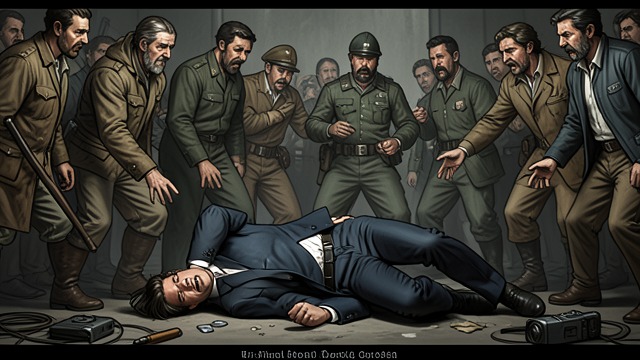
The walker loses his balance and falls from the rope. The crowd breaks apart as the spectacle becomes a real injury.
Public attention cannot help
The watchers flee rather than remain with the dying man. The scene exposes the distance between seeing suffering and accepting responsibility for it.
Fear of Hell
Fear of Hell
A dying man’s belief
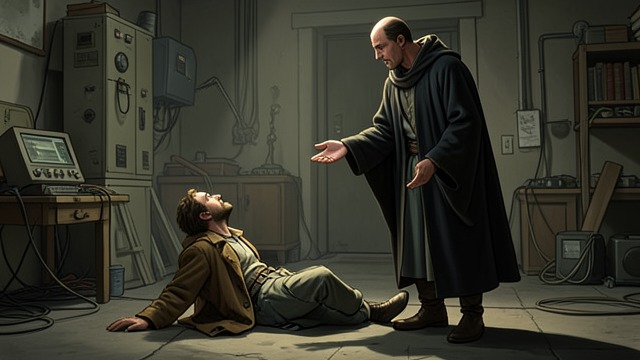
The walker asks whether Zarathustra will stop the Devil from dragging him to Hell. His language reveals how inherited religious images shape the final interpretation of his death.
Zarathustra refuses false comfort
Zarathustra tells him that neither Devil nor Hell exists and that his soul will die before his body. The reassurance is stark but gives the man something clearer than fear.
Burial by Zarathustra
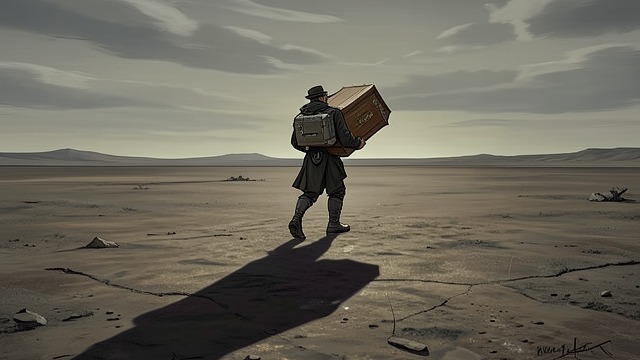
Burial by Zarathustra
A vocation acknowledged
Zarathustra tells the dying walker that he chose danger as his calling and deserves no contempt for it. The response grants dignity without inventing a supernatural reward.
A private duty accepted
Zarathustra carries the body away and intends to bury it himself. His solitary action contrasts with the crowd’s abandonment and marks an early, concrete form of responsibility.
At the marketplace opening
At the middle of the crossing
Moments after the buffoon leaps over him
After consciousness returns
That night, as Zarathustra leaves town
