
The Three Metamorphoses
Thus Spoke ZarathustraThis flow follows the spirit through obedience, liberation, and creative innocence as three distinct stages of transformation.
increasing Bearing strength in each event
 decreasing
Bearing strength in each eventdecreasingThe Camel Accepts Weight
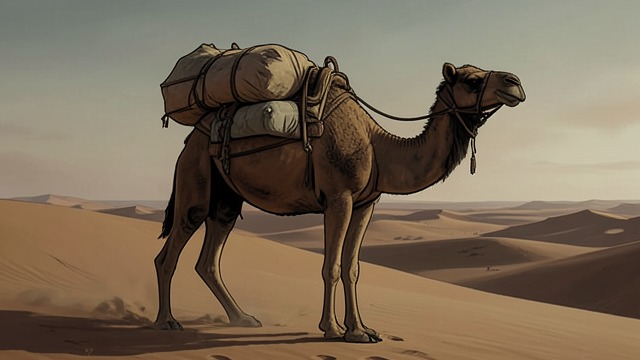
The Camel Accepts Weight
Strength through endurance
The spirit first becomes a camel, seeking the heaviest burdens and proving its capacity to bear them. Its reverence expresses discipline rather than simple weakness.
Preparation through difficulty
The burdens teach stamina and seriousness, but they do not yet create freedom. The camel’s strength must eventually serve a further transformation.
The Desert of Solitude
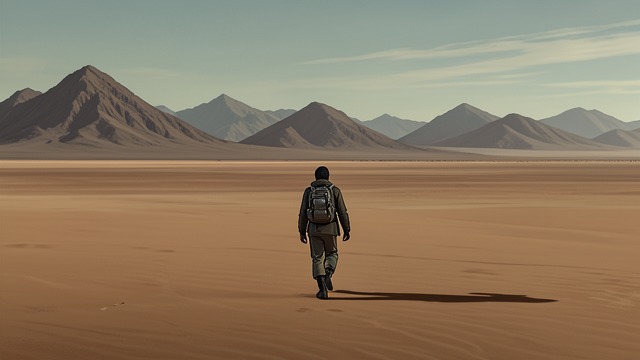
The Desert of Solitude
A space apart
In the desert, the spirit leaves the familiar community of inherited duties. Isolation brings it into direct conflict with what it has learned to revere.
The condition for change
The desert is not yet creation. It is the demanding space in which obedience can be examined and a different relation to authority become possible.
The Lion Confronts Duty
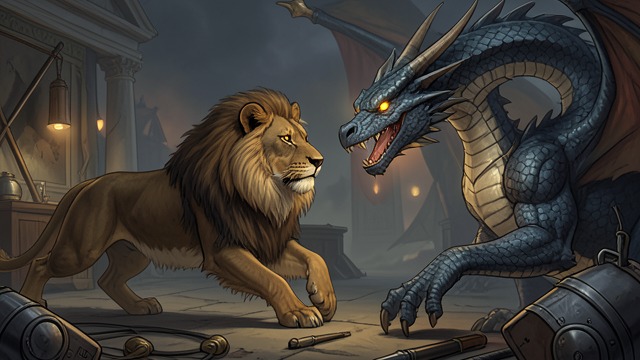
The Lion Confronts Duty
Refusal of the dragon
The lion faces the great dragon marked by “Thou shalt,” which claims that every value has already been created. The spirit answers with “I will” and fights for freedom.
Liberation without creation
The lion can win the right to say no, but it cannot yet make new values. Its victory clears ground rather than building a world.
The Child Begins Again
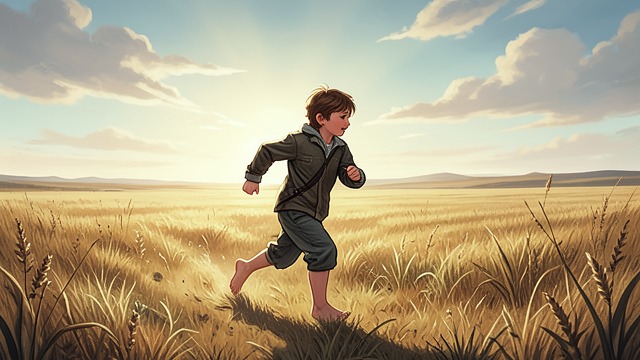
The Child Begins Again
Innocence and play
The spirit becomes a child: forgetful, affirmative, and able to begin anew. This is not a return to ignorance but a freedom from the exhausted authority of old commands.
Creation becomes possible
The child’s sacred yes makes a world of its own. The sequence reaches its purpose when refusal gives way to active creation.
The Bridge to the Superman
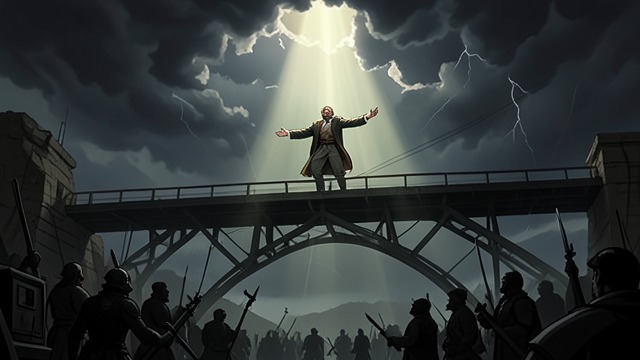
The Bridge to the Superman
Transformation as a pattern
The three stages show how discipline can lead to resistance and resistance to creative affirmation. No single stage by itself completes the spirit’s journey.
A model for overcoming
The metamorphoses echo the book’s wider demand that human beings become transitions rather than final products. Their significance lies in opening a path beyond inherited identity.
Early among Zarathustra’s discourses in Pied Cow Town
After the camel enters its loneliest desert
In the second metamorphosis
At the final metamorphosis
As the discourse concludes
