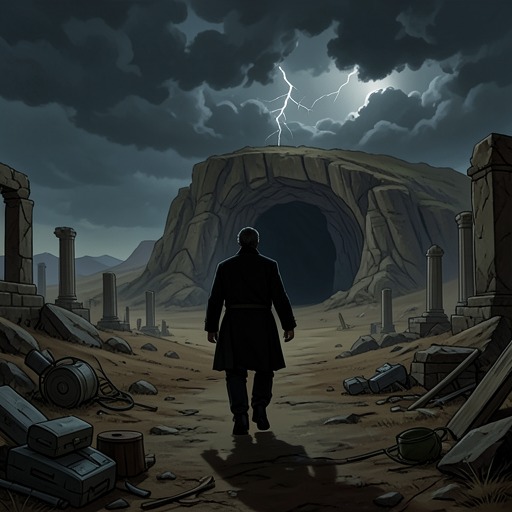
Nothing is true, everything is permitted
Thus Spoke Zarathustra“Nothing is true, everything is permitted” is a self-directed formula of radical release in which the speaker recounts abandoning inherited words, values, and revered names. Its force lies in the passage’s tension: the formula opens a way beyond prohibition, but the speaker’s account also shows the cost and uncertainty of that freedom.
Formulation and Context
The expression appears as the speaker recalls having unlearned belief in “words and values and great names.” The surrounding image of the Devil casting off a skin extends that unlearning: even a name, the passage suggests, may be only a covering. The formula follows this image as a conclusion the speaker once drew about authority and permission, not as an impersonal rule announced from outside the speaker’s experience.
A Risky Experiment in Freedom
The speaker describes taking the maxim into practice by plunging “into the coldest water, with head and heart.” The image gives the claim a bodily and emotional intensity, while the recollection of standing naked “like a red crab” turns apparent liberation into exposure. Freedom from prohibition is therefore not presented as effortless mastery; the speaker’s own account makes vulnerability part of its consequence.
Limits and Significance
The lines that follow complicate any reading of the expression as an uncomplicated endorsement of wrongdoing. The speaker laments the loss of goodness, shame, and belief in the good, and recalls that following truth could end with truth striking back. At times, an intention to lie unexpectedly led to truth. In this context, “Nothing is true, everything is permitted” marks a dangerous passage beyond inherited certainty, but the experience does not resolve into a stable replacement doctrine: it leaves the speaker confronting the unsettled relation between truth, value, and freedom.