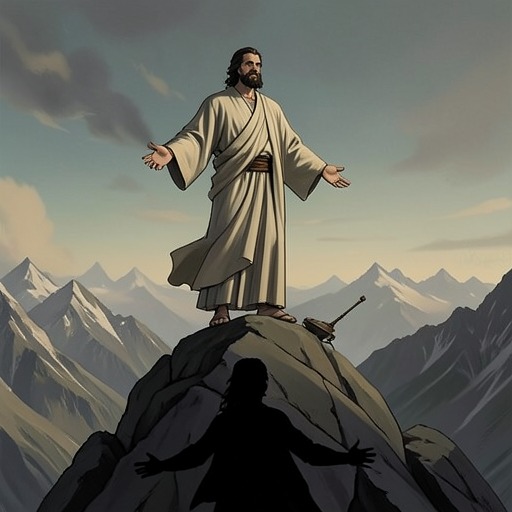
Pied Cow Town
Thus Spoke ZarathustraPied Cow Town is both a place of teaching and a point of departure and return in Zarathustra’s travels. Its importance lies less in any description of the town itself than in the encounters and movements that gather around it: Zarathustra lives there, walks its surrounding mountains, leaves it with his followers, and later rejoices that home is near.
Setting and Early Encounters
After teaching the three metamorphoses of the spirit, Zarathustra is living in Pied Cow Town. The narrative then carries him beyond the town into the surrounding mountains. Walking alone one evening, he finds a young man leaning against a tree and gazing wearily into the valley. The setting joins the young man’s isolation to Zarathustra’s teaching: the tree becomes the image through which he speaks of invisible forces that torment and bend people.
Departure and the Staff
When Zarathustra takes leave of the town to which his heart is attached, many who call themselves his disciples escort him. At a crossroads he tells them that he intends to continue alone, describing himself as a friend of going alone. His followers give him a staff for the farewell: a serpent coils around a sun on its golden haft. Zarathustra is delighted by the gift and leans on it before speaking to them about gold and the virtue of giving. The departure makes the town a threshold between companionship and solitude, while the staff carries an emblem of that parting onward with him.
Return on the Road Home
Later, Zarathustra speaks in Pied Cow Town again, now only two days from reaching Zarathustra’s cave and his animals. The nearness of home fills his soul with continual rejoicing. The return gives the town a different place in his journey from the one it held at departure: it is no longer merely the community he leaves behind, but a familiar waypoint from which the final distance home can be measured.