Self-overcoming
Thus Spoke ZarathustraSelf-overcoming names the movement by which Life does not merely preserve itself but transforms itself, again and again. In Thus Spoke Zarathustra, it is the hinge connecting the Will to power with the creation of values: resistance becomes an occasion for increased power, and the hardest resistance is the self that must govern and remake itself. The idea offers a way beyond Nihilism without appealing to a metaphysical world; its culmination is a form of joy capable of affirming life as a whole.
Definition and underlying drive
Life gives the idea its most direct formulation: it is that which must overcome itself again and again. Even perishing and the falling of leaves are presented as sacrifice for power, not as exceptions to life's striving. The process is therefore not simply a creature defeating an external obstacle. Life expends, alters, and surpasses its own forms; what looks like loss can belong to an ongoing movement of transformation.
The accompanying account of the Will to power makes Self-overcoming more than a claim about individual ambition. It proposes a single motivating principle behind human action. The account begins with two drives identified through psychological inquiry, the desire for power and fear, and then interprets fear as the feeling of power's absence. On this view, distinctively human qualities need not be explained by recourse to the supernatural: they can be understood as transformed, or sublimated, expressions of a drive shared with animal life. Self-overcoming is the positive turn in that account, the process by which the drive ceases to appear only as domination and becomes a capacity for self-formation.
Values, discipline, and the Superman
A people's Table of values is described as the voice of its Will to power: moral values are not detached truths but commands through which a people gives shape to its life. Evaluation is unavoidable, but different peoples cannot simply maintain themselves by adopting a neighbor's standards. The claim places morality within a history of collective formation rather than treating good and evil as settled answers that everyone has always known.
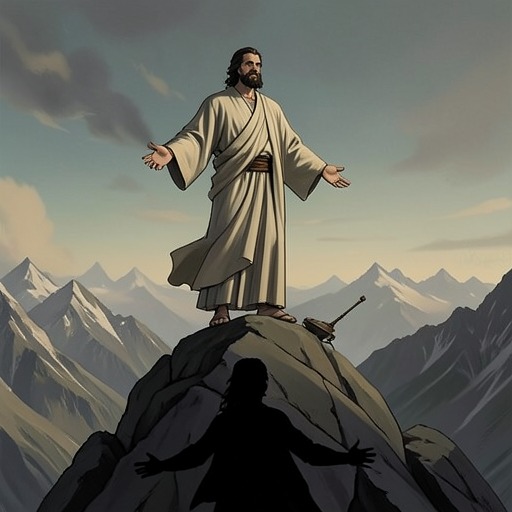
The same process can occur within an individual. Primitive aggression is turned back upon itself and sublimated into self-control; the person who imposes commands upon himself and obeys them becomes, by analogy, a nation rather than a rabble. Self-mastery is difficult precisely because it requires power to order one's own competing impulses. The Superman is described in this interpretation as the person who has achieved that mastery—not as a being detached from life, but as one capable of giving form to it.
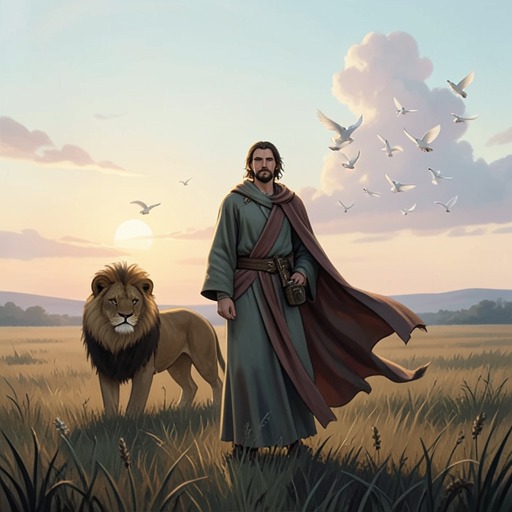
This account also explains why value creation cannot be reduced to rejecting every existing rule. In the three metamorphoses of the spirit, the lion confronts the dragon called Thou shalt, whose scales carry the inherited values of a thousand years. The lion's I will wins freedom from those commands, but the lion cannot itself create new values. Its achievement is preparatory: it makes freedom for creation possible and establishes the right to begin again. Self-overcoming thus has a negative and a constructive movement: refusal breaks the hold of imposed authority, while creation gives the newly won freedom a direction.
Truthfulness and the revaluation of morality
The use of Zarathustra's name gives this movement a further, deliberately paradoxical dimension. Friedrich Nietzsche presents Zarathustra as the originator of the fateful error that translated morality into a metaphysical conflict between good and evil. Because Zarathustra first made morality central, he is also cast as the one who must recognize and overcome that error. The means is truthfulness: the moralist is to overcome himself into his opposite. Self-overcoming here does not mean polishing an unchanged moral identity; it means following an inherited commitment far enough that it turns against the system it once served.
That reversal also unsettles confidence in conventional moral knowledge. When Zarathustra visits people, he finds them resting on the assumption that they already know what is good and evil; talk of virtue has become an old, bedtime assurance. His teaching disturbs that settled certainty by placing the creator, rather than the complacently certain, at the center of value-making. The warning extends even to the good and just: their conviction that they already possess justice can make them dangerous to the human future, because it closes the search for new values. Self-overcoming is consequently a critique not only of overtly wicked acts but also of virtuous certainty when it refuses transformation.
Joy, affirmation, and the end of Nihilism
The stakes are existential. After the destruction of the metaphysical world and the death of God, life and humanity risk being devalued. The account of Self-overcoming offers an answer that does not restore a supernatural guarantee: life can become meaningful through the continual transformation of its own conditions. As resistance is overcome and power increases, joy arises as the experience of that increase. It needs no external justification; it can justify itself.
The argument culminates in the Superman's capacity to affirm life, including its pain, because events are chained and entwined together and must be accepted as a whole. Eternal recurrence gives this affirmation its most severe test: only someone who could will life again and again, without separating its agreeable parts from its suffering, could fully affirm it. The Superman's joy in being as he is, now and ever, is presented as the furthest sublimation of the Will to power and the final overcoming of otherwise inexorable Nihilism.
A religious echo remains within this account, even as it rejects metaphysical dependence. The commentary connects Self-overcoming to the Christian idea of grace: in each case, an inner quality raises some human beings above their ordinary condition. It also reads the pathos of power through associations with divine will and glory, and places Eternal recurrence beside Christian ideas of eternal life and an unalterable order. These parallels clarify the force of the language without making the concepts identical. Self-overcoming relocates transformation within Life itself: the movement that elevates a person is a worldly practice of remaking and affirmation, not submission to a separate realm.