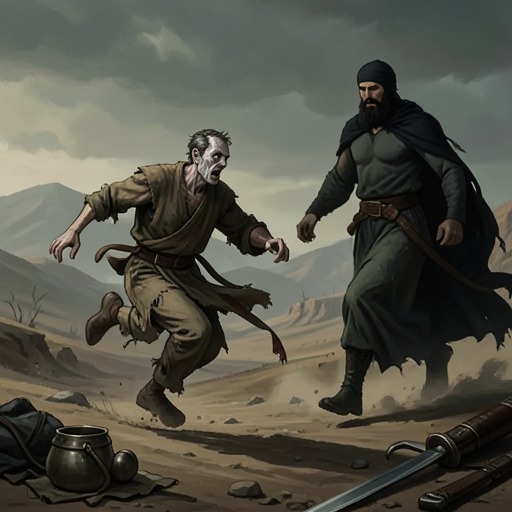
Serpent’s Death
Thus Spoke ZarathustraSerpent’s Death is a remote, lifeless valley whose harsh landscape and association with death frame Zarathustra’s encounter with the Ugliest Man. Its name comes from the shepherds’ account of an old serpent that goes there to die, and within the valley Zarathustra recognizes the figure who has summoned him as the murderer of God.
Landscape and Name
The valley appears after Zarathustra’s path rounds a rock, abruptly changing the scenery into what the narration calls a kingdom of death. Black and red cliffs rise above a place without grass, trees, or birdsong. Beasts avoid it, including predators; the sole exception is an ugly, thick, green serpent that comes there when old to die. Shepherds call the place Serpent’s Death after this recurring end to the serpent’s life.
The name links the valley not simply to danger but to a specific, solitary destination. The serpent’s arrival is presented as an established pattern, while the surrounding absence of animal life makes it the landscape’s defining exception. Nothing in the account suggests that the valley is inhabited or cultivated; it is marked instead by barrenness and avoidance.
Zarathustra’s Return and Encounter
The valley seems familiar to Zarathustra: he is plunged into dark recollections and feels he may have stood there before. As the recollections weigh on him, his pace slows until he stops. He then notices a figure sitting on the path, shaped like a man but scarcely recognizable as one. Overcome by shame at having seen it, Zarathustra turns away and starts to leave.
The stillness is broken by a voice emerging from the ground. It calls Zarathustra by name, challenges him to solve the speaker’s riddle, and warns him that the slippery ground may cause his pride to stumble. The encounter therefore begins with concealment and recognition delayed: the valley’s strange occupant speaks before Zarathustra identifies him.
Recognition and Significance
Pity overcomes Zarathustra when he hears the appeal, and he sinks to the ground before rising again with a stern expression. He then identifies the figure as the Ugliest Man and declares that he is the murderer of God. Zarathustra’s explanation connects the act to the Ugliest Man’s inability to endure being seen by God, who had looked through him without blinking. The valley thus becomes the place where its visitor’s identity and the reason for his act are disclosed.
Serpent’s Death concentrates the encounter’s themes of exposure and retreat into a landscape where nearly all animal life withdraws. Zarathustra initially tries to turn away from what he sees, but the voice draws him back into a confrontation that changes pity into stern recognition. The valley’s name, grounded in the serpent’s repeated journey there to die, also establishes death as part of its setting before the Ugliest Man’s account gives the scene its human and theological significance.