The Ugliest Man
Thus Spoke ZarathustraThe Ugliest Man is both the murderer of God and a fugitive from the pity that follows his exposure. His encounter with Zarathustra turns on the pain of being seen: he killed the all-seeing God rather than endure that gaze, yet asks Zarathustra for refuge from the compassion of other people. At Zarathustra’s cave he becomes part of the gathering of the Higher Men, and a day spent with Zarathustra changes his judgment of earthly life.
Identity and Revelation
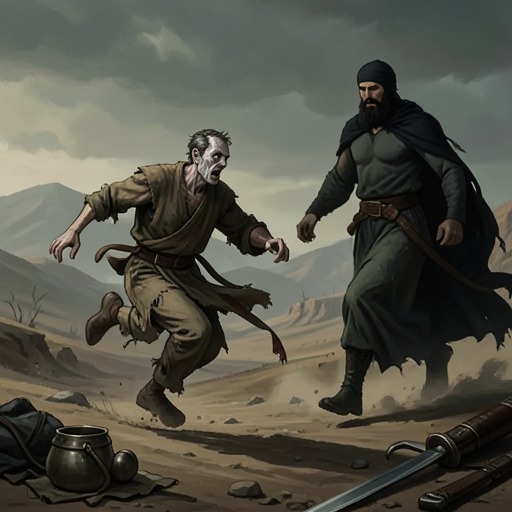
Zarathustra encounters The Ugliest Man in Serpent’s Death, a desolate valley associated with death and avoided by other beasts. The sight of a barely human-shaped figure brings Zarathustra to a halt. He feels shame at having looked upon it and turns away, but a voice from the ground calls him back and demands that he solve the speaker’s riddle. The scene withholds the speaker’s identity until Zarathustra recognizes him: he is the murderer of God.
The recognition alters the encounter. Zarathustra initially sinks to the ground under the force of pity, then rises with a stern expression and names the crime. The Ugliest Man confirms the identification not by denying what he did but by explaining what made God intolerable to him. The central fact of his identity is therefore also the source of the conflict between the two men: he could not bear to be seen through by the being who saw everything.
The Motive and the Burden of Pity
The Ugliest Man describes God’s vision as an unrelenting exposure of human hiddenness. God saw the depths and abysses of humanity, including the shame and ugliness people conceal; in his account, God’s pity entered even his most private and degrading corners. He presents that compassion not as comfort but as an intrusion from which there was no escape. He says he wanted either to avenge himself on such a witness or to cease living, and that God had to die.
This account makes the murder an answer to the experience of being known without reserve. The Ugliest Man does not claim that God’s pity was malicious. Rather, he depicts its boundlessness as unbearable: because God continued to see him, even compassion became a form of exposure. Zarathustra’s ability to understand how the murderer felt gives the encounter an uneasy intimacy, but it does not erase the act. The confession explains the crime while leaving its terrible consequence in view.
His plea to Zarathustra turns on a distinction between persecution and pity. He says he would scorn and even welcome hatred or the people sent to pursue him; it is other people’s compassion that he flees. He asks Zarathustra to protect him as his last refuge, claiming that Zarathustra alone can discern what it feels like to have killed God. At the same time, he warns Zarathustra to guard against pity and identifies himself as a danger to that response. His request for shelter is thus also a warning: recognition may draw Zarathustra toward him, but compassion risks repeating the very relation from which he has escaped.
Among the Guests at Zarathustra’s Cave
Later, after searching and roaming through the day, Zarathustra returns to his cave and hears the cry of distress coming from inside. The Ugliest Man is among the people gathered there: the two kings, the sorcerer, the pope, the voluntary beggar, the shadow, the conscientious man of the spirit, the prophet, and the ass. He has placed a crown on his head and arranged two purple sashes around himself, disguising and embellishing his appearance. The earlier fugitive from the gaze of pity is now part of a company that Zarathustra recognizes as the Higher Men.
The cave gathering places him among others who have been encountered separately during the day. He is no longer alone in the death valley, demanding that one witness interpret him; he sits among companions and waits with them for Zarathustra to speak. The change in setting does not undo his past or show that his fear of pity has disappeared. It does, however, place him within a shared occasion whose importance he will later describe in terms of what it has taught him about life on earth.
A Changed Judgment of Life
After the gathering, the company goes out into the night. Zarathustra leads The Ugliest Man by the hand to show him the moon and the waterfalls beside the cave. They stand silently together with the other old men, comforted and brave, and surprised that life on earth can feel so good. Zarathustra thinks that he is pleased with the Higher Men, but keeps the thought to himself out of respect for their happiness and silence.
The Ugliest Man then speaks again, making his last contribution with a clear question. He says that, for the sake of that day, he is content for the first time to have lived his whole life. He goes further: a single festival with Zarathustra has taught him to love the earth. The claim does not resolve the murder of God or establish that his earlier suffering has vanished. Its force lies in the scale of the change he reports: after a life in which being seen meant intolerable exposure, one shared day allows him to affirm earthly existence. The man first defined by the witness he destroyed ends by testifying to a renewed attachment to life.