The Ultimate Man
Thus Spoke ZarathustraThe Ultimate Man is Zarathustra’s deliberately contemptuous name for a human type that has made comfort its highest achievement and lost the capacity to reach beyond itself. He presents this figure as the destination awaiting people who no longer risk, create, or even despise their own smallness. Yet when the crowd hears the warning, it asks to become precisely what Zarathustra meant to condemn, preferring the Ultimate Man to the Superman. The concept thus defines both a future of diminished aspiration and the failure of Zarathustra’s first public appeal.
A future without aspiration
Zarathustra begins by recognizing the pride of his audience: they call their distinction from goatherds culture, and they dislike having contempt spoken of them. He therefore turns their pride against them, offering the Ultimate Man as the most contemptible figure. The tactic gives his warning an edge: what the audience considers a mark of superiority may conceal a future in which human beings have ceased to set themselves difficult goals. Zarathustra accordingly calls for people to fix a goal and plant the seed of their highest hope.
That appeal depends on the possibility of inner disorder and transformation. Zarathustra says that one must have chaos within to give birth to a dancing star, and insists that his listeners still possess such chaos. Against this remaining possibility he sets the coming age of the Ultimate Man, when people will give birth to no more stars. The contrast is not merely between one kind of comfort and another; it is between a life that can generate new aims and one that has lost the capacity to desire anything elevated enough to unsettle it. Most decisively, the coming figure can no longer despise himself. The loss of self-contempt signals not self-acceptance after achievement, but the disappearance of any demanding standard by which he might measure or surpass himself.
The habits of small happiness
Zarathustra makes the type recognizable through a series of questions that expose what it can no longer understand. The Ultimate Man asks what love, creation, longing, and a star are, then blinks. The gesture recurs as a compact emblem of the figure’s response: a claim to satisfaction accompanied not by discovery or intensity but by an untroubled failure to comprehend what lies beyond his settled life. His refrain, “We have discovered happiness,” sounds like a final answer, but its repetition and the accompanying blink make that answer seem less like an achievement than a limit on what can be imagined.
The social world of the Ultimate Men is designed to remove hardship and friction. They leave places where living is difficult because they need warmth; they continue to love their neighbors, but also rub against one another for the same warmth. Sickness and mistrust become sins, and caution becomes a rule of conduct. Anyone who stumbles over stones or other people is dismissed as a fool. Their togetherness is therefore presented as shelter from risk, not as a bond that asks its members to endure conflict or pursue a demanding common purpose.
Their intelligence and sociability do not restore what this life has discarded. They know everything that has happened, and their knowledge leaves them with an inexhaustible supply of mockery. They still quarrel, but quickly make peace lest they suffer indigestion. Their pleasures are small and divided between day and night, while health remains an object of respect. These details give the Ultimate Man’s contentment its particular scale: knowledge without discovery, disagreement without lasting consequence, pleasure carefully portioned, and bodily well-being protected from disturbance. The figure does not live without any pleasures; he lives so as to keep pleasure modest and danger away.
The audience chooses the warning
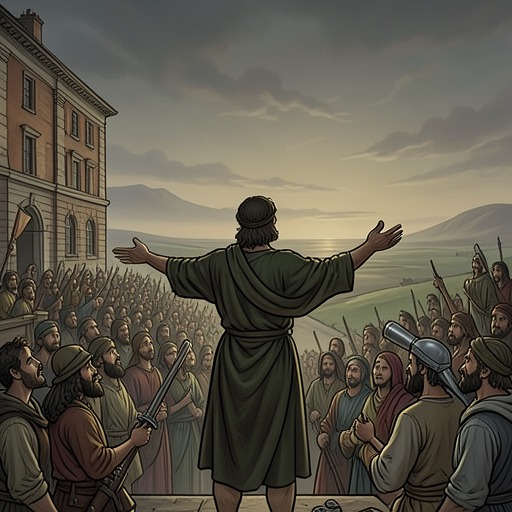
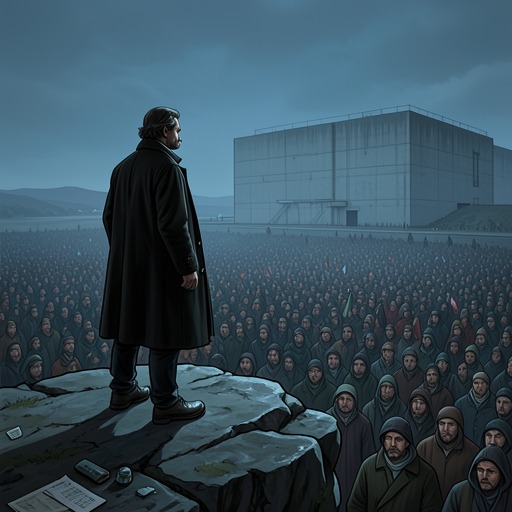
The description becomes a dramatic test when the crowd interrupts Zarathustra’s first discourse, also called the Prologue. Rather than reject the type, the people cry out for him to give them the Ultimate Man and make them into it; they offer him the Superman instead. Their laughter and shouting turn a warning into a popular demand. The audience has not simply misunderstood a definition: it has reversed the valuation at the center of Zarathustra’s speech, treating the diminished endpoint as desirable and the higher possibility as expendable.
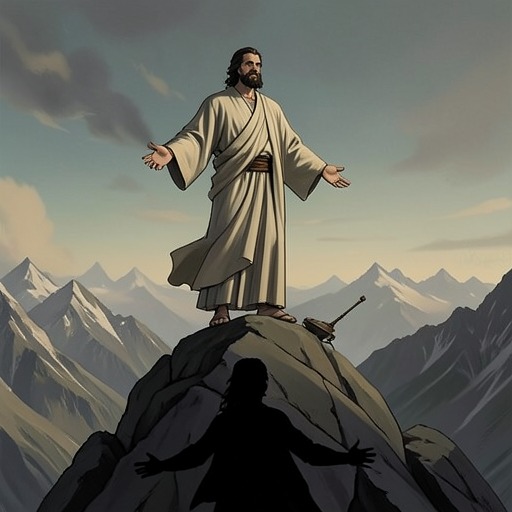
Zarathustra grows sad and speaks inwardly of the distance between speaker and listeners. He is not the mouth for these ears, and wonders whether long solitude in the mountains, among trees and streams, has left him speaking to the people as if they were goatherds. This ending gives the concept its immediate consequence: the Ultimate Man is not only an imagined future but an image the crowd willingly embraces. Zarathustra’s attempt to awaken ambition instead reveals how little his listeners want to be disturbed by it.
The demands the figure refuses
Other prescriptions in the work clarify the severity of the contrast. In “Of War and Warriors,” Zarathustra addresses his hearers as brothers in war and says that a noble slave’s rebellion should ultimately show itself in obedience. The good warrior prefers “thou shalt” to “I will,” and the love of life is to be directed toward the highest hope. This ideal is demanding in a way the Ultimate Men’s careful avoidance of difficulty is not: obedience is made a discipline in the service of a larger aim, rather than a means of securing warmth and ease.
The address to the Higher Men likewise distinguishes courage from mere hardness or public display. Zarathustra rejects cold, blind, or intoxicated behavior as proof of stoutheartedness; courage belongs to one who knows fear and masters it, and who can face the abyss with pride and an eagle’s eyes. This is almost the inverse of the Ultimate Men’s wary avoidance of stumbling. One ideal looks into danger without surrendering its capacity to affirm a higher possibility; the other makes safety and health the measure of sensible conduct.
The contrast is not an endorsement of every prescription Zarathustra offers. His discussion of women, for instance, describes woman as a means to the child and assigns her a role in the warrior’s recreation, an explicitly gendered formulation of the same warrior-centered value system. Its presence shows that the work’s alternatives to the Ultimate Man are not a neutral catalogue of universal goods: they are voiced through ideals of war, command, creation, and generational purpose. The expression’s force lies in the starkness of its opposition to passive comfort, even as the surrounding ideals reveal the particular hierarchy through which Zarathustra articulates that opposition.
Meaning and dramatic function
The Ultimate Man gathers the book’s anxieties about a humanity that would rather settle than surpass itself. Its defining failure is not simply ignorance, since the figure is said to know what has happened, or the absence of pleasure, since he enjoys small delights. It is the narrowing of desire: love becomes a source of warmth, knowledge feeds mockery, health demands caution, and happiness becomes a refrain that closes off further questions. Against Zarathustra’s image of chaos giving birth to a star, this is a life that has made the absence of disturbance its achievement.
The figure also gives the Superman a practical contrast within the Prologue. Zarathustra does not merely name a higher possibility; the crowd’s response shows how readily people might choose a manageable, comfortable endpoint instead. The Ultimate Man’s cheerfully repeated claim to happiness and the people’s laughter leave the warning unresolved: the audience has heard the image, but welcomes it. In that reversal, the expression becomes a measure of the gap between Zarathustra’s demand for a highest hope and the crowd’s desire to be spared one.