Yes-Saying to Life
Thus Spoke ZarathustraYes-Saying to Life is the willingness to affirm existence without separating joy from suffering or a cherished moment from everything bound up with it. In Zarathustra’s prophetic speech, affirmation first appears as a charged readiness for the future, then reaches its fullest test in the desire for recurrence: to say Yes to one joy is also to accept the return of all things entwined with it.
Prophetic Readiness and the Future
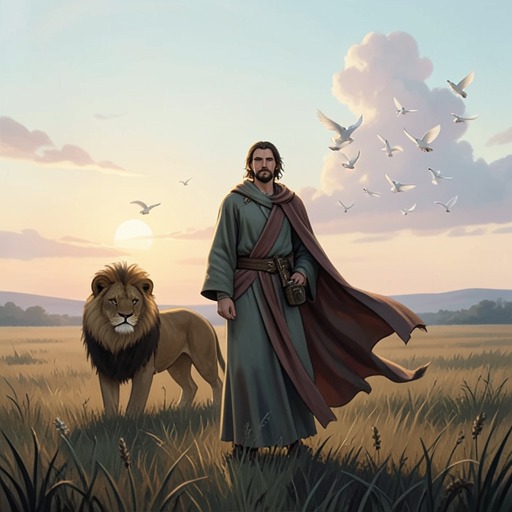
The concept begins in an image of Zarathustra as a prophet moving along high ridges between two seas and between past and future. The elevated route sets his prophetic spirit apart from lowlands associated with weariness, where existence can neither die nor live. The image presents affirmation not as easy contentment but as a capacity to endure a suspended, unsettled state while remaining open to what is coming.
That readiness gathers force in the figure of a dark cloud carrying lightning. Zarathustra’s prophetic spirit is described as ready for both lightning and redeeming beams of light, and as “pregnant with lightnings which affirm Yes! laugh Yes!” The repeated Yes joins affirmation to laughter and to an impending flash: it is an active, expressive force, not merely a quiet assent. The passage blesses the one who bears this potential, making the waiting itself part of the work of affirmation.
The future does not kindle at once. Zarathustra says that the one who wants to kindle its light must “hang long over the mountains like a heavy storm!” The storm’s weight and duration matter: the prophetic Yes is prepared through prolonged suspension, not delivered as an effortless promise. Yet the image also holds darkness and illumination together. The cloud is dark, but it is already pregnant with flashes that affirm; the future’s light emerges from within the charged interval rather than from a denial of it.
Eternity as the Beloved
The speech then turns from prophetic weather to intimate address. Zarathustra longs for eternity and calls it the “Ring of Recurrence,” giving the abstract desire for permanence the form of a bond that closes upon itself. He speaks of wanting children with the woman he loves, then identifies that beloved as Eternity. The shift makes the future-bearing language of pregnancy resonate with a different kind of continuation: what he desires is not simply a future beyond the present, but a relation to eternity itself.
This address links prophetic expectation to recurrence without making them identical. The storm imagery looks toward future light; the ring suggests return, a movement that comes round again. Both figures resist a life defined by weariness or by a simple escape from what exists. In the passage’s terms, the future is worth kindling, while eternity is worth loving. Zarathustra’s longing places these orientations beside one another: affirmation can face what is coming and embrace the repetition of what has been.
Joy and Suffering in Recurrence
The later passage makes the stakes of affirmation explicit through a contrast between suffering and joy. Everything that suffers wants to live so that it may grow ripe and become passionate for things described as more remote, higher, and brighter. Suffering speaks of wanting heirs and children, and of not wanting itself. Its desire points outward, toward a continuation or transformation beyond its present condition.
Joy, by contrast, wants no heirs or children. It wants itself, eternity, recurrence, and “everything eternally the same.” The contrast does not make suffering and joy unrelated: it shows them speaking different desires. Suffering reaches beyond itself toward what is higher or brighter; joy desires the unending return of what it is. The text gives each its own movement, while setting them within a shared account of life rather than reducing one to the other.
The decisive test arrives in Zarathustra’s question to his friends: “Did you ever say Yes to one joy?” He immediately binds that assent to all woe as well. Things are “chained and entwined together”; the joy cannot be isolated from the conditions and events joined to it. The image of entanglement supplies the logic of the passage: the moment is not a detachable pleasure that can be preserved while everything around it is discarded. To affirm it is to affirm its connections.
The Test of Saying Yes
The argument turns on a conditional act of desire. If someone ever wanted one moment twice, or addressed happiness as a moment that pleased them, then that person wanted everything to return. Recurrence is thus presented not merely as an abstract proposition but as the consequence contained in an intensely particular wish. The wish to repeat one moment expands until it includes the whole chain: everything anew, everything eternal, everything intertwined and in love.
This expansion gives Yes-Saying to Life its demanding form. The passage does not say that pain becomes indistinguishable from joy; it says that accepting one joy in this way also means willing the return of the woe bound to all things. Even woe is addressed with the wish to go and return. The repeated demand of recurrence prevents affirmation from becoming a selective celebration of pleasant experiences alone.
The concluding refrain, “For all joy wants – eternity!”, gathers the earlier images into one claim. The storm’s lightning, Zarathustra’s love of Eternity, and the wish to have a moment again all approach the same threshold from different directions. Affirmation is both an opening toward brighter things and consent to the return of the whole. Its measure is not whether every part of existence is pleasant, but whether joy can be willed without cutting it loose from the life to which it belongs.