Zarathustra’s Homecoming to Solitude
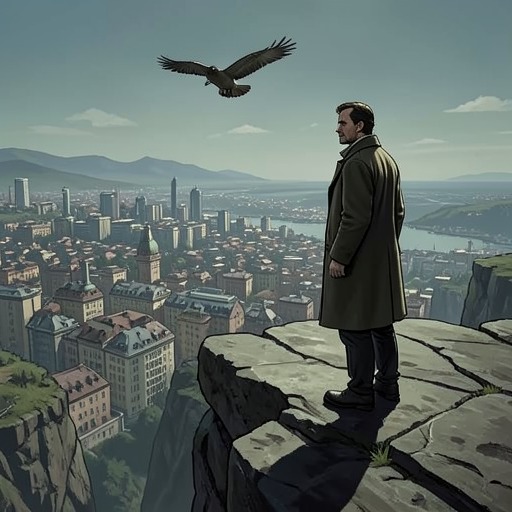
Thus Spoke ZarathustraZarathustra’s Homecoming to Solitude is a return both geographical and inward: on the road from Pied Cow Town toward his mountain cave, Zarathustra recognizes that chosen solitude is not the same as loneliness among people. His homecoming has not yet reached its destination—he is still two days from the cave—but the nearness of home lets him name what human company has cost him and reclaim the mountain air as freedom.
The Road Home
The scene begins in Pied Cow Town, which Zarathustra loves. From there, only two days remain before he can reach his cave and animals, and his soul continually rejoices at the approach. The distance matters: this is a homecoming in anticipation, not an arrival. The chapter’s emotional movement begins before the cave is reached, as the prospect of returning gives shape to his reflection on the life he has led among people.
Solitude becomes a home he addresses as though it could answer him. He imagines it greeting him with a mother’s gesture, both reproaching and smiling at the one who once rushed away from it like a storm-wind. That imagined welcome holds two truths together: he has left solitude before, and he now longs for it without pretending that departure never happened. His return is therefore not a simple retreat from the world but a renewed relation to a condition he once found difficult to bear.
Loneliness Among People
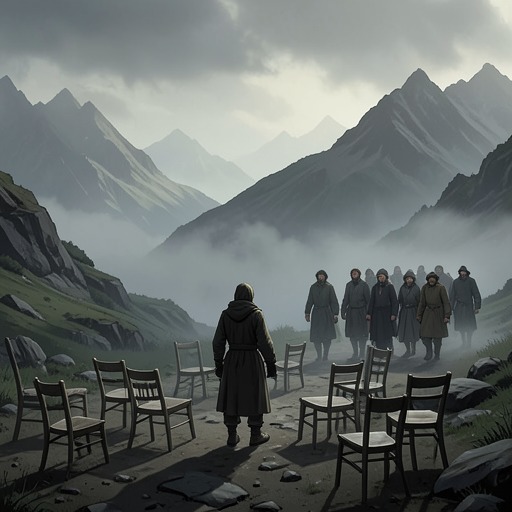
Zarathustra distinguishes the open ease he finds with solitude from the loneliness he experienced in human company. He recalls standing undecided in a forest beside a corpse, not knowing where to go, while his bird cried above him. He had wanted his animals to lead him, judging the company of people more dangerous than the company of animals. The memory gives loneliness a precise setting: not merely being alone, but being exposed to uncertainty among human beings and unable to find direction there.
Another recollection places him on an island, a well of wine among empty buckets, giving and pouring out to thirsty people. The image makes his generosity inseparable from depletion: he has something to bestow, while those who come to receive are figured as vessels waiting to be filled. The memory does not simply celebrate giving. Set beside his later account of indulgence and pity, it helps explain why pouring himself out among people could become a danger rather than a cure for isolation.
The most inward of the remembered episodes is the arrival of The Stillest Hour, which tore Zarathustra out of himself and urged him to speak and break. He had waited and kept silent; the hour made him repent of that restraint and undermined his humble courage. Zarathustra identifies this, too, as loneliness. Its pressure comes not from the crowd but from a demand that breaks into silence and requires an answer. The three memories thus distinguish different forms of isolation: disorientation beside death, exhausted bestowal, and the unsettling summons to speak.
What Solitude Offers
Against those memories, Zarathustra welcomes a relation with solitude in which neither party needs to question or complain. They go openly together through open doors; everything is clear, and even the hours seem to run more lightly. The contrast gives the homecoming its central measure. Among people, he has experienced danger, demands, and compromised speech; with solitude, openness is possible without the burdensome negotiation of human company.
This openness is not presented as mere quiet. Zarathustra recalls how, among people, things are talked down: what time once resisted is chewed over and picked at by the present, while what had been a secret of profound souls is exposed to street-trumpeters and butterflies. The complaint is about more than noise. Public talk turns difficult or private things into common material, stripping them of the weight and reserve they once possessed. Solitude, by contrast, permits things to remain clear without being flattened by indiscriminate speech.
Human Danger and Mountain Freedom
Zarathustra declares that humankind, with its dark-street noise, is once again behind him, and that his greatest danger lies behind him too. He identifies that danger as indulgence and sufferance: people want to be indulged and suffered, and he himself once lived among them by withholding truths and relying on foolishness, affection, and small lies of pity. His relief is therefore accompanied by self-recognition. The danger was not only the conduct of others; it also lay in the way he accommodated them, holding back truths and letting pity shape his speech.
He recalls having softened his language around pedantic wise men, calling them wise, and around gravediggers, calling them investigators and scholars. The word choices blurred distinctions rather than expressing what he saw. His image of gravediggers digging diseases for themselves extends the criticism: old rubble conceals evil vapours, and stirring up the bog is not a task he now wishes to undertake. Against that low, stale ground he sets the mountain, where one should live rather than disturb what lies beneath the rubble.
The return culminates in breath and bodily release. Zarathustra breathes mountain freedom through happy nostrils, delivered at last from the odour of humankind. Sharp breezes tickle his soul like sparkling wine until it sneezes and cries a blessing to itself. The ending turns an abstract recovery into a physical sign: his homeward movement has restored the capacity to breathe freely. He is still approaching the cave, but the chapter closes with the relief of having left human danger behind and the mountain air already entering him.