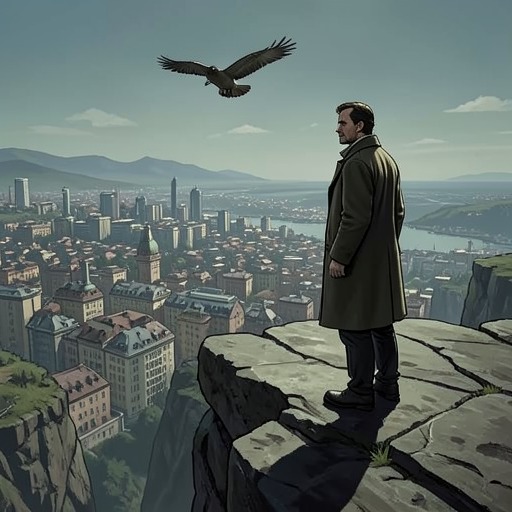
Zarathustra’s Mountain Cave
Thus Spoke ZarathustraZarathustra’s Mountain Cave is the secluded refuge in the mountains where Zarathustra lives apart from humanity, first gathering strength in solitude and later returning with wisdom he longs to share. Its significance lies in that tension: the cave shelters withdrawal, but never makes Zarathustra’s inward life wholly separate from the world beyond it.
Mountain Refuge and the First Decade
At thirty, Zarathustra leaves his home and its lake for the mountains, where he enjoys his spirit and solitude and does not weary of them for ten years. The account places his cave within this mountain retreat: each morning, Zarathustra’s Eagle and Serpent accompany him as he awaits the sun. His address to the star imagines their repeated meeting as an exchange: the sun shines upon those below, while Zarathustra and his companions receive its abundance.
Retreat and the Burden of Giving
After teaching of bestowing virtue, Zarathustra returns to the mountains and the solitude of his cave, withdrawing from mankind like a sower who has scattered seed. Yet seclusion does not extinguish his attachment to those he loves. His soul fills with impatience and longing because he still has much to give, and the difficulty is not simply to offer it but to close the open hand in love and preserve modesty as a giver. The cave thus becomes a place where generosity is held in suspension: wisdom gathers there, while the wish to share it presses against retreat.
Abundance Within Solitude
The cave’s recurring narrative role is to make inward abundance visible through the prospect of departure and return. Zarathustra’s wisdom increases during the solitary months and years, but its excess causes him pain; solitude protects and enlarges what he has gathered while also intensifying the need for others to receive it. The refuge is therefore neither an escape from human bonds nor a permanent destination. It is the setting in which withdrawal becomes preparation for renewed giving.