Leah–Lily sibling relationship
Tinea and Leah: [Cyberpunk, Alien Incursions, Murder and Mayhem, Girl's Love (WLW)]Leah–Lily sibling relationship is the formative bond behind Leah’s later life as a caretaker and protector. Lily dies while the sisters are still children in an orphanage, yet the relationship does not end with that death: it survives through memory, grief, a recording, and Leah’s decision to turn love for her sister into responsibility toward other children.
Childhood Bond and Loss
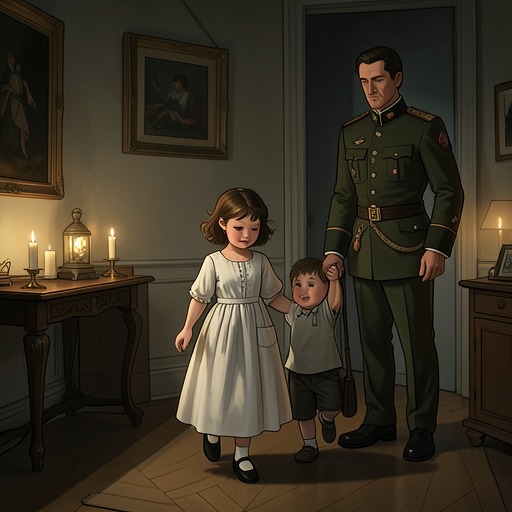
Lily and Leah grew up together in an orphanage, where Leah was the older sister and protected Lily from bullies. Lily was sickly, making Leah’s protective role especially immediate and practical. Their bond is therefore remembered not as an abstract family connection but as a pattern of vigilance: Leah watched over a younger child who depended on her and understood herself through that duty.
A tumor took Lily’s life while both girls were still children. The illness progressed so suddenly that Leah missed its early signs, and she interpreted that failure to notice as a personal betrayal. Her guilt became inseparable from her grief. Rather than openly mourning, she swallowed the loss until it had damaged her ability to feel and speak about it; the first visible breakthrough came only when an older man asked her to tell stories about Lily and allowed her to scream at him until her voice broke. That confrontation produced the first time Leah had cried in years.
Grief, Memory, and Recovery
The older man’s questions redirected Leah’s memory from the fact of Lily’s death toward Lily’s living individuality. He asked what Lily liked, which color she favored, what jokes amused her, and what made her laugh. By returning Leah to these ordinary details, he helped her recover Lily as a person rather than leaving her reduced to the circumstances of her death or to Leah’s guilt over the illness.
When Leah was older and less angry, the man gave her a file containing a recording of Lily playing with her. The recording reopened Leah’s grief, but it also revealed a different truth about the past. Watching it allowed Leah to see the care she had shown Lily, including a source of pride and strength that had been hidden by her self-accusation. The recording thus becomes a durable memorial and a recurring emotional object: Leah keeps it in a place of honor in her visual field, where it remains unobtrusive but always present, and she later settles against Tinea while gazing at its icon.
This form of remembrance does not erase pain. Leah learns instead to move between sadness and strength, preserving grief without allowing it to define the whole meaning of Lily’s life. The relationship becomes an internal practice of recollection: remembering Lily’s preferences and laughter makes it possible to remember the sisters’ care as well as their loss.
From Sisterly Care to a Vocation
Leah turns her renewed understanding of Lily into a promise to guard children who need protection. Within another year she certifies as a caretaker at sixteen and then spends eight years living near several orphanages. She regularly takes small groups of children on modest adventures, teaches them life skills, and works to protect their wellbeing. The children she most enjoys include a girl with Lily’s bright red hair and green eyes, as well as another girl and a boy whose temperament and curiosity remind Leah of Lily. These resemblances keep Lily present, but they do not make the children mere substitutes; they become the living recipients of the protective care Leah once gave her sister.
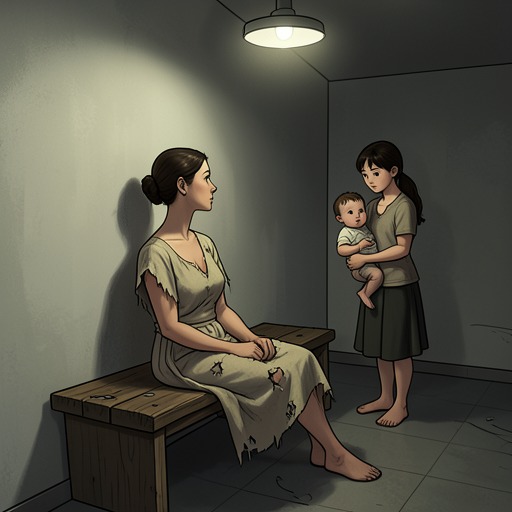
The promise reaches its greatest practical consequence when Leah becomes a samurai while protecting that group. During the New Montreal incursion, she shelters those children and others in a secluded refuge, then makes certain they return safely to their orphanage. The kidnappers wait until Leah has entered her own home and lowered her guard before taking her, which leaves her uncertain whether the children have also been harmed. Her conclusion that she can no longer be only a caretaker follows directly from this history: protecting children has become an obligation demanding greater capacity, not a role she can safely limit to ordinary supervision.
Trauma, Care, and Repeated Protection
Lily’s death also helps explain why later threats to Leah’s body and autonomy carry such force. After Leah’s limbs have been taken, she wakes to find a stranger’s gray hand where she expects her own flesh and blood. The memory of mutilation produces sudden fear, but the memory of being rescued and cared for by Tinea keeps that fear from overwhelming her. Her response shows the continuing structure of the sibling bond: bodily vulnerability is filtered through an established expectation that protection matters and that care can restore a person’s ability to endure the present.
Leah later experiences a flashback, becoming unresponsive while empty sobs continue. Tinea asks Tynea what to do, and Tynea explains that Leah should be gently reminded of the present, encouraged to breathe, and not subjected to unnecessary contact. Afterward, Tynea stresses that Tinea cannot prevent every recurrence or become Leah’s entire support system; Leah must develop the ability to rely on her own person, while professional help must address her health. Leah’s recovery from Lily-related guilt therefore does not produce a simple replacement dependence. The ethic inherited from her sister’s memory is protective, but the later relationship must also preserve Leah’s autonomy.
Leah contributes to that process by explaining how others should respond when she senses an episode approaching: they should talk to her, wait patiently for answers, and keep her safe and comfortable while allowing the episode to run its course. Her account recognizes the extraordinary mental load of an episode without reducing her to it. In this sense, the sibling relationship continues to shape a model of care that is attentive rather than possessive: protection means presence, patience, and respect for the affected person’s agency.
Meaning in Leah’s Identity
Lily is the absent center of Leah’s moral identity. The relationship begins in a concrete asymmetry, with an older sister defending a younger and sickly child, and develops into a long afterlife in which Leah protects orphaned children, becomes a samurai, and reassesses what her responsibilities require. The narrative makes grief productive without making it painless: Leah’s guilt must be spoken, cried through, and revised before it can become strength.
The bond also complicates ideas of bodily normality and human identity. Leah has long wished to become a girl, later marvels at a body whose proportions and musculature feel graceful rather than masculine, and eventually asks whether Vanguard become less human as they grow stronger. These bodily transformations do not displace Lily’s importance. Instead, the memory of a sister who was loved, protected, lost, and remembered provides a stable ethical continuity through radical physical change. Leah’s body may be altered, damaged, repaired, or technologically transformed, but the promise formed through Lily remains the clearest account of what Leah chooses to protect and why.