Leah–Saint Viktor children relationship
Tinea and Leah: [Cyberpunk, Alien Incursions, Murder and Mayhem, Girl's Love (WLW)]The Leah–Saint Viktor children relationship is the central expression of Leah’s chosen identity as a guardian. Formed from grief for Lily and sustained through years of practical caretaking, it joins protection with intimacy: Leah does not merely defend children from danger, but teaches them, takes them on small adventures, listens to their fears, and remains responsible for their ordinary happiness. The relationship becomes especially important during the New Montreal incursion, when Leah protects a familiar group in a secluded shelter, and later when separation from them gives urgency to her efforts to survive and come home.
Origin in Grief and Care
After losing Lily, Leah’s understanding of her sister was initially trapped in anger and painful memory. A kind old man helped her recover a fuller image of Lily by asking about the girl’s favorite color, the jokes that made her laugh, and the things she enjoyed. A recording of Lily playing with Leah allowed grief to coexist with pride: the footage revealed the care Leah had already shown her sister and helped Leah turn that memory into a promise to protect other little ones.
That promise became an organized life rather than a temporary emotional response. Leah certified as a caretaker at sixteen and then spent eight years living near several orphanages. She regularly took small groups of children on modest adventures, taught them life skills, and did what she could to protect their wellbeing. Care therefore operates on two levels in her life. It is an everyday practice involving instruction, recreation, and supervision, but it is also the form her mourning takes after Lily’s death. Protecting children lets Leah preserve what was valuable in her relationship with Lily without pretending that the loss can be undone.
The Children and Their Particular Bond with Leah
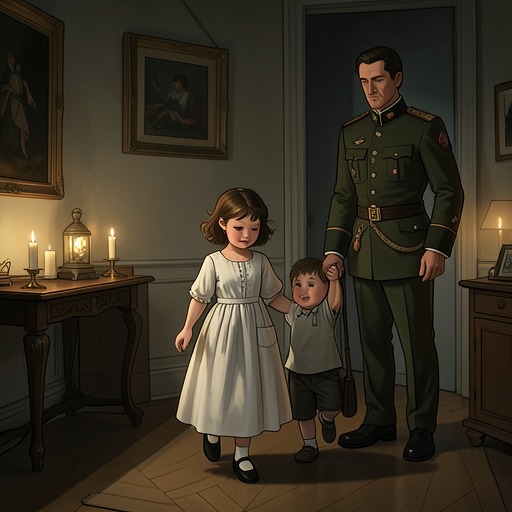
Among the children, Leah especially enjoyed a group whose qualities reminded her of Lily. One little girl had Lily’s bright red hair and green eyes; another girl and a boy shared Lily’s temperament and curiosity. Their resemblance does not make them replacements for Lily. Instead, it gives Leah a recognizable point of emotional connection while allowing the children to remain distinct people with their own needs and personalities. The relationship is thus grounded in attention rather than abstraction: Leah responds to actual children, not merely to an idea of innocence.
Her promise reached its greatest reward when she became a samurai while protecting that group. The same children, together with several others, were placed in a secluded shelter during the New Montreal incursion. Leah stayed on the outskirts of the invasion, where there was relatively little action, because her immediate objective was to keep the children safe. She had few points and limited equipment, having spent her small reserve on a cybernetic eye to replace one lost to an ambushing model Four, a cheaper augmentation, and a few weapons. Her lack of progress in the larger conflict is therefore inseparable from her success in the smaller, more urgent task: she chose reliable protection for vulnerable children over personal advancement.
Separation, Communication, and Everyday Attachment
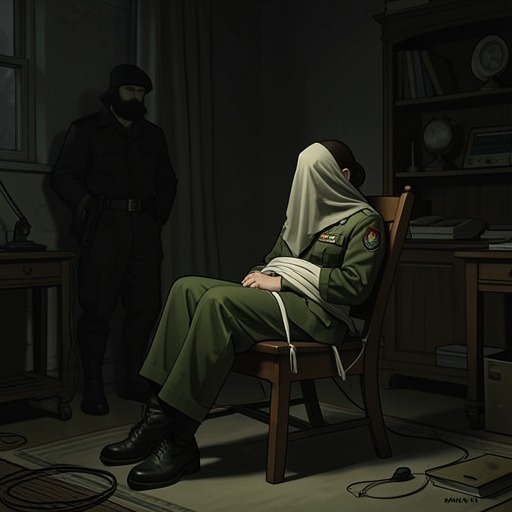
After the incursion, Leah made sure the children returned safely to their orphanage before going home herself. Their safety did not end her responsibility. When kidnappers later caught her after she had entered her home and lowered her guard, Leah remained intensely concerned that the children might have been harmed. The possibility that they were confined in a bunker, or that damaged infrastructure had interrupted communications, kept the relationship active even when she could not physically reach them.
When a connection finally came through, five familiar faces crowded the camera, with three of the smallest children stuck face-first against it, waving and shouting together. Leah responded by making her avatar wave back and briefly muting the others so she could tell them she was alive, between fights, and receiving help. She promised to introduce the person helping her when they returned, although several more days might be necessary because they were hundreds of miles to the north. The children’s questions immediately pulled the conversation toward both danger and home: they wanted to know what Leah was fighting, while she wanted to know whether they were all safe.
The children answered with the compressed drama of their daily lives. Jenny had broken her arm, returned the same day, and now wore a plastic cast that everyone had decorated by writing their names on it; Lana had written for one child and promised to teach her how to write her own name the following year. The report that everyone was safe was followed by concern for Andi, the youngest, who kept crying and stretched her hands toward the screen. Leah promised to visit Andi after only a few more sleeps, answered the child’s request for a hug with an affectionate reassurance, and then ended the children’s part of the call only because she needed to speak to the adults and continue moving if she was ever to come home.
This exchange shows the relationship’s reciprocal emotional structure. Leah is the protector, but the children are not passive symbols of the duty she performs. They call for her, report injuries and recoveries, ask when she will return, and make their longing physically visible through waving hands and Andi’s reaching gesture. Their happiness fills Leah with warmth, while their sadness imposes a cost she cannot simply ignore. The promise to return is both reassurance for them and a reason for Leah to keep going.
Protection, Trauma, and Boundaries
Leah’s care also exists within the damage left by kidnapping and bodily violation. A joke about a device stripping some of her skin triggered visible fear and trauma; the person who made the joke immediately recognized the harm, deactivated the device, and apologized while holding Leah close. The incident demonstrates how easily apparently playful contact can collide with Leah’s history, and how protection requires sensitivity to bodily autonomy rather than only physical defense.
During another episode, Leah experienced a flashback and responded with empty sobs rather than ordinary conversation. Tynea identified the episode and advised that Leah should not be subjected to additional contact or sudden movement. The immediate care consisted of remaining gentle, speaking to Leah, reminding her that she was having a flashback, and encouraging slow, deep breathing. This scene clarifies that Leah’s caretaking relationship with children does not erase her own need for care. The guardian can become frightened, dissociated, or overwhelmed, and responsible attachment must make room for that vulnerability.
The later discussion establishes a boundary essential to the relationship’s health. Leah may warn a trusted partner when an episode is coming, and the partner can keep her safe and comfortable while patiently talking to her; questions may take much longer to penetrate because an episode places an extraordinary load on her mind. But no partner can prevent every recurrence or become Leah’s entire support system. Her health requires professional help, and she must remain her own person rather than becoming dependent on the relationship. Applied to Leah’s bond with the children, this principle prevents care from becoming possessive self-erasure: her devotion is strongest when it protects their agency and preserves her own.
Narrative Significance and Continuing Direction
The children give Leah a moral vocabulary that survives the collapse of ordinary institutions and the violence of the incursion. Her equipment, points, and samurai status are measured against a simpler question: whether the children in her charge are safe. The cybernetic eye and weapons purchased with her scarce resources are not signs of ambition so much as tools acquired to fulfill that responsibility. Her transformation into a samurai gains meaning because it occurs while she is defending them, not because it grants her power in isolation.
The relationship also converts personal memory into collective continuity. Lily is gone, but Leah’s promise produces repeated acts of sheltering, teaching, accompanying, and returning. The children’s injuries, games, casts, jokes, calls, and requests for hugs create a future-oriented form of family that is not based on blood alone. When Leah tells them that she must keep moving if she ever wants to come home, home means more than a building: it is the community of children whose safety and affection make survival purposeful.
For that reason, the Leah–Saint Viktor children relationship remains active even during separation and combat. Leah’s battles take place elsewhere, but the children shape the stakes of every movement away from them and every effort to come back. They are the living beneficiaries of her promise to Lily, the people who recognize Leah in the intimate language of nicknames and embraces, and the human center that keeps her identity from being reduced to that of a weapon or samurai.