
The Daughter and the Absent Father
Tiny Beautiful Things: Advice on Love and Life from Dear SugarThis thread follows Cheryl Strayed / Sugar’s childhood love for her destructive father through estrangement, a tentative adult reconciliation, and the limits of what he can offer.
increasing Bearing strength in each event
 decreasing
Bearing strength in each eventdecreasingLove Alongside Fear
Love Alongside Fear
A Frightening Father
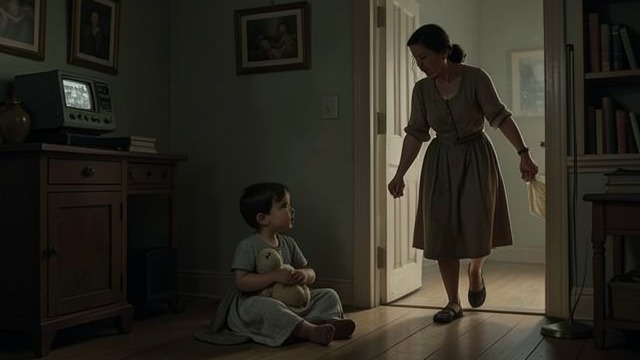
Cheryl Strayed / Sugar’s childhood includes her father’s violence and cruelty toward her mother, her siblings, and herself. She cries, hides, and develops fears that persist beyond the immediate incidents. Yet the child’s attachment is not diminished by her knowledge that his behavior is frightening.
A Child’s Plea
When her mother finally leaves, Cheryl Strayed / Sugar begs her to return to him. She does not want the marriage restored because she approves of the violence; she is terrified of losing the person she calls her dad. The intensity of that plea reveals how a child’s love can endure even when a parent has failed to make the child feel safe.
After the divorce, her father largely disappears from her life. The bond survives as longing and confusion rather than the dependable relationship she had hoped for.
Letters from a Father

Letters from a Father
The Mailbox Hope
After her parents divorce, Cheryl Strayed / Sugar and her siblings have little contact with their father. A few times a year, an envelope arrives in his handwriting. They rush to open it, thrilled by the prospect of a message from the father they miss.
The Letter’s Cruelty
The letters are not meant for the children. They contain vulgar attacks on their mother and threats about taking the children away. The promise of connection turns into fear, and Cheryl Strayed / Sugar imagines ways she and her siblings might escape and return to their mother if their father came for them.
As an adult, she understands that her father never intended to take them. That recognition brings grief: she realizes he did not want her in the way she had long hoped. The letters had kept the father present in her imagination while repeatedly making the relationship less safe.
An Invitation to Reconnect

An Invitation to Reconnect
A Letter After Bereavement
After her mother dies, Cheryl Strayed / Sugar writes to her father. She tells him that she has always hoped they might have a relationship, but says he must first explain the things he did when they lived together. Her hope is cautious: she leaves a possibility open without pretending the past did not happen.
The Call That Closes the Door
Her father responds by calling her a lying woman and blaming her mother for turning the children against him. Cheryl Strayed / Sugar hangs up without saying goodbye. The attempt does not produce the explanation or care she wanted; instead, it confirms that he cannot meet her in an honest conversation about their shared history.
She carries the failed exchange for years, but it does not require her to keep pursuing a relationship on his terms. The bond remains emotionally significant even as contact stops.
The Familiar Voice

The Familiar Voice
An Unexpected Call
Seventeen years after their last painful exchange, Cheryl Strayed / Sugar sees her father’s name on her telephone. She assumes his wife may be calling to say he has died, but the message is from her father himself, asking her to call back.
Ordinary Talk Over Old Wounds
When she returns the call, he speaks as if no rupture has occurred. They discuss television, recipes, and ordinary details, while the painful history that Cheryl Strayed / Sugar hoped he would acknowledge remains untouched. His familiar voice brings the relationship back into the present without resolving what made it unsafe.
The conversation unsettles her because it offers the shape of father-daughter contact while refusing its necessary truth. She is no longer the child who must accept that version of closeness simply because it is offered.
The Final Boundary

The Final Boundary
A Condition for Contact
Cheryl Strayed / Sugar writes again with care, explaining that she could consider a relationship only if she and her father honestly discuss their past. She is willing to hear his account and to see whether he has changed, but she will not act as if their history never happened.
Release Without Reconciliation
Her father replies in anger, telling her not to contact him again and saying he is glad to be rid of her. Cheryl Strayed / Sugar does not cry. She walks to a hill overlooking the city and holds together the sorrow, anger, gratitude, and acceptance the exchange has stirred.
The boundary does not create the father she wanted, but it ends the demand that she keep making herself available to someone who will not acknowledge their shared life. She imagines her parents holding her as a newborn and recognizes that her ability to thrive belongs to her, not to his approval.
During Cheryl Strayed / Sugar’s early childhood, before her parents divorce
During the years after the divorce, when Cheryl Strayed / Sugar is a child
At age twenty-two, after her mother’s death
Seventeen years after her first letter to him
At age thirty-nine, after a renewed attempt to discuss their past
