Cheryl Strayed’s father
Tiny Beautiful Things: Advice on Love and Life from Dear SugarCheryl Strayed’s father is remembered as both a source of childhood fear and a parent his daughter could not stop loving. After Cheryl Strayed’s mother left him when their daughter was six, he became largely absent, sending letters that addressed their mother rather than the children whose names appeared on the envelopes. The account’s decisive distinction is between the harm he caused and the continuing emotional bond his daughter felt: his absence did not erase his place in her sense of family, while her mother’s restraint helped keep that bond possible.
Identity and Background
Cheryl Strayed’s father and Cheryl Strayed’s mother were both nineteen when she became pregnant. Abortion was illegal, and she was unwilling to enter a home for unmarried pregnant women and give up her baby, so the two married in a quick ceremony. Over the next nine years they had three children. The marriage, as recalled in the column, began under constrained circumstances rather than strong love, and the family’s early life became difficult.
The account identifies the father as often violent and mean, and describes him as a destructive force in his daughter’s life. It does not recount the particular incidents behind that judgment; instead, it focuses on what the children’s attachment to him meant and on the consequences of the family’s separation. That choice keeps the emphasis on the child’s experience of losing a parent, rather than turning the father’s harmful conduct into a catalogue of scenes.
Childhood, Divorce, and Absence
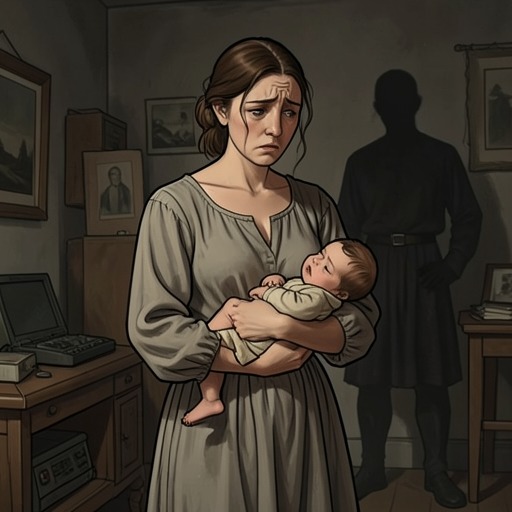
When Cheryl Strayed’s mother finally left, their daughter was six. The child pleaded with her to return to him, not because she accepted his treatment of the family, but because she understood the separation as the loss of her father. She loved him intensely even while fearing and grieving what he did. Her distress appeared in several forms: she wept, hid, had headaches considered inappropriate for her age, and continued wetting the bed beyond the usual age. Those details show that the conflict reached into ordinary childhood life, not merely the child’s understanding of her parents’ marriage.
After the divorce, the father was no longer a dependable presence in his daughter’s life. She saw him only three times, during short visits that she recalls as sad and unsettling. For much of her childhood, there was simply no father in daily life. She lived in inexpensive apartment buildings among other children of single mothers, many of whom also had little contact with their fathers. The social setting did not make her own absence less painful, but it placed that experience among other families shaped by separation and limited paternal involvement.
Letters, Threats, and a Later Realization
A few times each year, a letter in the father’s handwriting arrived for his children. They found the envelopes in the mailbox after school, when their mother was at work, and opened them with intense anticipation. The promise of contact was especially powerful because it came so rarely. Yet the letters were not messages to the children: they were attacks on their mother, including insults, condemnation of her parenting, and threats that he would take the children so she would never see them again.
The threats made the prospect of being taken feel constant to the daughter. She imagined ways that she and her siblings might escape and return to their mother, even at the cost of a difficult journey. The father never took them. At twenty-seven, she understood that he had never intended to do so—and that he had not wanted her. The realization arrived with surprise and grief, revising the meaning she had assigned to the letters: what had once seemed to promise a father’s return had instead been directed against the person caring for them, and did not amount to a wish to parent his children.
Relationship, Legacy, and Narrative Role
The daughter’s account resists a simple division between loving and condemning the father. She hated the harm he did to her mother, siblings, and herself, yet her childhood love for him remained undeniable. His conduct and his absence damaged their relationship; they did not make the child’s attachment disappear. The narrative also distinguishes his threats from their fulfillment: he threatened to take the children, but never did, and the adult narrator later concluded that he had not meant to carry out the threat.
Cheryl Strayed’s mother did not speak ill of him to the children or try to turn them against him. This did not mean concealing the family’s painful experiences: she and the children spoke honestly about what they had witnessed and suffered. Rather, she presented him as a flawed human being with the capacity for change. When her daughter asked what had made her fall in love with him, she found things to say even though she could no longer clearly remember them. As a teenager, the daughter argued with her mother over her refusal to condemn him; her mother answered that she was grateful to him because the children would not exist without him.
When Cheryl Strayed’s mother knew she was dying, she told her daughter that reaching out to her father would not betray her. She encouraged openness to forgiveness, reconciliation, and change, leaving the choice to her daughter rather than demanding it. The account does not say that reconciliation occurred. Instead, it shows the mother preserving its possibility, and making clear that a child’s relationship with a parent need not be dictated by the other parent’s anger.
This recollection gives the father’s story a second function within an advice-column response to a mother concerned about her child’s father. The narrator uses her own childhood to explain why a parent’s words and actions about an ex-partner can shape a child’s sense of both parents and of herself. Her father remains important in the account not as a redeemed or restored parent, but as the absent figure whose place in a child’s life could not simply be erased. The mother’s refusal to demonize him, despite the harm she and the children experienced, is presented as a lasting gift: it allowed the daughter to acknowledge the truth of his failures without being instructed to deny that he was her father.