The Human Scale
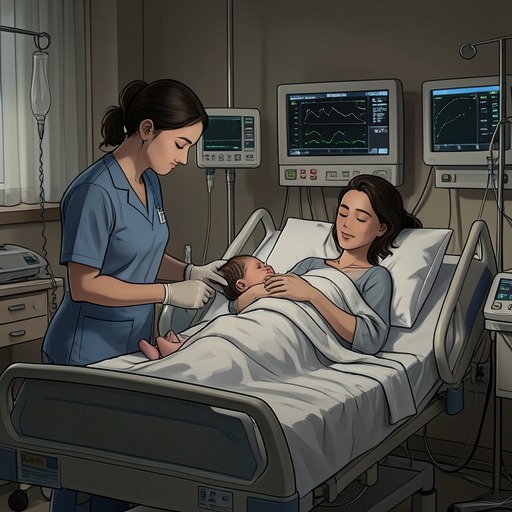
Tiny Beautiful Things: Advice on Love and Life from Dear SugarThe Human Scale is Sugar’s name for a form of faith and mutual support grounded in what people can actually offer one another: presence, compassion, and care amid suffering they cannot erase. The phrase emerges in her reply to a mother awaiting her daughter Emma’s potentially life-threatening surgery, where Sugar shifts the search for divine intervention toward human love. Across the book’s advice and remembered work with vulnerable girls, the idea becomes an ethic of witnessing and responsibility—one that offers no promise that tragedy will be reversed, and does not excuse the institutions or people who fail to protect others.
From supernatural rescue to human presence
Sugar’s account begins with a correspondent asking why God would allow her young daughter to face possibly life-threatening surgery. Sugar resists treating good or bad fortune as evidence that some people are blessed and others abandoned. Such a test, she argues, creates a false division between the fortunate and the condemned, and weakens the capacity for compassion toward the many people devastated by events that cannot be justified in spiritual terms.
The scene that redirects her answer is intensely specific. Sugar says she woke at three in the morning feeling the correspondent’s distress and wrote an email. She imagines that message, along with other people’s kind words and prayers, as a tiny raft barely able to carry the mother through the hours spent waiting to learn what would happen to Emma. The image does not make the danger smaller or claim that words can cure it. It gives human support a limited but consequential task: helping someone remain afloat while the outcome is unknown.
Sugar makes the distinction explicit through a counterfactual: even if Emma’s surgery had gone badly, the love offered to her mother would still have carried her through the ordeal. In this account, grace is not the miraculous prevention of suffering. It is what people give one another when prevention is beyond their power. Sugar proposes that faith might be located in compassion, a hand laid on a daughter’s body, or sunlight through a window—not only in a spirit who answers prayers by producing the desired result. The human scale makes meaning smaller than supernatural certainty, but more available to lived experience.
Grief witnessed rather than repaired
The same ethic shapes Sugar’s answer to a parent whose baby girl has died. She treats the depth of the correspondent’s suffering as an understandable response to a devastating loss, not as a condition that outsiders are entitled to declare finished. People who urge the bereaved parent to get over the death may be frightened by grief or trying to help, but their efforts to minimize it cannot provide the needed form of support. Sugar describes the mourner as living on a different planet from those who have not experienced the death of a child: the loss changes the terms on which ordinary consolation can be heard.
In a separate letter, Sugar tells a man that his fiancée’s mother’s death will never become okay. Her advice is not to find a solution or to persuade his fiancée out of grief, but to keep acknowledging the loss and to bear witness to its continuing reality. Sugar connects this recommendation to her own bereavement: what helped most was other people repeatedly saying that they were sorry, despite the words’ apparent ordinariness and the discomfort of feeling unable to fix anything. Their value lies in recognition, not novelty or cure. Compassion, in this formulation, means giving the love available even when the truth of the loss remains unchanged.
Care and the limits of protection
Sugar’s recollection of working as a youth advocate tests this ethic against a more disturbing limit: human concern does not guarantee effective protection. She worked with roughly twenty girls in seventh and eighth grade who had been identified by their school as being at particularly high risk. Her approach was unconditional positive regard; her modest goals were that they avoid pregnancy and incarceration before graduating, and eventually find work. The girls responded to her attention with intense trust, wanting to borrow her flower clip or pen, share her sandwich, look in her purse, and tell her what had happened in their lives.
Those disclosures included severe abuse and danger. Sugar describes girls being harmed at home, including one who showed her the cuts she made on her arms and another who was repeatedly held under ice-cold water by her mother’s boyfriend. She reported abuse to police and state child-protection services, sometimes calling every day. No one intervened in the cases she describes. A child-protection worker explained that limited funding meant teenagers not judged to be in imminent danger could be left on a list, while the agency prioritized younger children and had more resources for runaways. Sugar’s conclusion is not that caring attention can substitute for public protection. Her experience exposes the gulf between taking a child’s account seriously and having the resources or institutional response to stop the harm.
That distinction also clarifies why the human scale is an ethic of action rather than a consoling slogan. In advice to a mother angry with her child’s father, Sugar asks her to consider the child’s future relationship with him and to send updates, not because the father is owed them but because the child may benefit from a bond with him. Elsewhere she urges a woman to separate herself from a destructive brother while maintaining love for her parents and seeking ways to remain present in her niece and nephew’s lives. In both cases care involves choices about who is responsible to whom, and where involvement must be limited to avoid participating in further harm.
Care as costly, unfinished work
Sugar’s own circumstances prevent the idea from becoming a claim that care is effortless or fairly supported. When she accepts an unpaid advice-column job, she describes herself and Mr. Sugar as working writers without savings, stable employment benefits, or free childcare, with two children and substantial debt. She initially agrees, then begins drafting an email to withdraw because the work would displace paid writing and add to an already demanding caregiving life. The episode makes visible the material cost of answering other people’s pain: attention and compassion take time, while the work of offering them may be unpaid.
Her parenting advice likewise joins compassion to accountability. Responding to a mother who has thrown her daughter onto the lawn in anger, Sugar recognizes the exhaustion of caring for two very young children with little practical support, and admits that she too has behaved toward her children in ways she regrets. But recognition is not absolution: she places responsibility for change on the mother, because parenting requires confronting both loving capacities and destructive conduct. The human scale therefore asks neither for impossible perfection nor for sentimental forgiveness without change. It attends to what people can give, what they must take responsibility for, and what help or protection is missing.
Across these different situations, The Human Scale keeps the limits of care in view. Words cannot reverse a death; affection cannot by itself stop abuse; parental love does not remove the duty to protect a child; and sympathy does not make unpaid labor costless. Yet a kind email can help sustain someone through a night of uncertainty, repeated acknowledgment can make grief less isolated, and attentive regard can give a vulnerable young person room to speak. Sugar’s phrase locates meaning not in mastery over suffering, but in the imperfect, concrete acts through which people accompany one another within it.